
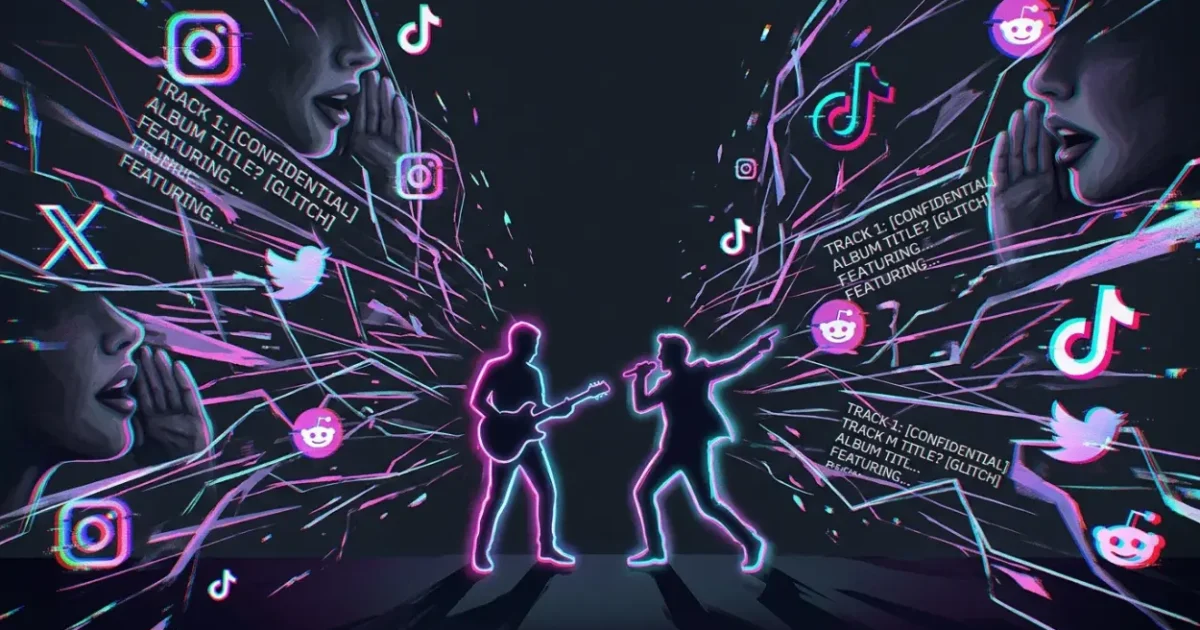
Fake collaboration rumours spread when unverified claims about musicians are repeated across social platforms, fan communities, websites, and search results until they gain visibility. Reputation management is the structured understanding of how information affects public perception, credibility, and search visibility around an individual or entity. Online reputation refers to the collection of information, opinions, references, reviews, and published content that search ecosystems associate with a person. For musicians, collaboration rumours become a reputation issue when repeated claims influence how search engines and audiences interpret the artist’s professional relationships.
How Do Fake Collaboration Rumours Start Online?
Fake collaboration rumours usually begin with an unsupported statement, misleading post, altered image, speculative headline, or misinterpreted interaction between musicians. A rumour becomes an information object once it is published and distributed through digital platforms. Social posts, fan accounts, entertainment websites, forums, and video descriptions all provide locations where an unverified claim can be repeated. Each publication creates another reference point connecting the musician with the alleged collaboration. Search engines then encounter these references as separate pieces of indexed information rather than as a single isolated statement.
The initial source does not need to have strong authority for a rumour to gain attention. Social engagement can increase distribution, while repetition creates additional instances of the same topic across the digital footprint. A photograph showing two musicians together, for example, can receive a speculative caption claiming that a joint single is being recorded. When users repeat the caption without checking its origin, the speculation becomes part of the surrounding information environment. The distinction between confirmed information and user-generated speculation therefore becomes increasingly important during SERP evaluation.
How Does Repetition Make a False Collaboration Rumour More Visible?
Repetition increases visibility by creating multiple references to the same claim across different digital properties. Search ecosystems evaluate information through relationships between queries, entities, documents, links, language, engagement, and authority. Repeated references can strengthen the apparent relevance of a topic even when the underlying claim lacks reliable evidence. This process does not mean that search engines automatically treat repetition as truth. It means that repeated content creates a larger information footprint around the subject.
Content duplication and content propagation also influence how users encounter information. A rumour can appear first on a social platform, then be copied into a blog post, discussed in a video, and referenced by another website. Each occurrence expands the number of documents associated with the musician and the alleged collaboration. Search engines process these documents individually while also recognising their semantic relationships. As a result, an unsupported claim can become increasingly prominent within searches connected to the musician and the supposed collaborator.
How Do Search Engines Interpret Rumours About Musicians?
Search engines interpret rumours primarily through content, entities, relevance, authority, context, and other ranking signals rather than through a simple true-or-false classification. A search engine identifies relationships between words, people, organisations, events, topics, and documents. When multiple pages associate two musicians with a collaboration, the relationship itself becomes part of the searchable information landscape. The existence of that relationship in search results does not establish that the collaboration occurred.
Entity perception is shaped by the information connected to an entity across indexed sources. If an artist’s name repeatedly appears alongside terms such as “new collaboration”, “joint project”, or “upcoming single”, those concepts become semantically associated with the artist. Search results can therefore reflect the prominence of a claim without validating its accuracy. Understanding this distinction separates search visibility from factual verification and explains why false rumours can influence perception without becoming established facts.
Why Do Social Media Platforms Accelerate Collaboration Rumours?
Social platforms accelerate rumours because their distribution systems make rapid publication, interaction, and repetition easy. A post containing a speculative claim can generate comments, reposts, reactions, screenshots, and derivative content within a short period. These interactions increase the amount of publicly available material surrounding the original statement. The resulting digital footprint extends beyond the original account and creates additional documents that search engines can discover or users can encounter directly.
Short-form content also removes contextual detail that would otherwise distinguish confirmed information from speculation. A cropped photograph, short caption, or edited video can create an association without explaining its source. Users then interpret the content through existing assumptions about the musicians involved. Once external websites reproduce the same interpretation, the claim enters a broader content ecosystem where its original context becomes harder to identify.
How Do Fan Communities Influence the Spread of False Music Rumours?
Fan communities influence rumour propagation by providing highly active environments for discussion, interpretation, and redistribution. A community member can introduce a speculative collaboration, while other members add screenshots, comments, predictions, or references to previous releases. These interactions create a dense network of related content around the musicians. The resulting information can then spread beyond the original community through search, social sharing, video content, and entertainment publications.
Community activity also affects the language surrounding an entity. Repeated discussion introduces associated terms, names, concepts, and claims into the musician’s broader digital footprint. Search engines encounter these associations across publicly accessible documents and platforms. The resulting semantic network can increase the visibility of the collaboration query even when no official announcement confirms it. Community discussion therefore functions as an information-distribution mechanism rather than as independent evidence of the claim.
How Do Entertainment Websites Turn Speculation Into Searchable Content?

Entertainment websites can turn speculation into searchable content by publishing articles based on social posts, fan theories, photographs, or statements taken out of context. A speculative headline creates a new document that search engines can crawl, index, and evaluate. If the article contains the names of both musicians, the alleged project, and relevant descriptive terms, it establishes a stronger semantic connection between those entities. Subsequent websites can then reference the article as an additional source.
This process creates a feedback loop between social discussion and web publishing. Social speculation provides material for articles, while published articles provide material for further social discussion. The same claim consequently moves between different content environments and acquires additional visibility. Search perception is influenced by this distribution because users encounter the claim through multiple formats rather than through its original source alone.
How Do Search Rankings Affect the Perception of Collaboration Rumours?
Search rankings affect perception because users generally encounter a limited selection of results for a query. A rumour appearing prominently for searches involving an artist and another musician receives greater exposure than an identical claim buried deeper in the results. Ranking therefore determines the practical visibility of information within a SERP. Visibility does not establish accuracy, but it influences which information users encounter first.
Search perception develops through the combined presence, prominence, and context of available information. If an artist’s search results contain official announcements, reputable interviews, established music publications, and unsupported rumours, users evaluate these signals within the same results environment. The authority and context of individual sources remain important, but the overall composition of the SERP also shapes interpretation. A false collaboration claim becomes more influential when it occupies prominent search positions alongside credible information.
What Role Do Authority and Trust Signals Play in Rumour Evaluation?
Authority and trust signals help distinguish established information sources from weak or unsupported references. A recognised music publication, official artist website, verified announcement, or direct statement provides stronger contextual evidence than an anonymous post repeating speculation. Search engines assess documents through numerous signals rather than relying on a single authority measurement. Users also evaluate source credibility when deciding whether a collaboration claim appears factual.
Trust is therefore contextual rather than purely numerical. A high-authority publication repeating an unverified social claim does not automatically transform the claim into a confirmed event. Its wording, attribution, evidence, and publication context remain relevant. Effective SERP evaluation requires examining whether a page reports a confirmed collaboration, discusses speculation, quotes another source, or simply repeats an unsupported assertion.
How Do Reviews and Sentiment Signals Affect a Musician’s Online Reputation?
Reviews and sentiment signals influence a musician’s online reputation by adding evaluative information to the broader entity profile. Reviews typically address performances, releases, professionalism, public behaviour, or audience experiences rather than collaboration rumours directly. However, discussions surrounding a controversial or disputed rumour can introduce positive, negative, or neutral sentiment into the artist’s digital footprint. This sentiment becomes another layer of information associated with the entity.
Sentiment interpretation is also dependent on context. A negative comment about a rumoured collaboration does not necessarily indicate negative sentiment towards the musician as a whole. Search systems distinguish between topics and entities through language and contextual relationships. Reputation analysis therefore separates criticism of an alleged event from broader evaluations of the artist’s credibility, conduct, or professional identity.
Dive Deeper With Our Expert Guides:
Why Feuds Between Artists Dominate Search Results
How Leaked Demos and Tracks Damage an Artist’s Reputation
How Does a False Collaboration Rumour Become Part of a Musician’s Digital Footprint?
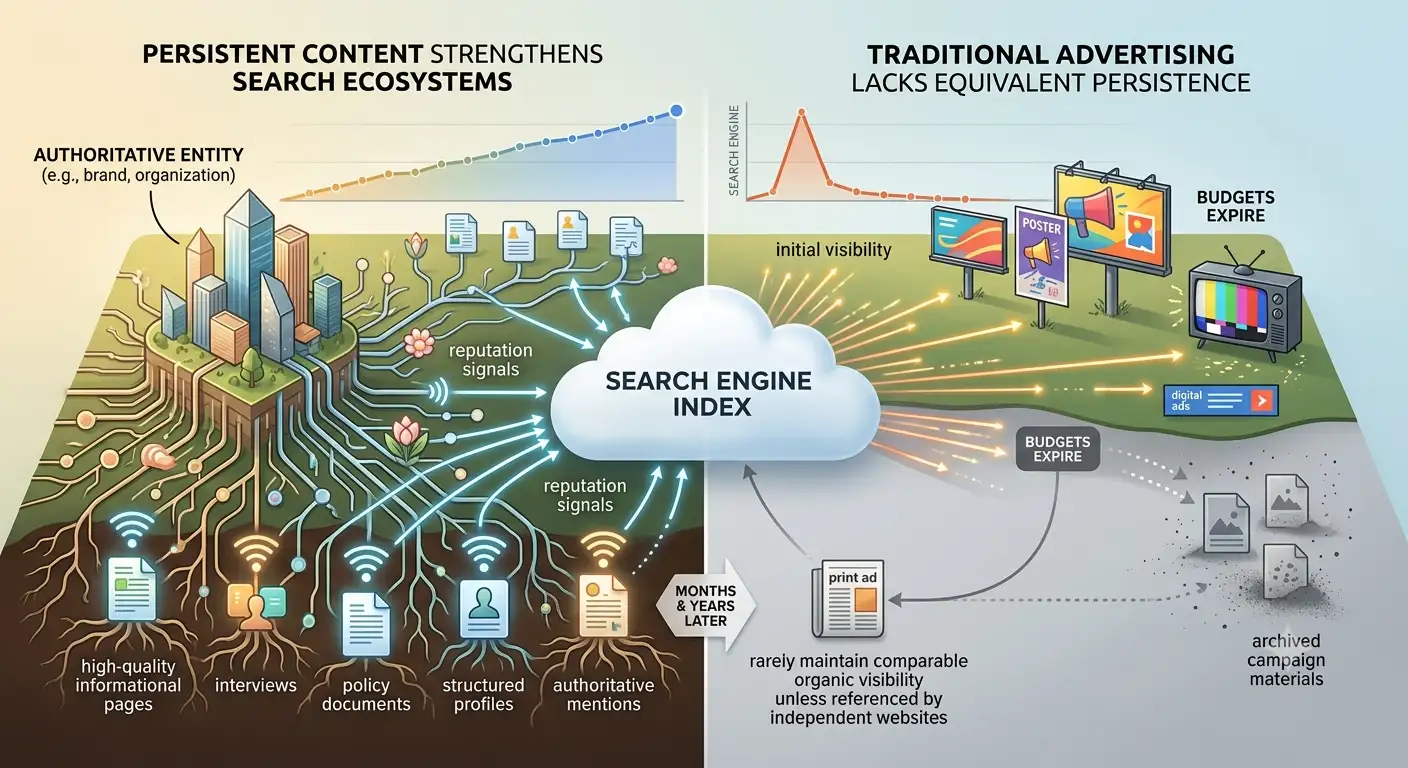
A false rumour becomes part of a digital footprint when references to the claim remain accessible across indexed pages, social platforms, videos, forums, images, or other online resources. The digital footprint is the accumulated body of publicly available information connected with an individual or entity. Each persistent reference contributes to the wider information environment surrounding the musician. The strength of that association depends on factors including source authority, relevance, indexing, prominence, and repetition.
Content indexing is particularly important because unpublished or inaccessible information has limited search visibility. Once a page becomes discoverable and indexable, it becomes eligible to appear for relevant queries. A rumour that persists across indexed sources therefore has a greater opportunity to influence search perception than a statement that disappears from the accessible web. The digital footprint consequently reflects both the quantity of information and the visibility of the information that remains available.
How Can Searchers Distinguish Confirmed Collaborations From False Rumours?
Searchers can distinguish confirmed collaborations by evaluating source provenance, attribution, publication context, and consistency across authoritative sources. An official announcement provides direct evidence, while a reputable interview can establish whether an artist has confirmed or discussed the project. In contrast, speculative language such as “fans think”, “reportedly”, or “rumours suggest” indicates that the information has not been presented as confirmed fact. Comparing the wording and origin of multiple sources provides a clearer basis for evaluating the claim.
A structured evaluation also separates evidence from repetition. Ten websites repeating the same unverified social post do not necessarily provide ten independent confirmations. If each article traces back to one speculative source, the information represents propagation rather than independent verification. Understanding source relationships therefore provides a more accurate assessment of reputation signals and prevents repetition from being mistaken for credibility.
How Does Search Perception Change When False Rumours Persist?
Search perception changes when false rumours remain visible because repeated exposure increases the prominence of the association between the musician and the alleged collaboration. The underlying claim remains unverified, but its repeated appearance creates a persistent topic within the search environment. Users searching for the artist can therefore encounter the rumour alongside legitimate professional information. This changes the informational balance surrounding the entity.
The effect depends on query intent, source authority, ranking position, content freshness, and the wider information ecosystem. A rumour appearing for a highly specific collaboration query has a different reputational effect from one appearing for broad searches about the musician. Similarly, a single low-authority page has a different visibility profile from a cluster of indexed articles and social discussions. Reputation analysis therefore evaluates the complete SERP environment rather than treating one result as the entire reputation.
Why Do Fake Collaboration Rumours Spread About Musicians?
Fake collaboration rumours spread through a combination of speculation, repetition, social distribution, content publication, indexing, and search visibility. Reputation management is the structured analysis of how these information patterns affect the online representation of an individual or entity. Online reputation refers to the information environment through which users and search engines interpret credibility, associations, sentiment, and professional identity.
For musicians, collaboration rumours demonstrate the difference between factual confirmation and search visibility. A claim can become highly visible without becoming factually established because search ecosystems process accessible content and relationships rather than acting as universal fact-checking systems. Understanding authority, source provenance, repetition, content indexing, entity relationships, and SERP evaluation provides a clearer framework for analysing how reputation signals develop online. How to Shut Down False Collaboration Rumours Quickly also requires understanding how these signals influence what audiences encounter in search results and how inaccurate associations can gain visibility through repeated publication.
How do fake collaboration rumours spread about musicians?
Fake collaboration rumours spread through social media posts, fan communities, screenshots, forums, and entertainment websites that repeat unverified claims. Repetition increases the rumour’s digital footprint and can make the association more visible in search results.
Can fake collaboration rumours affect a musician’s online reputation?
Yes. Persistent rumours can influence search perception by associating a musician’s name with an unverified collaboration across indexed content, social discussions, and search engine results pages.
Why do false music collaboration rumours appear in Google search results?
Search engines index publicly accessible content based on relevance, context, authority, and other ranking signals rather than verifying every factual claim. A widely repeated rumour can therefore become searchable even when no official source confirms it.
How can you tell if a musician collaboration rumour is false?
Check the original source, official artist announcements, reputable music publications, and direct statements from the musicians involved. Multiple websites repeating the same social media post do not necessarily represent independent confirmation.
How does reputation management for musicians address false online information?
Reputation management for musicians analyses search results, indexed content, entity associations, and reputation signals surrounding the artist. This process helps identify how inaccurate information enters the digital footprint and how it affects search perception.