

A Google review response workflow is a structured process for monitoring, classifying, prioritising and answering customer reviews consistently. Reputation management strategies differ based on response speed, review sentiment, operational capacity and the level of reputational risk attached to each interaction.
Online reputation control methods are evaluated through their influence on customer trust, review engagement, entity credibility and search results. A reliable workflow connects review monitoring with response standards, escalation procedures and performance measurement, allowing businesses to manage positive, neutral and negative feedback without treating every review identically.
What Is the Difference Between a Structured Review Workflow and Ad Hoc Responses?
A structured review workflow is a repeatable system that assigns responsibility, response rules and escalation criteria to every Google review. An ad hoc approach relies on individual judgement, with staff responding when time permits or when a review attracts attention. The structured model improves consistency because each review enters a defined process rather than depending on personal availability. The ad hoc model offers flexibility for small teams, but response quality and timing vary when responsibilities are unclear. The main distinction is operational control, not simply the number of reviews answered.
Structured workflows also create a clearer record of reputation signals. A business can identify recurring complaints, compare sentiment distribution and establish whether response delays are concentrated around particular products, locations or teams. Ad hoc responses rarely produce the same level of reliable operational evidence unless staff document their actions separately. This difference affects management decisions because review data becomes useful for service improvement only when it is recorded and interpreted consistently.
How Does Each Approach Affect Trust and Search Visibility?
A structured workflow supports customer trust by producing relevant, professional responses across different review categories. Prospective customers can evaluate how a business acknowledges praise, handles criticism and explains service limitations. An ad hoc process produces inconsistent public evidence, particularly when positive reviews receive acknowledgements but negative feedback remains unanswered. Google identifies review responses as a way for businesses to engage with customers, but a response workflow is not a direct guarantee of higher rankings. Its search-related value lies in supporting review engagement, customer confidence and a more complete public representation of the business.
Which Review Classification Method Is More Effective: Sentiment-Based or Risk-Based?
Sentiment-based classification groups reviews according to positive, neutral or negative language, whereas risk-based classification prioritises reviews according to their potential operational, legal or reputational consequences. Sentiment classification is straightforward to automate because text analysis can identify praise, dissatisfaction and recurring emotional terms. Risk classification requires additional context, such as allegations of misconduct, references to personal information, safety complaints or disputes involving sensitive transactions. The two approaches serve different purposes and work best as complementary stages rather than competing alternatives. Sentiment identifies the general tone of feedback, while risk determines the appropriate response process.
A sentiment-only workflow can misclassify a calm review containing a serious allegation as low priority. Conversely, a strongly worded complaint about a minor inconvenience can receive excessive attention despite requiring only a routine service response. Risk-based classification reduces these errors by considering the substance and potential consequences of the complaint. Its limitation is the need for clear decision rules and trained reviewers, particularly when automated systems interpret sarcasm, ambiguous wording or complex disputes. A combined method balances processing efficiency with reputational risk control.
How Should Positive, Neutral and Negative Reviews Be Handled Differently?
Positive reviews generally require a brief acknowledgement that refers to a specific aspect of the customer’s feedback. Neutral reviews benefit from a factual response that clarifies the experience or invites further information when an issue remains unresolved. Negative reviews require acknowledgement of the stated concern, an appropriate explanation where verified facts are available and a practical route for resolution. These response categories create consistent expectations without forcing staff to use identical wording for every customer. Personalisation remains important because generic replies reduce the informational value of public engagement.
Risk classification adds another layer to this process. Reviews containing threats, personal data, allegations of unlawful conduct or disputed facts require controlled escalation rather than an improvised public reply. Staff must avoid disclosing customer information, making unsupported admissions or arguing about events that have not been verified. Where a review appears to violate Google’s content policies, the business can assess whether reporting is appropriate, although removal is not guaranteed. A policy assessment is distinct from a disagreement with a reviewer’s opinion.
Is an Automated Google Review Workflow More Effective Than Manual Management?
An automated workflow uses software to detect new reviews, issue notifications, allocate tasks and apply approved response templates. Manual management relies on staff to monitor review platforms, assess each entry and compose responses without extensive automation. Automation improves scalability by reducing repetitive monitoring tasks and shortening the time between review publication and internal notification. Manual management offers greater contextual judgement when a review involves complex service failures, ambiguous allegations or sensitive customer information. The appropriate balance depends on review volume, team capacity, response complexity and the consequences of an incorrect reply.
Automation does not independently establish whether a customer’s allegations are accurate or whether a response is legally appropriate. Sentiment detection tools can misinterpret humour, cultural expressions and mixed feedback, while template systems can produce responses that sound irrelevant to the actual complaint. Manual systems avoid some automation errors but introduce delays, inconsistent record-keeping and dependence on individual staff members. A hybrid workflow automates detection, classification support and task allocation while retaining human approval for sensitive or disputed cases. This arrangement improves processing efficiency without treating automated output as a substitute for judgement.
Which Tasks Are Suitable for Automation?
- Automate review monitoring and notifications so new Google reviews enter a shared queue without depending on staff checking the platform manually.
- Standardise routine acknowledgements through approved response guidance that requires staff to reference the customer’s actual feedback.
- Escalate sensitive allegations, privacy concerns and disputed factual claims to an authorised reviewer before publishing a response.
- Audit automated classifications against human decisions to identify recurring errors involving sarcasm, mixed sentiment or high-risk language.
These controls distinguish process automation from automated decision-making. Monitoring and allocation tasks are generally easier to standardise than responses involving complex factual disputes. A business also needs clear permissions, access controls and quality checks to prevent unauthorised publishing or accidental disclosure. Automation is most effective when its boundaries are explicit and staff can override incorrect classifications.
How Do Organic Review Management and Reactive Responses Compare?
Organic review management is a proactive approach that integrates review monitoring, customer feedback analysis and service improvement into regular business operations. Reactive response management begins when a review appears and focuses primarily on addressing the individual public comment. The proactive model identifies recurring service problems before they generate additional complaints, while the reactive model concentrates on visible feedback that already exists. Both approaches are necessary because operational improvement does not replace the need to respond to published reviews. Their difference lies in whether review data informs ongoing business decisions or remains a series of isolated customer interactions.
Organic management also supports a more balanced understanding of sentiment distribution. When teams categorise reviews by issue, location and service stage, they can identify repeated problems and assess whether corrective measures change subsequent feedback. Reactive management can resolve an individual complaint but often fails to connect similar reviews across departments or reporting periods. This creates a gap between public communication and internal improvement. A workflow that combines both approaches links the visible response with the underlying operational cause.
How Does Each Method Influence Reputation Signals?
Review responses form part of the public information customers examine when assessing a business. Clear, specific replies demonstrate that feedback receives attention, while unresolved complaints can leave prospective customers without the business’s explanation or account of subsequent action. Search engines use multiple signals to understand local businesses and determine relevant results, but individual response activity does not guarantee a ranking increase. The strongest defensible benefit is improved context for users evaluating a business through its review profile. Reputation signals therefore influence customer interpretation more directly than they establish a predictable search ranking outcome.
Proactive management also supports content enhancement by improving the accuracy and completeness of the information available to customers. Content enhancement means adding useful context, addressing misunderstandings and demonstrating how a business handles feedback. Content suppression, by contrast, attempts to reduce the prominence of damaging material through eligible removal processes or the visibility of other relevant content. These approaches operate through different mechanisms, and neither replaces appropriate review responses. A response workflow primarily improves engagement and context rather than removing legitimate criticism from search results.
Should Businesses Prioritise Short-Term Response Speed or Long-Term Consistency?
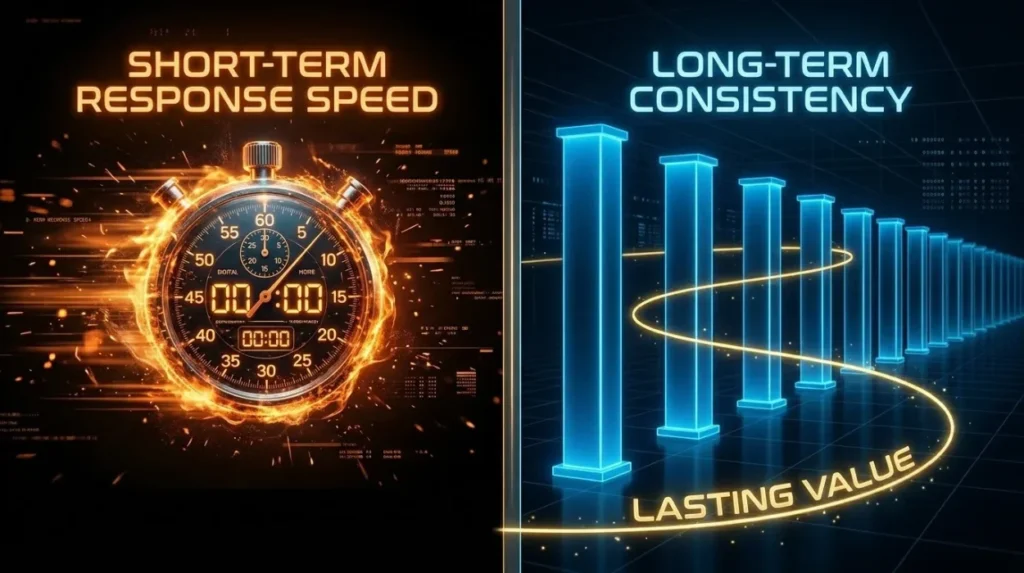
Short-term response speed reduces the period during which a new review remains unanswered, whereas long-term consistency maintains reliable standards across review categories and reporting periods. Rapid responses are useful when customers need immediate clarification or when an unresolved service issue is still actionable. However, speed without factual verification increases the risk of irrelevant answers, contradictory explanations and accidental disclosure. Consistency requires defined response standards, ownership and quality assurance, even when review volume rises. A sustainable workflow measures timeliness alongside relevance, accuracy and resolution quality.
A response-time target is useful when it reflects the business’s capacity and the urgency of incoming feedback. Routine positive reviews can follow a standard processing schedule, while serious complaints require priority assessment and clear escalation ownership. Teams must distinguish acknowledgement time from resolution time because a prompt reply does not mean that the underlying problem has been solved. Recording both measures reveals whether the business communicates quickly but leaves complaints unresolved. This distinction produces a more accurate evaluation of review management effectiveness.
Dive Deeper With Our Expert Guides:
Managing Your Google Q&A Section to Protect Your Reputation
Avoiding Google’s Spam Filters When Growing Reviews Quickly
Which Metrics Measure Workflow Performance Most Reliably?
A workflow requires operational measures that distinguish response activity from meaningful outcomes. Response coverage measures the proportion of eligible reviews receiving replies, while median response time shows how quickly the business typically responds without allowing extreme delays to distort the result. Escalation rates reveal how frequently reviews require specialist assessment, and resolution tracking indicates whether reported issues receive documented follow-up. Sentiment trends can help identify changes in recurring customer concerns, but they do not independently prove that responses caused those changes. Each metric becomes more useful when interpreted alongside review volume, service changes and the period being assessed.
Businesses also need to evaluate consistency across locations, teams and review types. A high overall response rate can conceal poor coverage of negative reviews or delays affecting one branch. Segmenting performance data reveals whether the workflow distributes attention appropriately instead of prioritising only convenient or positive interactions. Periodic quality audits assess whether replies address the actual review, respect privacy and avoid unsupported claims. These measures evaluate workflow reliability more effectively than response volume alone.
When Is Review Removal More Appropriate Than a Public Response?
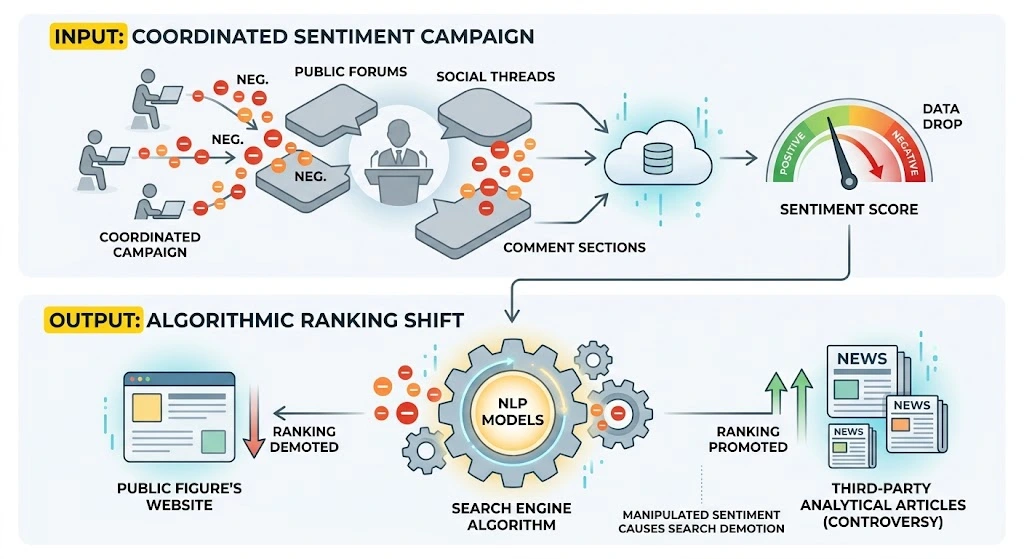
A public response is generally appropriate when a review reflects a customer’s genuine experience and the business can provide a relevant, professional reply. Review removal is a separate process intended for content that violates the platform’s policies, rather than criticism that a business considers unfair or damaging. Google reviews can be reported for assessment when they appear to involve prohibited content, such as spam, fake engagement, conflicts of interest or other policy violations. The platform determines whether the content meets its removal criteria, so reporting does not guarantee deletion. A response workflow must distinguish a policy concern from a disagreement about a customer’s account.
Removal and response strategies produce different effects on the public review profile. A successful removal eliminates eligible content from that profile, while a response adds the business’s perspective without erasing the original review. Attempting to remove legitimate criticism can waste resources and delay a practical resolution. Responding to policy-violating material without assessing reporting options also leaves the underlying compliance concern unaddressed. The correct method depends on the content, available evidence and applicable platform rules.
How Can Businesses Evaluate the Appropriate Action?
- Verify the review’s factual context by checking relevant service records and communicating internally with the staff involved.
- Assess the content against Google’s published review policies instead of treating negative sentiment alone as evidence of a violation.
- Respond to legitimate criticism with a factual acknowledgement and an appropriate route for resolving the customer’s concern.
- Report suspected policy violations through the available platform process and retain relevant evidence for follow-up.
- Escalate serious allegations or privacy-sensitive cases to an authorised reviewer before publishing a public statement.
This evaluation framework reduces the risk of confusing reputation protection with the removal of unwelcome opinions. A business can preserve professional communication while pursuing a policy-based review report when the evidence supports it. The workflow also creates a record of why a response, escalation or report was selected. Such records improve accountability and help teams apply the same standards to comparable cases.
What Makes a Google Review Response Workflow Scalable and Sustainable?
A scalable workflow maintains consistent decision-making as review volume, locations and staffing arrangements change. It requires defined responsibilities, a central review queue, documented response standards and escalation procedures that do not depend on a single employee. Standardisation improves repeatability, while controlled personalisation ensures replies remain relevant to the individual review. A workflow that depends entirely on one manager becomes vulnerable to absence, workload peaks and inconsistent judgement. Scalability therefore depends on both process design and the distribution of responsibility.
Sustainability also requires regular evaluation of response quality and operational outcomes. Businesses need to update templates when services change, revise escalation rules when new risks emerge and examine whether repeated complaints reveal unresolved operational problems. A static workflow gradually loses relevance because customer expectations, review patterns and platform policies change. Regular audits preserve the connection between public responses and actual business practices. Long-term effectiveness depends on maintaining this feedback loop rather than simply achieving a high response rate.
Which Google Review Management Approach Offers the Best Overall Balance?
A hybrid workflow provides a practical balance by combining automated monitoring, structured classification, human review and consistent performance measurement. Structured processes outperform ad hoc handling in accountability and repeatability, while manual judgement remains important for complex or sensitive reviews. Proactive management identifies recurring service problems, whereas reactive responses address individual comments already visible to customers. Content enhancement improves context and communication, while policy-based removal addresses eligible violations through a separate platform process. Businesses seeking a consistent approach can Respond to Every Google Review by integrating timely replies, clear response guidelines and appropriate escalation procedures. These methods serve complementary purposes rather than forming a single interchangeable solution.
The most appropriate workflow depends on review volume, risk exposure, team capacity and the need for individual judgement. Businesses benefit from measuring response coverage, response time, reply quality, escalation outcomes and recurring sentiment patterns together. Search visibility remains influenced by multiple factors, so response activity must not be treated as a guaranteed ranking mechanism. A sustainable system connects customer communication with operational learning and documented decision-making. This approach supports consistent reputation management while preserving the distinction between public engagement, service improvement and platform enforcement.
How do you build a response workflow for every Google review?
Build a Google review response workflow by monitoring new reviews, classifying feedback by sentiment and risk, assigning response responsibilities and setting clear response-time targets. Use standardised guidelines and regular quality checks to maintain consistent, relevant replies across positive, neutral and negative reviews.
How quickly should businesses respond to Google reviews?
Businesses should aim to respond promptly, with response-time targets based on review urgency and available resources. Negative reviews involving unresolved service issues require timely assessment, while routine positive feedback can follow a consistent response schedule.
Should businesses automate Google review responses or manage them manually?
Automation helps monitor reviews, send notifications and organise response tasks, making it useful for businesses with high review volumes. Manual review provides better contextual judgement for sensitive complaints, so a hybrid workflow combines automation with human approval for complex cases.
Do responses to Google reviews improve local SEO rankings?
Responding to Google reviews supports customer engagement and helps prospective customers understand how a business handles feedback. Review responses alone do not guarantee higher local search rankings, which depend on multiple factors, including relevance, distance and prominence.
Should a business respond to a negative Google review or request its removal?
Businesses should respond professionally when a negative review reflects a genuine customer experience, addressing the concern without disclosing private information. If a review appears to violate Google’s content policies, the business can report it for assessment, although removal is not guaranteed.