

Managing a Google Q&A section involves monitoring customer questions, providing accurate information and addressing policy-violating content where Google’s reporting processes apply. Reputation management strategies differ based on whether the objective is to correct information, improve search visibility, reduce harmful content exposure or strengthen entity credibility.
Online reputation control methods are evaluated through their effectiveness, scalability, risk exposure and long-term sustainability. Google Q&A, where available, forms one part of a wider search environment that includes Google Reviews, business profile information, indexed web pages and other reputation signals. Each element contributes differently to customer perception, so effective evaluation requires distinguishing between correcting an individual information gap and improving the overall search results page (SERP). Content enhancement and content removal also operate through different mechanisms, making their suitability dependent on the nature of the reputational issue.
Which Google Q&A Management Methods Are More Effective: Monitoring, Responding or Reporting?
Monitoring, responding and reporting address different types of reputation risk, and their effectiveness depends on whether the problem involves missing information, a factual misunderstanding or content that breaches platform policies. Monitoring identifies questions and recurring concerns before they become persistent sources of confusion. Responding provides relevant context directly within the business profile, while reporting submits potentially non-compliant content for platform review. These methods are complementary rather than interchangeable because each operates at a different stage of the reputation management process.
Monitoring is a detection mechanism that tracks questions, answers and changes in customer concerns. It helps identify repeated queries about opening hours, services, pricing or business procedures, allowing profile information to be assessed for gaps. Its principal strength is early identification, but monitoring alone does not correct inaccurate information or alter customer interpretation. Responding addresses the information gap by supplying a factual explanation in the relevant context. Reporting, by comparison, relies on platform enforcement and does not guarantee removal simply because a business considers a question damaging.
The most suitable method therefore depends on the evidence and the type of problem. A question arising from unclear service information requires a different response from content that contains prohibited material or demonstrably misleading claims. Treating every negative question as a removal issue creates unnecessary enforcement risk and overlooks opportunities to improve understanding. A structured process distinguishes legitimate criticism, correctable misunderstandings and potential policy violations before selecting an intervention.
How Does Content Enhancement Compare with Content Removal for Google Q&A Reputation Management?
Content enhancement improves the accuracy, relevance and completeness of information, whereas content removal attempts to eliminate material that meets applicable removal criteria. Enhancement operates by supplying useful context and correcting information gaps, while removal depends on platform rules, ownership rights or other applicable grounds. The distinction matters because reputational damage does not automatically establish that content violates a platform policy. Selecting an intervention based on the actual cause of the problem reduces unnecessary escalation and improves the consistency of reputation signals.
Content enhancement focuses on the information available to users rather than attempting to eliminate every unfavourable signal. Updating business descriptions, clarifying service details and answering recurring questions creates a more complete information environment. These improvements support entity credibility by helping customers compare profile claims with other accessible information. However, enhanced information does not erase existing criticism, guarantee higher rankings or prevent users from interpreting legitimate negative feedback unfavourably. Its effectiveness depends on factual accuracy, relevance and consistency across the business’s digital footprint.
Content removal follows a narrower mechanism. A business identifies content that potentially breaches the platform’s policies and submits it through the relevant reporting process, providing evidence where required. The platform assesses the material against its own rules, and the outcome depends on that assessment rather than the reputational impact alone. Removal can reduce direct exposure to qualifying content, but it does not automatically correct the underlying information gap or eliminate copies published elsewhere. Consequently, removal is most appropriately evaluated as a targeted intervention rather than a complete reputation management strategy.
The two approaches also differ in sustainability. Accurate information and useful answers remain valuable as customer questions evolve, provided the details are maintained. Removal produces a more limited outcome because it concerns specific material and depends on the applicable enforcement decision. A sustainable strategy therefore evaluates whether the original issue has been resolved, whether the information environment remains accurate and whether the same concern continues to appear across other channels.
How Do Organic Reputation Strategies Compare with Reactive Reputation Management?
Organic reputation management builds a consistent body of credible information over time, while reactive management responds to a specific event, question, review or reputational threat. Organic methods operate through the publication and maintenance of useful information across relevant digital properties. Reactive methods operate through targeted actions such as correcting a factual error, responding to a customer concern or reporting content that appears to violate platform rules. Both influence the information users encounter, but their timing, resource requirements and risk profiles differ.
Organic approaches include maintaining accurate business profile details, publishing relevant website content and ensuring that important business information remains consistent across trusted sources. These activities help search engines discover and interpret information associated with a business entity. Their value lies in creating a broader, more coherent information environment rather than relying on a single response to a negative signal. However, organic development requires sustained maintenance and does not guarantee that a particular page, answer or business profile will rank in a preferred position. Search ranking influence depends on multiple systems and signals beyond the direct control of a business.
Reactive management prioritises an identifiable issue and seeks to address it within a defined timeframe. A factual correction, for example, can resolve confusion about a service, while a policy report can initiate a review of potentially prohibited material. This approach is efficient when the problem is specific, evidence is available and the relevant platform offers an appropriate process. Its limitation is that a response to one issue rarely resolves wider inconsistencies across search results. Repeated reactive intervention without broader analysis also consumes resources and leaves recurring causes unaddressed.
The strongest comparison examines whether an issue is isolated or systemic. An isolated misunderstanding often requires a precise answer, whereas repeated questions about the same subject indicate a wider information gap. A sudden increase in negative search results requires a broader review of SERP composition, source credibility and the distribution of favourable, neutral and unfavourable information. Organic and reactive methods therefore address different time horizons and should be assessed against the actual source of reputational risk.
How Do Search Engines Interpret Google Q&A, Google Reviews and Other Reputation Signals?
Search engines process different forms of information through distinct systems, so Google Q&A activity, review sentiment and website content do not function as one interchangeable ranking signal. Business profile information helps users understand an entity, while reviews provide customer-generated assessments and website pages explain services, policies or expertise. These information sources can influence human perception even when their direct ranking effects are uncertain or undocumented. Separating user trust from ranking influence prevents businesses from attributing search changes to a single profile feature without sufficient evidence.
Google Reviews communicate customer experiences through ratings, written feedback and patterns of sentiment. Their reputational significance depends on the content, context, recency and distribution of feedback, rather than the existence of one unfavourable review alone. A consistent pattern of unresolved complaints can create a different perception from an isolated criticism surrounded by detailed, credible positive feedback. Review management therefore measures sentiment distribution and recurring themes instead of treating every negative contribution as equally consequential. Attempts to manipulate ratings or suppress legitimate criticism introduce additional trust and compliance risks.
Google Q&A, where available, serves a different informational purpose by presenting questions and answers related to a business. It can expose uncertainty about policies, service availability or operational details before a customer makes contact. Accurate responses improve the immediate context in which users interpret the business, but the presence of a useful answer does not establish a guaranteed search ranking benefit. Platform features and their availability also change, so a management process needs to verify which functions currently exist for the relevant profile.
Website content and other indexed sources extend the information environment beyond the business profile. Search engines discover and organise accessible pages, while users compare the claims, detail and consistency of information across results. Contradictory business details can weaken confidence even when individual pages appear authoritative in isolation. Consistent information supports clearer entity interpretation, but consistency alone does not prove that a claim is accurate. Reputation analysis therefore considers source quality, factual reliability and contextual relevance alongside search visibility.
Which Reputation Management Approach Provides Better Short-Term Results and Long-Term Stability?

Reactive interventions generally address defined problems more directly, whereas organic reputation strategies focus on maintaining a reliable information environment over an extended period. Short-term effectiveness measures whether a specific issue has been corrected, a response has clarified a misunderstanding or a qualifying content report has received a decision. Long-term stability measures whether accurate information remains accessible, recurring concerns decline and the business’s wider search presence stays consistent. These measures are related, but success against one does not establish success against the other.
A short-term intervention begins with a defined problem and an observable outcome. Correcting an outdated opening time, for example, addresses an immediate information discrepancy that affects customers. Submitting a report about potentially policy-violating content initiates an enforcement process, but the business does not control the decision or its timing. Measuring these interventions requires recording the original issue, the action taken and the verified result. Without that distinction, a submitted report can be mistaken for a completed removal, or a published response can be mistaken for a measurable improvement in reputation.
Long-term stability depends on maintaining accurate information and reviewing how reputation signals evolve. Regular profile checks identify outdated details, while analysis of customer feedback reveals recurring misunderstandings and operational concerns. Maintaining relevant website content also provides additional context for people researching the business through search engines. These activities require ongoing resources, but they reduce dependence on one-off interventions. Their value is measured through consistency, information quality and changes in customer-facing outcomes rather than an assumed guarantee of ranking improvement.
A balanced evaluation separates immediate resolution from sustained performance. Businesses need to distinguish between an issue that has disappeared from view and one whose underlying cause has been resolved. A removed item can reduce exposure on one platform while similar information remains elsewhere, whereas a corrected information gap can continue to generate confusion if other sources remain outdated. Long-term assessment therefore examines the original cause, the distribution of relevant search results and the persistence of the improvement.
How Should Businesses Evaluate Reputation Management Effectiveness, Scalability and Risk?
Reputation management effectiveness is the extent to which an intervention addresses a defined reputational problem using a verifiable outcome. Scalability measures whether the process remains manageable as the volume of questions, reviews, profiles and indexed sources increases. Risk exposure concerns the possibility of policy violations, inaccurate responses, privacy breaches or actions that undermine customer trust. Sustainability measures whether the improvement continues without disproportionate monitoring effort or repeated corrective work. Evaluating these dimensions together provides a more reliable basis for choosing between reputation management methods.
A practical evaluation framework uses four criteria:
- Measure effectiveness by comparing the original problem with the verified outcome, such as whether a factual error was corrected or a platform confirmed that reported content breached its policies.
- Assess scalability by recording the time required to monitor questions, review evidence and respond consistently across multiple business profiles.
- Evaluate risk exposure by checking whether an intervention relies on accurate evidence, follows platform rules and avoids attempts to manipulate legitimate customer feedback.
- Test sustainability by reviewing whether information remains accurate and whether the same question or complaint continues to recur after the intervention.
These criteria expose weaknesses that headline metrics often conceal. A decline in the number of visible negative results, for example, does not independently demonstrate improved customer trust or a change in search rankings caused by a specific action. Similarly, a high volume of responses does not establish quality if answers are repetitive, inaccurate or unrelated to the questions asked. Outcome measurement needs to connect activity with a clearly defined business or information objective.
Scalability becomes particularly important when businesses manage multiple locations or receive repeated customer questions. A consistent process can categorise issues, assign responsibility and distinguish routine corrections from cases requiring specialist review. Standardisation improves operational efficiency, but overly rigid templates can produce responses that ignore the context of an individual question. Effective scaling therefore combines repeatable procedures with factual review and appropriate case-specific judgement.
Risk evaluation also includes the limitations of platform control. Businesses do not have unrestricted authority to remove customer-generated content or dictate search engine rankings. Misrepresenting criticism as prohibited content can waste resources and weaken the credibility of subsequent reports. A defensible process documents the evidence, identifies the relevant policy or factual issue and selects an intervention proportionate to the problem.
Dive Deeper With Our Expert Guides:
Avoiding Google’s Spam Filters When Growing Reviews Quickly
Encouraging Customers to Add Photos to Their Google Reviews
How Can Businesses Choose Between Competing Google Q&A Reputation Strategies?
The most appropriate strategy depends on the source of the problem, the evidence available and the outcome required. A business facing incomplete information needs a different intervention from one dealing with a demonstrable factual error or content that potentially breaches platform rules. Selecting the method before diagnosing the issue increases the risk of ineffective action. A structured assessment instead connects each reputational concern with an intervention that addresses its underlying mechanism.
The decision process begins by identifying where the concern originates. If customers repeatedly ask the same question, the business needs to examine whether its profile and website explain the relevant information clearly. If an answer contains a factual error, the next step is to establish the correct information and determine the appropriate way to address the discrepancy. If content appears to violate a platform policy, the business needs to review the applicable criteria and supporting evidence before submitting a report. Where the concern appears across multiple websites or search results, the analysis must extend beyond Google Q&A.
The next stage compares the likely benefits and limitations of each available response. Information enhancement offers direct control over the accuracy of material the business manages, but it cannot eliminate independent criticism. A platform report provides a route for reviewing potentially non-compliant content, but the outcome rests with the platform. Broader content development improves the context available to searchers, although visibility and ranking outcomes remain uncertain. These differences make the nature of the problem more important than a preference for one universal technique.
Finally, the business needs to define how the result will be measured. Suitable measures include the accuracy of profile information, the resolution of recurring customer questions, the outcome of policy reports and changes in the composition of relevant search results. Each measure requires a clear baseline and a consistent review period. Separating completed actions from verified outcomes prevents activity metrics from being mistaken for evidence of reputation improvement.
For businesses evaluating a more comprehensive management approach, Manage Your Google Q&A Section represents the decision topic connecting profile-level information management with wider reputation considerations. The underlying assessment remains the same: identify the reputational issue, evaluate the available mechanisms, consider their limitations and measure outcomes against the original problem.
What Do the Differences Between Google Q&A Reputation Management Methods Mean in Practice?
Google Q&A reputation management is most effective as part of a wider information-quality process rather than as an isolated attempt to control search perception. Monitoring identifies issues, accurate responses resolve information gaps, content enhancement improves context and policy reporting addresses material that warrants platform review. Organic strategies build consistency over time, while reactive methods address specific events and immediate concerns. Neither approach independently guarantees improved rankings, removal of negative content or a favourable customer response.
The strategic distinction lies in matching the intervention to the problem. Content enhancement is appropriate when relevant information is incomplete or unclear, whereas removal requests are appropriate when evidence supports a valid policy-based or other recognised ground. Organic activity supports longer-term information consistency, while reactive intervention provides a targeted response to identifiable issues. A sustainable approach combines these methods selectively, with attention to accuracy, platform rules, operational cost and the reliability of the evidence.
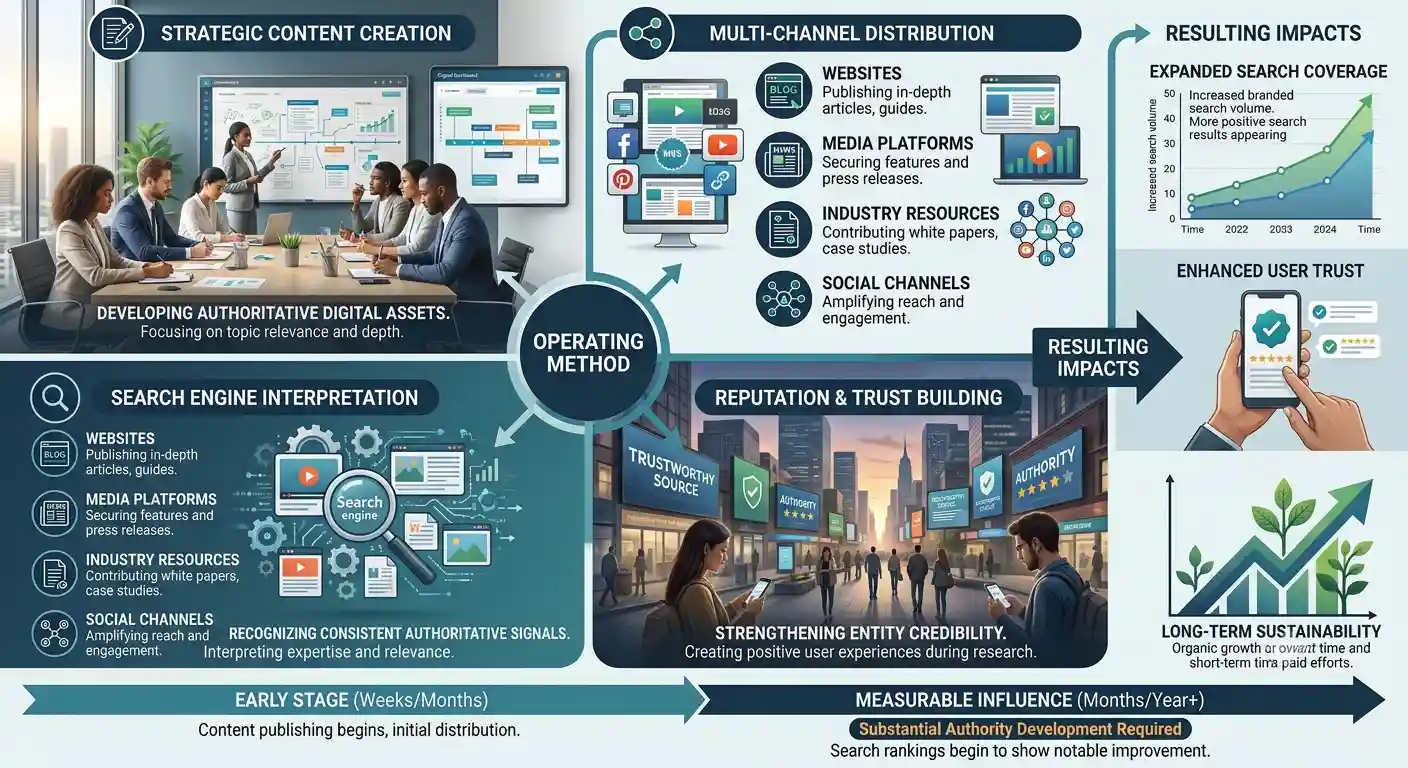
Ultimately, reputation management requires a clear separation between search visibility, information quality and customer trust. A change in one does not automatically prove a change in the others. Businesses that measure these outcomes independently gain a more accurate understanding of which interventions resolve problems, which merely alter content exposure and which require further attention. This evidence-led approach provides a defensible basis for managing Google Q&A and the wider digital reputation environment.
How can managing your Google Q&A section protect your business reputation?
Managing your Google Q&A section helps protect business reputation by ensuring customers receive accurate, relevant information about your services, policies and operations. Regular monitoring and clear responses reduce confusion and support customer trust in your Google Business Profile.
Can you remove negative questions from Google Q&A?
Negative questions cannot generally be removed simply because they criticise a business. Content that appears to violate Google’s policies can be reported for review, but removal depends on Google’s assessment of the reported material.
How does Google Q&A affect customer trust and business credibility?
Google Q&A influences customer perception by making questions and answers about a business accessible during the research process. Accurate responses strengthen information consistency, while unanswered questions or misleading answers can create uncertainty about business credibility.
What is the difference between Google Q&A management and Google Reviews management?
Google Q&A management focuses on questions and answers about a business, whereas Google Reviews management focuses on customer ratings, written feedback and review-related concerns. Both contribute to online reputation, but each requires different monitoring, response and policy-compliance methods.
How often should businesses monitor their Google Q&A section?
Businesses benefit from checking their Google Business Profile regularly and reviewing it promptly when customer questions or reputation concerns arise. Monitoring frequency depends on customer activity, business changes and reputational risk, while profile feature availability varies over time.