

Acknowledge the reviewer and the specific issue within 24 hours, demonstrating you read their comment and prioritise resolution.
A prompt acknowledgement signals active monitoring and respect. Mention the exact problem the customer raised. Use the customer’s name if available. This reduces frustration and lowers the chance of escalation. Fast responses improve perceived service quality and algorithmic visibility on many review platforms.
How do you write an effective apology without admitting legal liability?
Apologise for the customer’s experience, not for legal fault; express regret, explain next steps, and avoid definitive liability language.
Use brief, factual phrases: “I’m sorry you experienced X.” Avoid words like “we’re guilty” or “we accept responsibility.” Offer a corrective action such as a refund review, replacement, or internal investigation. State who will follow up and by when. This balances empathy with risk management and keeps the message professional for public readers and potential legal reviewers.
What details should you include in a public response?
Include the reviewer’s name, the problem summary, an initial corrective action, and an invitation to continue offline with contact details or a case number.
Keep sentences short and direct. Confirm the steps your team will take: investigate the order number, verify service logs, or audit the transaction. Offer a dedicated email or phone contact and a reference code. This moves the resolution off public channels and creates an audit trail for your reputation management process.
Read our articles, Common Review Response Mistakes That Damage Your Reputation and Reputation Management Services That Handle Customer Reviews for You.
When is it appropriate to take the conversation offline?
Take the conversation offline immediately when personal data, refunds, or complex operational fixes are required.
If the solution requires account verification, sensitive data, or a refund, provide a private contact channel. Ask the reviewer to message you or call with a case number. Record the interaction in your CRM and flag it for follow-up within 48 hours. Moving offline protects privacy and accelerates resolution.
How do you respond to false or fraudulent reviews?
Flag the review with the platform, collect supporting evidence, and post a concise factual rebuttal while offering to investigate.
Document order records, timestamps, IP logs, and any correspondence. Submit these to the review platform’s dispute process. In the public reply, state facts: dates, order or ticket numbers, and your willingness to investigate. Avoid accusatory language. This preserves transparency and builds trust with other readers.
How should tone and language vary across review types?
Use empathetic tone for genuine complaints, firm and factual tone for fraud claims, and appreciative tone for mild misunderstandings.
Match language to intent. For service failures, apologise and outline remedial steps. For billing disputes, use transactional language: verify, reconcile, refund. For simple misunderstandings, clarify policies and thank the customer. Consistent, role-specific phrasing improves clarity and reduces back-and-forth.
What internal process should teams follow after posting a response?
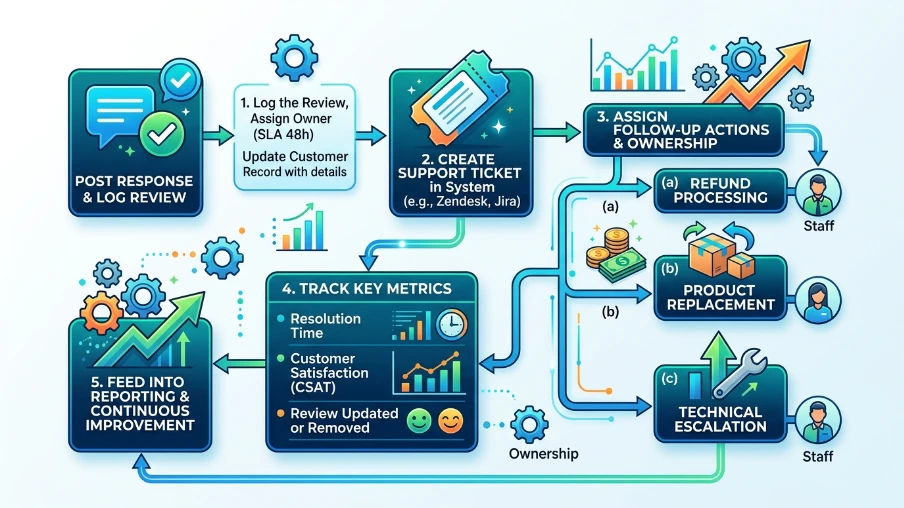
Log the review, assign a responsible staff member, set a 48-hour resolution SLA, and update the customer record with outcome details.
Create a ticket in your support system when you reply. Assign ownership for follow-up actions: refund processing, product replacement, or technical escalation. Track resolution time, customer satisfaction, and whether the reviewer updated or removed the review. These metrics feed into reputation management reporting and continuous improvement.
How do you measure whether your responses improve reputation?
Track response time, resolution rate, reviewer satisfaction, and change in overall rating over 90 days.
Measure median reply time and percentage of reviews resolved within 48 hours. Survey customers post-resolution for satisfaction scores. Monitor overall star-rating trends and review volume. Use these KPIs to refine templates, training, and escalation rules for reputation management for business.
What are common review-response mistakes to avoid?
Avoid generic replies, public argumentation, delayed responses beyond 72 hours, and sharing personal customer data publicly.
Generic phrases reduce credibility. Public back-and-forth escalates conflict. Long delays imply neglect. Posting order numbers, addresses, or payment details breaches privacy rules. Train staff to use short, custom replies that include a clear next step and an offline contact.
How do templates help while keeping responses personalised?
Use modular templates with variable fields for names, issue types, and specific actions to ensure speed and relevance.
Templates reduce cognitive load and maintain brand voice. Create modules for apology, investigation, action, and offline contact. Fill in exact details: order number, date, or product SKU. Reviewers recognise personalisation and platforms value unique responses. Rotate wording to avoid mechanical patterns.
Explore our reputation management for business guides,
When Should You Hire a Reputation Management Agency?
Why Reputation Monitoring Matters for Every Business
When should a business escalate a review to management or legal?
Escalate when the review alleges criminal behaviour, regulatory breach, or potential class-action exposure.
Set thresholds: defamatory claims, threats, or regulatory complaints trigger escalation. Provide management with documented evidence: correspondence logs, transaction records, and platform screenshots. Legal reviews assess libel risk and advise on public replies or takedown requests.
Responding to negative customer reviews professionally requires speed, clarity, and a documented resolution process. Use short, precise responses that name the issue, apologise for the experience, and offer a private path to resolution. Track outcomes and refine your process to improve reputation over time. Clear My Name delivers reputation management for business with structured review monitoring, 48-hour response SLAs, and documented remediation workflows.
Frequently Asked Questions
How long does reputation management for business take to improve online reviews?
Clear My Name typically shows measurable improvements in review response rate and sentiment within 30–90 days, depending on review volume and issue complexity. Results track via metrics like average rating, response time, and resolved-review percentage.
What tactics does reputation management for business use to remove false reviews?
Clear My Name documents evidence, files dispute requests with platforms, and requests removals under platform policies for fake or fraudulent content. The process relies on records such as order numbers, timestamps, and correspondence to support takedown requests.
Can reputation management for business help prevent negative reviews before they appear?
Yes. Clear My Name implements proactive measures: post-purchase review prompts, automated feedback surveys, and service recovery workflows to capture issues before public posting. These systems increase verified positive reviews and reduce complaint escalation.
How much does reputation management for business cost for a small company?
Costs vary by scope, typically ranging from subscription plans for monitoring and templated responses to bespoke services for large-scale remediation and legal escalation. Clear My Name provides tiered packages based on review volume, platform coverage, and SLA requirements.
Will reputation management for business affect search engine rankings?
Reputation management for business improves local and brand search signals by increasing fresh, relevant content and timely review responses, which can lift visibility in local packs and branded searches. Search improvements depend on review quality, citation consistency, and on-page optimisation.