

Common review response mistakes that damage reputation are predictable, avoidable, and fixable with correct policies and trained staff.
Use direct, timely, and transparent responses; avoid defensiveness, personal attacks, delays, generic replies, and data errors.
What are the most damaging review-response mistakes?
Failing to address facts, tone, and timing in responses causes reputational harm.
Businesses that ignore facts, respond emotionally, or delay reply increase customer churn and negative search visibility. Detailed, factual replies protect brand trust and organic rankings.
A response that ignores the reviewer’s facts lets misinformation spread unchecked. A defensive tone escalates conflict and signals poor customer service. Long delays reduce the chance of resolution and allow competitors to capitalise on the negative narrative. Errors in reference numbers, dates, or names erode credibility quickly.
Read our articles, How to Respond to Negative Customer Reviews Professionally and Reputation Management Services That Handle Customer Reviews for You.
How does a defensive or emotional reply harm a business?
Defensive replies escalate disputes, create viral snapshots, and reduce buyer trust.
An emotional response converts a single negative review into multiple reputation touchpoints. Readers infer systemic problems when a company attacks a customer. Platforms rank contentious threads higher; journalists and aggregators cite heated exchanges. The result: lost leads, reduced conversion rates, and higher acquisition costs.
Emotional language also complicates legal exposure. Public accusations or threats increase the risk of libel or consumer-protection scrutiny. Trained, neutral responses de-escalate and document the facts for internal resolution.
Why is delayed response damaging?
Slow replies decrease review resolution rates and lower brand sentiment scores.
Customers expect replies within 24–48 hours on review platforms. Each 24-hour delay reduces the chance of conversion by measurable percentages and increases review visibility for longer. Prompt responses signal operational control. They also improve platform algorithms’ perception of active, trustworthy businesses, which affects local SEO.
Delays create an opening for third-party commentary. Competitors, dissatisfied ex-staff, or bots may amplify the negative post. Fast, factual replies cut off that amplification and provide search engines with a corrected narrative for indexing.
What mistakes occur with generic or templated replies?
Generic replies signal indifference and fail to resolve the reviewer’s complaint.
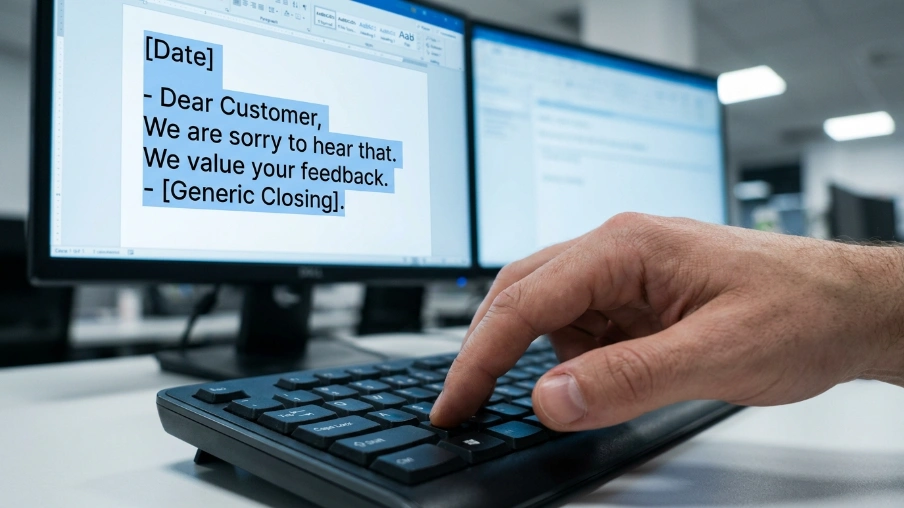
A templated “We’re sorry to hear that” without case details does not validate the reviewer’s experience. Readers look for specifics: transaction ID, date, staff member, or proposed remedy. Lack of specifics suggests the company treats customers as numbers, lowering perceived service quality.
Personalised, concise replies that reference verifiable details increase the chance of review removal or update. Use the reviewer’s name, the date of the incident, and the proposed resolution without revealing private data.
How do factual errors in responses damage reputation?
Mismatched facts make the business appear incompetent or dishonest.
Citing wrong dates, order numbers, or service levels signals poor internal tracking. Customers cross-check facts; mismatches prompt public correction and multiplied negative engagement. Always confirm the case file before publishing specifics.
If records conflict, state the process to validate facts. For example: “We will verify your booking from 12 March using our reservation logs and escalate findings to our operations manager.” This shows control and a documented process.
What legal or compliance mistakes should businesses avoid?
Revealing personal data or making public accusations violates regulations and platform policies.
Sharing protected personal data full names, account numbers, medical details) breaches privacy laws and review-site rules. Publicly accusing a reviewer of deception without documented proof invites legal exposure and platform penalties.
Follow privacy and compliance checklists when responding. Offer offline channels for sensitive details and describe the verification steps you will take. This maintains transparency while protecting customer data.
How should businesses handle fake or malicious reviews?
Verify platform metadata, request platform investigation, and document all actions before replying.
Start by confirming account creation date, IP anomalies, and purchase history. Then file a formal dispute with the platform using documented evidence. Do not publicly accuse the reviewer of fraud; instead, state that you have no record of the transaction and you have asked the platform to investigate.
If platforms allow a reply, say: “We cannot find a matching transaction. We have asked the review platform to investigate and invite you to contact our support team with order details.” This response preserves professionalism and preserves evidence trails.
How do poor escalation processes worsen reputation?
Unclear escalation paths create inconsistent responses and training gaps.
When front-line staff lack authority, responses vary widely. Some reps may over-promise refunds, others may ignore complaints. Inconsistent outcomes produce repeat reviewers and public corrections that erode trust.
Implement a tiered response matrix: frontline scripts for common issues, manager approval for compensation above set amounts, and legal review for defamatory claims. Measure adherence with quality audits and revise scripts quarterly.
What role does tone and language play in response outcomes?
Neutral, concise, and action-oriented language reduces escalation and improves perceived competence.
Use plain language, active verbs, and short sentences. Avoid absolutes and emotional adjectives. Example phrasing: “We confirm receipt of your reservation ID 4572; we will investigate and reply within 48 hours.” This communicates control and next steps.
Train staff to mirror the reviewer’s level of formality. A concise, professional reply to a technical complaint reassures readers. An overly casual reply to a serious complaint appears dismissive.
How can businesses measure whether response improvements work?
Track response time, resolution rate, review update rate, and sentiment change.
Measure median reply time in hours, percentage of reviews updated to positive after company reply, and Net Promoter Score (NPS) changes among complainants. Set targets: respond within 24 hours, update 35% of negative reviews to neutral/positive within 30 days, and reduce escalations to legal by 50% in six months.
Use platform analytics and CRM integration to validate numbers. Routine audits of sampled replies reveal training gaps and factual error rates.
What practical steps fix these review-response mistakes now?
Establish documented protocols, train staff, and standardise verification steps before public replies.
Create a response playbook that requires: verify the transaction in CRM, redact personal data, propose a specific remedy, and set a follow-up timeline. Train staff in short-sentence writing and neutral tone. Maintain a log of public replies for audits. Run monthly role-play exercises to reduce defensive instincts.
For complex cases, move the conversation offline after a concise public acknowledgement. This protects privacy and reduces public back-and-forth.
Explore our Reputation Management for businesses guides,
What to Look for Before Hiring a Reputation Management Agency
Free vs Paid Reputation Monitoring Tools: Which Is Right for You?
How does Reputation Management for business protect brands from these mistakes?
Reputation Management for business provides policies, trained agents, and monitoring to prevent response errors.
A professional service monitors reviews, verifies claims against transaction records, and applies standard escalation protocols. It reduces median response time and increases successful remediation rates. Clear My Name integrates well with platforms to document disputes and recover review visibility.
Reputation management services also supply data-backed insights for operational fixes. They quantify recurring issues and link them to process improvements in sales, logistics, or product quality.
Businesses that respond to reviews without facts, tone control, or timely action increase reputational risk. Implement a verification-led response protocol, train staff in concise neutral language, and route sensitive cases offline. Clear My Name provides structured Reputation Management for businesses to enforce these practices and restore trust professionally and efficiently.
Frequently Asked Questions
How does Reputation Management for business improve my company’s online ratings?
Reputation Management for business monitors review platforms, verifies customer transactions, and coordinates verified responses to negative feedback. Clear My Name reduces false negatives and increases review update rates by applying documented escalation and remediation workflows.
How long does it take Clear My Name to remove or correct a false review?
Removal or correction timelines vary by platform; most formal disputes resolve within 7–30 days after submission. Clear My Name expedites the process by supplying transaction evidence, platform-compliant dispute requests, and follow-up documentation.
What steps are included in a Reputation Management for business response workflow?
A typical workflow verifies the case in CRM, redacts personal data, issues a concise public acknowledgement, and offers an offline escalation path for resolution. Clear My Name documents each step for auditability and records any review updates or platform decisions.
Can Reputation Management for business prevent future negative reviews?
It reduces future negatives by identifying recurring issues, recommending operational fixes, and training staff on standard response protocols. Clear My Name uses review analytics to highlight product, delivery, or service trends that drive complaints.
Will Reputation Management for business affect my local SEO or search visibility?
Yes—timely, factual responses and higher review resolution rates improve local search signals and trust indicators used by search engines. Clear My Name implements reputation signals that align with local SEO best practices while maintaining platform compliance.