

London finance recruitment operates within a search environment where salary information, recruiter profiles, employer references and candidate feedback contribute to online credibility. Reputation management is the structured process of monitoring, interpreting and influencing the information associated with an individual or organisation across digital channels.
Online reputation refers to the combined perception created by indexed information across search engines, websites, review platforms, professional profiles and third-party sources. For finance recruiters, this information forms part of the entity signals that candidates evaluate before deciding whether to engage with a recruitment firm or share professional information.
How does online reputation influence finance recruitment in London?
Online reputation influences finance recruitment by shaping the information candidates encounter when they search for recruiters, agencies and specialist recruitment firms. Reputation management is therefore connected to the consistency, accuracy and authority of information associated with a recruitment entity.
A recruiter can have information distributed across an official website, LinkedIn profile, industry publication, review platform, company directory and employer-facing resource. Search engines analyse these sources as separate content entities while users interpret them as parts of one broader reputation. Consistency between business names, specialist sectors, locations, professional credentials and published expertise strengthens entity clarity. Contradictory information creates additional interpretation requirements for both users and search systems.
The relationship between salary information and reputation is also significant. A salary guide that accurately reflects banking, private equity and fintech recruitment markets establishes topical relevance around a specific finance sector. When supporting information demonstrates expertise and maintains factual consistency, the content contributes to the wider digital footprint of the publishing entity.
What reputation signals do finance candidates evaluate before contacting a recruiter?
Finance candidates evaluate reputation signals through the information available across search results, professional networks, recruitment websites and third-party references. These signals provide contextual evidence about a recruiter’s sector expertise, professional identity and relationship with the finance employment market.
Search visibility represents one layer of this evaluation. A recruiter appearing for relevant searches such as investment banking recruitment, private equity careers or fintech vacancies has greater topical visibility for those queries. The ranking position itself does not establish credibility, but the surrounding information affects how candidates interpret the entity represented in the SERP.
Authority signals form another layer. Industry publications, professional profiles, company information and references from recognised sources provide external context around an entity. Search engines use relationships between entities, documents and topics to understand relevance, while candidates use the same information environment to assess whether a recruiter appears established and relevant to their career field.
How do search engines interpret recruiter credibility?
Search engines interpret recruiter credibility through relationships between content, entities, authorship, references and topical relevance rather than through a single reputation score. Entity perception develops from the consistency and contextual strength of information associated with a recruiter across indexed sources.
A recruitment firm’s website provides first-party information about its services, sectors and expertise. Third-party publications, professional profiles and external references provide additional information that exists outside the firm’s direct control. When these sources describe compatible facts, search systems gain stronger contextual signals about the entity and its subject areas.
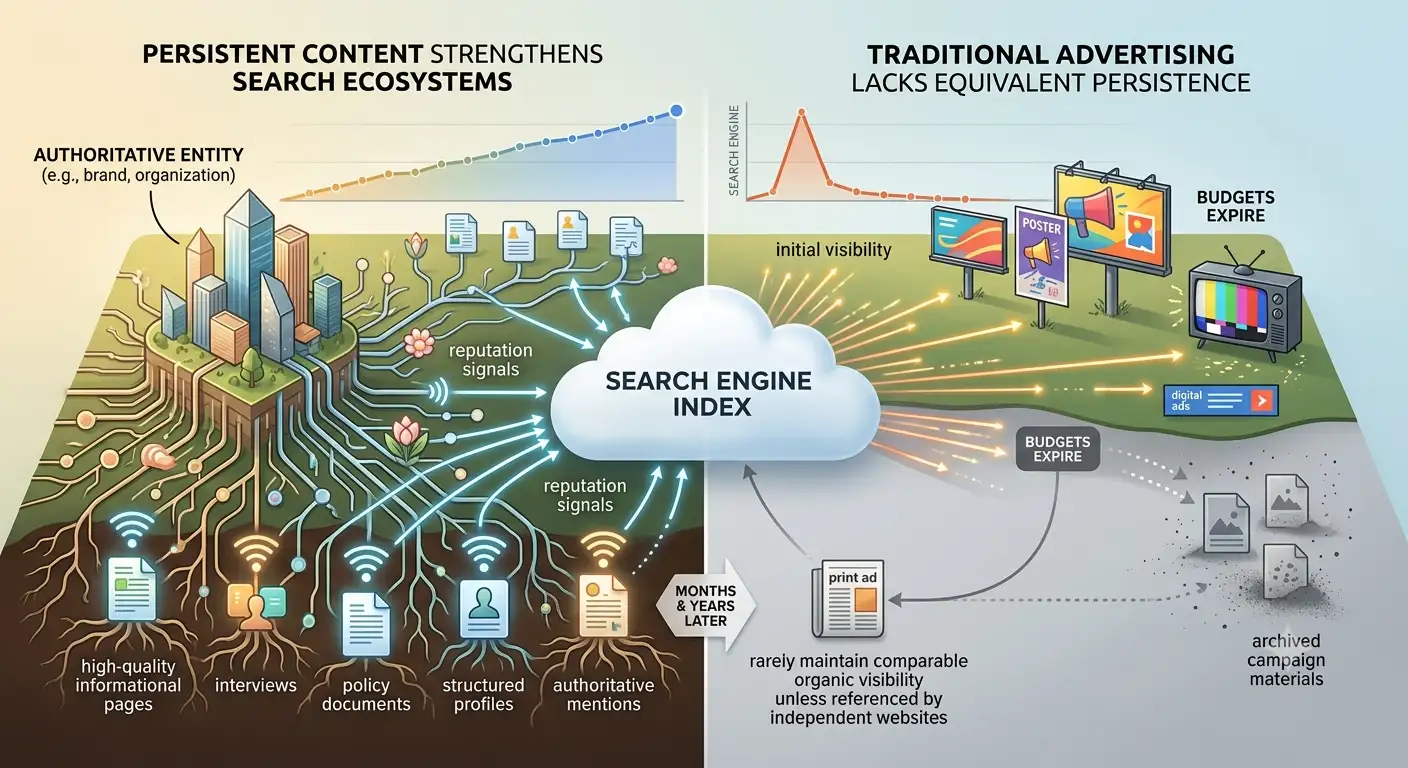
Content indexing determines which information becomes available for retrieval in search results. Indexed pages can represent the recruiter directly, describe the recruitment market or discuss specialist areas such as investment banking and private equity. The resulting search ecosystem contains multiple documents that collectively influence the information environment surrounding the recruiter.
How does salary content affect recruiter entity perception?
Salary content affects entity perception by associating a recruiter or publisher with a defined subject area and set of employment-related entities. A detailed salary guide creates topical relationships between recruitment, job functions, financial sectors, locations, seniority levels and compensation data.
For example, information about London investment banking salaries connects the recruitment topic with banking roles, compensation expectations and the London employment market. Private equity salary information creates a separate relationship involving investment firms, deal professionals and specialist recruitment requirements. Fintech salary information introduces technology, financial services and emerging employment categories into the same broader search ecosystem.
The quality of the information also affects its usefulness. Salary claims require clear definitions around role type, seniority, compensation structure and market period. A page that distinguishes base salary from bonuses and separates banking, private equity and fintech roles provides a clearer information structure than a single undifferentiated salary figure.
How do reviews influence the reputation of finance recruiters?
Reviews influence recruiter reputation by providing user-generated information that search engines can associate with a business entity. Review signals include rating patterns, review volume, sentiment, recency and the textual context contained within individual reviews.
Search engines do not treat every review as an independent measure of organisational credibility. Review content exists within a wider information system containing the business profile, website, professional references and other indexed documents. Consistency between these sources provides additional context for interpreting the entity.
Sentiment analysis also affects how review content is understood at scale. Positive, negative or neutral language can identify recurring themes relating to communication, professionalism, candidate experience or recruitment processes. The presence of negative sentiment does not automatically establish that an organisation lacks credibility; it represents one information source within the broader reputation ecosystem.
Why does consistent information matter across recruiter profiles?
Consistent information matters because search engines and users need to connect information from different sources to the same entity accurately. Entity consistency reduces ambiguity between the recruitment firm’s name, website, professional profiles, industry references and other digital properties.
A recruiter operating in London’s finance market can have information distributed across company pages, social platforms, recruitment directories and publications. Differences in company names, sector descriptions, office locations or specialist services can weaken the clarity of these connections. Consistent information creates stronger relationships between the entity and its associated topics.
This principle also applies to salary-related content. If a recruiter publishes information about banking, private equity and fintech compensation, the terminology should correspond with the firm’s broader sector expertise. Clear topical relationships help search engines understand why the content belongs within the finance recruitment information environment.
How does third-party content affect recruiter search visibility?
Third-party content affects recruiter search visibility by introducing independent documents that reference or describe the recruitment entity. These documents can include industry publications, business directories, professional platforms, employment resources and specialist finance websites.
External references expand the digital footprint beyond information controlled directly by the recruiter. Search engines can analyse links and contextual relationships between entities, organisations, topics and documents. A reference that accurately identifies a recruiter and its specialist market creates a clearer relationship between the entity and that subject area.
Third-party information also affects candidate perception because users often encounter external sources before visiting an official website. Search results therefore operate as an information layer between the recruiter and the candidate. The overall SERP contains multiple sources, each contributing different evidence about the entity.
What role does content indexing play in recruiter reputation?

Content indexing determines which publicly accessible documents enter a search engine’s searchable information system. Reputation-related content therefore has an impact only when it is discoverable, indexable and relevant to the queries being evaluated.
An indexed recruitment profile can appear for searches associated with the firm’s name, services or specialist market. An indexed salary guide can create visibility around compensation-related searches. An indexed third-party article can introduce another interpretation of the same recruitment entity.
Indexing does not guarantee high rankings. Search engines evaluate relevance, quality, authority, content relationships and other ranking signals when determining which indexed documents appear for particular queries. Reputation analysis therefore requires a distinction between content existing online and content receiving meaningful search visibility.
How do candidates assess recruiter credibility through SERPs?
Candidates assess recruiter credibility by interpreting the combination of results displayed for searches involving a recruiter’s name, specialist sector or recruitment service. SERP evaluation involves reviewing the types of pages that appear, the entities referenced and the consistency of information across those sources.
A branded search can return an official website, professional profile, review platform, directory listing and industry reference within the same results environment. Each result provides a different type of information. The candidate forms an overall understanding by comparing these sources rather than relying exclusively on one page.
This process makes search perception different from conventional brand visibility. Visibility determines whether information is encountered, while reputation relates to how the information is interpreted in context. A recruiter with strong visibility but inconsistent information presents a different search environment from one with consistent and clearly structured entity information.
How can finance recruitment content strengthen online credibility?
Finance recruitment content strengthens online credibility when it provides accurate, clearly structured and contextually relevant information connected to identifiable topics. Content becomes part of the reputation system when search engines index it and users associate it with the entity publishing or referenced within it.
A salary guide can establish relationships between London recruitment, banking, private equity, fintech, job functions and compensation. Supporting content can explain recruitment processes, career requirements, market terminology and employment trends. Each document adds another topical relationship to the broader entity graph.
The relationship between information quality and reputation is therefore cumulative rather than isolated. A single article does not define an entity’s reputation, while a coherent collection of relevant documents creates a clearer information environment. This is particularly important for candidates researching recruiters before disclosing professional details or entering recruitment processes.
Dive Deeper With Our Expert Guides:
How Does Finance Recruitment Work in London? Front, Middle, and Back Office
Project Manager Salary UK 2026: Day Rates and Permanent Pay by Sector
How do City candidates evaluate finance recruiters before sharing their CV?
City candidates evaluate finance recruiters by examining available evidence about professional identity, specialist expertise, online credibility and candidate experience. The evaluation often begins with search results and extends across professional networks, recruiter websites, reviews and third-party references.
The process connects directly with How Do City Candidates Vet Finance Recruiters Before Sharing Their CV? because CV sharing involves an information-trust decision as well as a recruitment decision. Candidates can examine whether the recruiter’s published sector expertise aligns with the roles being discussed and whether information across different sources remains consistent.
Search visibility provides the initial information set, while entity credibility provides the broader context. A candidate can compare company information, specialist finance content, professional profiles and independent references to construct a more complete understanding of the recruiter. This demonstrates how reputation operates as an information system rather than as a single numerical measurement.
What does reputation management mean within finance recruitment?
Reputation management refers to the systematic monitoring, analysis and maintenance of information associated with an entity across digital channels. Within finance recruitment, it encompasses the relationship between search visibility, indexed content, reviews, third-party references, professional profiles and entity consistency.
The process begins with understanding what information exists and how that information appears in search ecosystems. Content analysis identifies the subjects, claims and entities connected to the recruiter. SERP evaluation then shows which information receives visibility for relevant branded and non-branded searches.
Reputation management therefore operates at the intersection of information accuracy, search visibility and entity perception. It does not mean creating artificial signals or controlling every external opinion. Instead, it concerns understanding how information is created, indexed, connected and interpreted across the wider digital environment.
How does the search ecosystem shape finance recruiter reputation?
Finance recruiter reputation develops through the interaction of first-party content, reviews, professional profiles, third-party references and search engine indexing. Search engines organise these information sources through relevance, entity relationships and ranking systems, while candidates interpret the resulting SERPs as evidence about professional credibility.
London banking, private equity and fintech recruitment exists within a specialised information ecosystem where salary data and sector expertise create important topical relationships. Accurate content, consistent entity information and credible external references help establish a clearer digital footprint.
Understanding these mechanisms separates reputation analysis from promotional activity. Online credibility is formed through the information environment surrounding an entity, while search visibility determines which parts of that environment candidates encounter. Analysing both elements provides a factual framework for understanding how finance recruitment reputations develop across modern search ecosystems.
What is the average finance recruitment salary in London in 2026?
Finance recruitment salaries in London vary by role, seniority, sector and compensation structure. Banking, private equity and fintech positions have different salary and bonus patterns, so salary comparisons need to account for both base pay and variable compensation.
How does a finance recruiter’s online reputation affect candidates?
A finance recruiter’s online reputation influences the information candidates encounter when researching an agency before sharing their CV. Reviews, professional profiles, search visibility, third-party references and published sector expertise collectively contribute to recruiter credibility.
What do City candidates look for when choosing a finance recruiter?
City candidates commonly examine specialist finance expertise, professional credentials, candidate feedback and the consistency of information across online sources. Search results and third-party references provide additional reputation signals when candidates evaluate a recruiter.
Why are reviews important for finance recruitment agencies?
Reviews provide user-generated information about candidate experiences and contribute to the wider online reputation of a recruitment agency. Review sentiment, relevance and consistency with other business information can influence how the agency is perceived in search results.
How can finance recruiters build online credibility?
Finance recruiters can build online credibility by maintaining accurate company information, publishing relevant sector expertise and ensuring professional profiles remain consistent across platforms. Clear information about banking, private equity and fintech recruitment also strengthens topical relevance and entity credibility.