
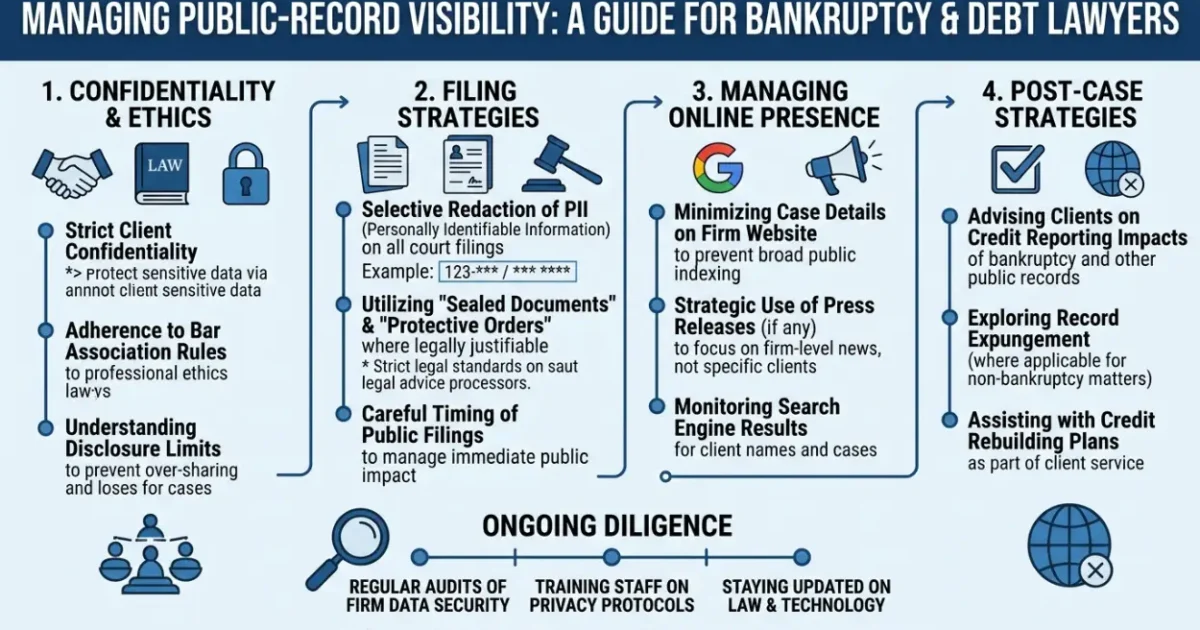
Reputation management strategies differ based on whether the objective is to remove problematic information, improve the visibility of credible information, or balance both approaches. Online reputation control methods are evaluated through search visibility, reputation signals, entity credibility, SERP composition, and the sustainability of resulting changes.
How Do Public-Record Visibility Strategies Compare?
Public-record visibility strategies generally fall into three categories: removal or correction, content enhancement, and broader search-result balancing. Removal focuses on addressing information that is unlawful, inaccurate, outdated, or eligible for restriction under applicable rules, while content enhancement develops authoritative information that provides stronger contextual signals. Search-result balancing operates by improving the visibility and relevance of credible pages without altering an underlying factual record. Each approach addresses a different mechanism within the search ecosystem. Comparing them requires evaluating legitimacy, ranking influence, scalability, risk exposure, and long-term sustainability rather than treating visibility reduction as a single technical outcome.
Removal or correction has the strongest direct effect when the underlying information qualifies for lawful amendment or removal. Its mechanism operates at the source level because the original document is changed, restricted, or de-indexed under an applicable process. Content enhancement operates at the search-environment level by developing relevant, authoritative information that competes for visibility. Balancing operates across the broader SERP by increasing the presence of credible entity information around the same search query. The distinction matters because search engines do not treat source removal and ranking competition as equivalent mechanisms.
Is Content Creation More Sustainable Than Public-Record Removal?
Content creation generally provides greater long-term scalability when the objective is to strengthen an entity’s broader information environment rather than alter a factual public record. Content enhancement operates by publishing relevant, accurate, and authoritative material that establishes additional reputation signals around the lawyer or debt practice. Professional biographies, legal expertise pages, educational resources, publications, interviews, and structured profiles can contribute contextual information to the entity. These assets remain available for indexing and can continue participating in search ranking dynamics after publication. Their effectiveness therefore depends on relevance, quality, authority, internal relationships, and continued maintenance.
Public-record removal has a different sustainability profile because its effectiveness depends on the eligibility of the source for lawful removal, correction, restriction, or de-indexing. A factual court or insolvency record generally operates under different rules from editorial content, user-generated material, or inaccurate third-party information. Attempting to treat every negative-looking result as removable creates unnecessary risk and fails to account for source-level constraints. Content enhancement avoids that limitation by addressing the surrounding search environment rather than attempting to eliminate factual information. The trade-off is that enhancement requires sustained publishing, optimisation, authority development, and monitoring.
How Does Content Suppression Compare With Content Enhancement?
Content suppression and content enhancement operate through different mechanisms and therefore produce different risk profiles. Content suppression refers to reducing the visibility of a target page through legitimate ranking, indexing, correction, removal, or platform-specific processes. Content enhancement focuses on strengthening relevant pages so that credible information gains greater search visibility relative to competing results. Suppression addresses the position or availability of a specific information source, while enhancement changes the composition of the wider SERP. A robust evaluation therefore distinguishes between changing the target result and changing the competitive environment surrounding it.
Suppression has greater relevance when a page violates a platform rule, contains demonstrably inaccurate information, exposes restricted personal data, or qualifies for a recognised legal process. Enhancement has broader applicability because accurate and legitimate content can be developed without requiring the removal of a factual source. However, enhancement does not erase the underlying record or guarantee a particular ranking position. Search ranking influence remains dependent on relevance, authority, competition, query intent, and technical accessibility. The strategic distinction is therefore between source-level intervention and search-level competition.
Dive Deeper With Our Expert Guides:
How Real Estate Attorneys Can Turn Online Research Into Consultations
Credibility-Building Strategies for Tax and Financial Law Practices
How Do Organic and Reactive Reputation Approaches Differ?
Organic reputation management develops reputation signals before a specific search-result problem becomes dominant, while reactive management responds after problematic information gains visibility. Organic approaches operate through consistent publication, professional profiles, authoritative references, accurate entity information, and ongoing digital footprint development. Reactive approaches begin with an identified issue, such as a public record becoming prominent in branded searches or inaccurate information entering the indexed ecosystem. The organic model builds search equity progressively, whereas the reactive model concentrates resources around an existing visibility problem. Their effectiveness therefore depends partly on whether the search environment is being developed proactively or corrected after disruption.
Reactive strategies provide greater precision because they begin with measurable evidence from current SERP composition and source-level analysis. A visibility audit can identify the target page, ranking position, source authority, query relationship, indexing status, and competing results. Organic strategies provide greater continuity because they establish authoritative information across the entity before an individual issue dominates search perception. Combining the two approaches creates a framework in which existing problems are evaluated while the broader information environment continues to develop. The comparison therefore centres on timing, resource allocation, risk exposure, and the maturity of the entity’s existing digital footprint.
Which Approach Provides Greater Control Over SERP Composition?

Content enhancement generally provides broader control over SERP composition because it introduces additional relevant assets into the search ecosystem. SERP composition refers to the combination of pages, domains, content formats, features, and information types displayed for a specific query. Developing authoritative content increases the number of legitimate pages that can represent an entity across informational and branded searches. Search engines then evaluate those pages according to relevance, authority, content quality, and other ranking signals. The resulting influence is indirect because no publisher controls the final ordering of organic search results.
Removal provides more direct control when an eligible page is successfully removed, corrected, or de-indexed through a legitimate process. That mechanism changes the available document set rather than simply competing against it. However, it remains constrained by legal, platform, editorial, and source-specific requirements. Enhancement has greater scalability because additional content can address different aspects of an entity’s expertise and identity. The comparative limitation is that stronger content does not guarantee disappearance of an authoritative public record.
How Do Search Engines Evaluate Reputation Signals From Public Records?
Search engines evaluate public-record reputation signals through relationships between entities, documents, queries, source characteristics, and relevance. A public record containing a lawyer’s name provides structured information that can become associated with the individual when the document is indexed. Search systems then assess the document in relation to searches involving the identified entity and relevant legal concepts. Authority, topical relevance, freshness, accessibility, and contextual relationships contribute to how the document participates in search ranking. The system does not simply classify the record as positive or negative.
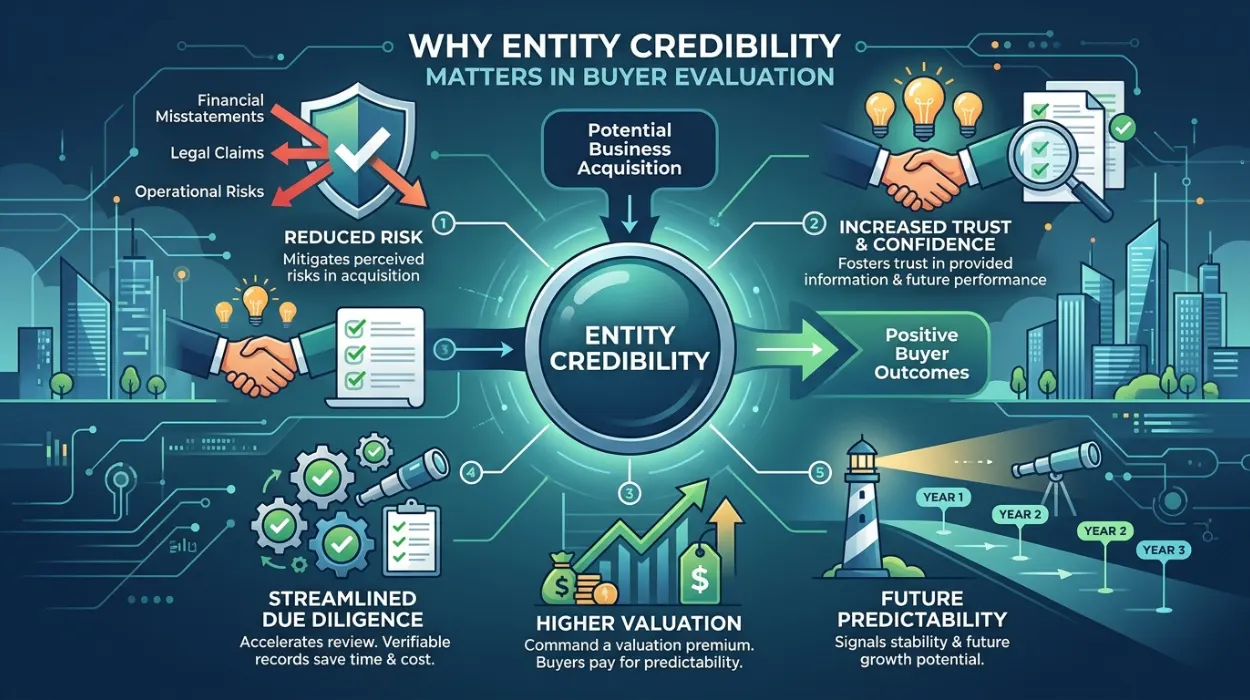
Entity credibility develops from the wider collection of information available about the same person or organisation. Professional profiles, legal publications, reviews, directories, institutional references, and public records each provide different forms of information. Search engines process these sources according to their individual characteristics while users interpret their combined visibility as an overall representation. This creates an important distinction between algorithmic ranking and human perception. A strategy therefore requires analysis of both search ranking influence and the way visible information affects entity interpretation.
How Do Short-Term and Long-Term Reputation Strategies Compare?
Short-term strategies focus on reducing an immediate visibility problem, while long-term strategies focus on strengthening the underlying information ecosystem. Short-term interventions include correcting inaccurate information, addressing eligible removals, improving existing pages, and responding to newly indexed content. Long-term programmes involve authoritative content development, professional profile consistency, digital footprint optimisation, review monitoring, and continuous SERP analysis. Short-term methods can address a defined issue efficiently when the source qualifies for direct intervention. Long-term methods create broader resilience by increasing the depth and consistency of credible entity information.
The main difference concerns sustainability rather than speed alone. A short-term intervention can lose its effect if new content emerges, search algorithms change, or competing pages gain authority. A long-term approach distributes reputation signals across a wider set of relevant sources and content formats. This creates a stronger information architecture around the entity without depending on one ranking position. The trade-off involves ongoing resources, because sustainable visibility requires monitoring, maintenance, and content quality. Strategic evaluation therefore measures the durability of the information environment rather than focusing only on immediate SERP movement.
How Should Effectiveness Be Measured Across Reputation Management Methods?
Effectiveness is measured through changes in search visibility, SERP composition, source authority, reputation-signal distribution, and entity consistency. Ranking position alone provides an incomplete measurement because a single result does not represent the entire search ecosystem. A meaningful evaluation examines which pages appear, which sources dominate, how frequently public-record information appears, and whether authoritative professional information occupies relevant positions. It also evaluates whether the information landscape remains accurate and consistent across different branded and related queries. Measurement therefore connects technical search performance with broader perception indicators.
A structured evaluation framework can compare methods using four core dimensions:
- Measure visibility by tracking the ranking positions, search features, and frequency of public-record pages across defined branded queries.
- Evaluate authority by comparing the source quality, topical relevance, and institutional credibility of competing pages.
- Assess risk by identifying legal, factual, editorial, platform, and reputational constraints associated with each intervention.
- Monitor sustainability by measuring whether visibility changes persist as new content, competing pages, and search signals enter the ecosystem.
This framework separates temporary ranking movement from durable improvement in the information environment. It also prevents removal, suppression, and enhancement from being treated as interchangeable tactics.
How Does Risk Exposure Differ Between Removal and Enhancement?
Removal strategies carry greater procedural risk because they require a valid basis for changing or restricting an existing information source. The legitimacy of a request depends on the nature of the content, applicable law, platform policies, jurisdiction, and rights held by the relevant parties. Public records also require particular care because factual legal information has a different status from defamatory, inaccurate, or unlawfully published material. Enhancement strategies generally carry lower source-level intervention risk because they focus on publishing accurate information rather than changing another party’s record. Their primary risks instead involve content quality, duplication, over-optimisation, inconsistency, and unsustainable publishing practices.
Risk analysis therefore requires separating factual information from harmful or inaccurate interpretation. A bankruptcy filing can be an authentic public record while commentary surrounding that filing contains unsupported conclusions or incorrect claims. Treating both sources identically creates an inaccurate assessment of the available options. Source verification establishes what information exists, while contextual analysis determines how it affects entity perception. This distinction supports more defensible decisions about whether correction, removal, enhancement, or monitoring represents the appropriate mechanism.
How Can Public-Record Visibility Be Managed Without Distorting Factual Information?
Public-record visibility can be managed without distorting factual information by separating source accuracy from search-result prominence. The underlying record remains unchanged when it accurately documents a legitimate proceeding, while surrounding content provides additional context about the lawyer’s professional identity. Accurate biographies, legal expertise resources, professional publications, and authoritative profiles can strengthen the entity’s information structure without denying the existence of a public record. This approach operates through contextual completeness rather than factual alteration. It therefore aligns search visibility management with the principle that reputation control does not require rewriting legitimate historical information.
The same principle applies to reviews, articles, directories, and third-party references. Information that is inaccurate or unlawfully published belongs to a different evaluation category from information that is factual but potentially sensitive or reputation-relevant. Each source requires assessment according to its origin, accuracy, authority, indexing status, and relationship to the entity. A balanced strategy then determines whether correction, removal, suppression, enhancement, or monitoring fits the source. Public-Record Visibility for Your Debt Practice therefore represents an analytical objective centred on managing search visibility while preserving factual accuracy.
Which Reputation Strategy Offers the Strongest Long-Term Search Position?
No single method provides universal control because reputation systems operate through interconnected ranking, indexing, authority, and content signals. Removal is most directly effective when a source qualifies for a legitimate correction or restriction process. Enhancement provides broader scalability because authoritative content can expand the entity’s digital footprint and diversify reputation signals. Reactive approaches offer targeted intervention, while organic approaches create continuity and stronger baseline visibility. The strongest strategic evaluation therefore considers how each mechanism addresses a specific source and how it contributes to the wider SERP environment.
Long-term search position depends on the consistency and authority of the overall information ecosystem rather than one isolated tactic. A debt lawyer’s digital presence can contain public records, professional profiles, reviews, publications, directories, and educational resources, each contributing different signals. Search engines continuously reassess these documents as relevance, competition, content, and user behaviour change. Sustainable reputation management consequently requires ongoing analysis of entity credibility, search visibility, and sentiment distribution. The objective is not to erase factual information but to understand and manage how the complete information environment represents the entity.
Which Public-Record Visibility Approach Is Most Appropriate?
Public-record visibility strategies differ according to their mechanism, legitimacy, scalability, risk exposure, and expected duration. Removal and correction operate at the source level, while content enhancement and SERP balancing operate through the wider search ecosystem. Reactive methods address existing visibility problems, whereas organic methods build a stronger information environment over time. Effective evaluation measures SERP composition, reputation signals, authority, entity credibility, and sustainability rather than relying solely on ranking position. Understanding these differences allows public-record visibility to be analysed as a search-system problem involving factual information, content indexing, ranking influence, and professional perception.
How can bankruptcy public records affect a debt lawyer’s online reputation?
Bankruptcy public records can become reputation signals when they are indexed and appear in searches for a lawyer’s name. Their impact depends on search visibility, source authority, context, and the surrounding professional information.
Can bankruptcy records be removed from search results?
Removal depends on the nature of the record, its accuracy, applicable law, and search engine or platform policies. Accurate public records generally require a different approach from unlawful, inaccurate, or eligible content.
What is the difference between content suppression and content enhancement?
Content suppression focuses on reducing the visibility of a specific result through legitimate removal, correction, or search optimisation methods. Content enhancement strengthens authoritative pages so they provide stronger reputation signals within the SERP.
How do lawyers manage public-record visibility without hiding factual information?
Lawyers can analyse the source, indexing status, ranking position, and context of public records while developing accurate professional information around the entity. This approach manages search visibility without altering legitimate factual records.
What factors determine the effectiveness of public-record reputation management?
Effectiveness depends on search ranking influence, source authority, content relevance, SERP composition, entity credibility, and long-term sustainability. Monitoring these signals helps evaluate whether visibility changes create a more balanced digital footprint.