

Preparing social media for university or scholarship reviews involves evaluating public content, search visibility, entity credibility and the reputation signals associated with an applicant’s identity. Different reputation management strategies produce different effects because removal, content enhancement, profile optimisation and ongoing monitoring operate through separate mechanisms.
Reputation management strategies differ based on the reputation mechanism being addressed, while online reputation control methods are evaluated through their effect on SERP composition, trust signals, content visibility and long-term sustainability.
Which reputation management approach is most effective for university social media reviews?
The most effective approach depends on whether the objective involves removing problematic information, improving the surrounding information environment or controlling how an existing digital footprint is presented. Content removal targets the original source, while content enhancement introduces stronger or more relevant information that can influence search visibility around an individual’s name.
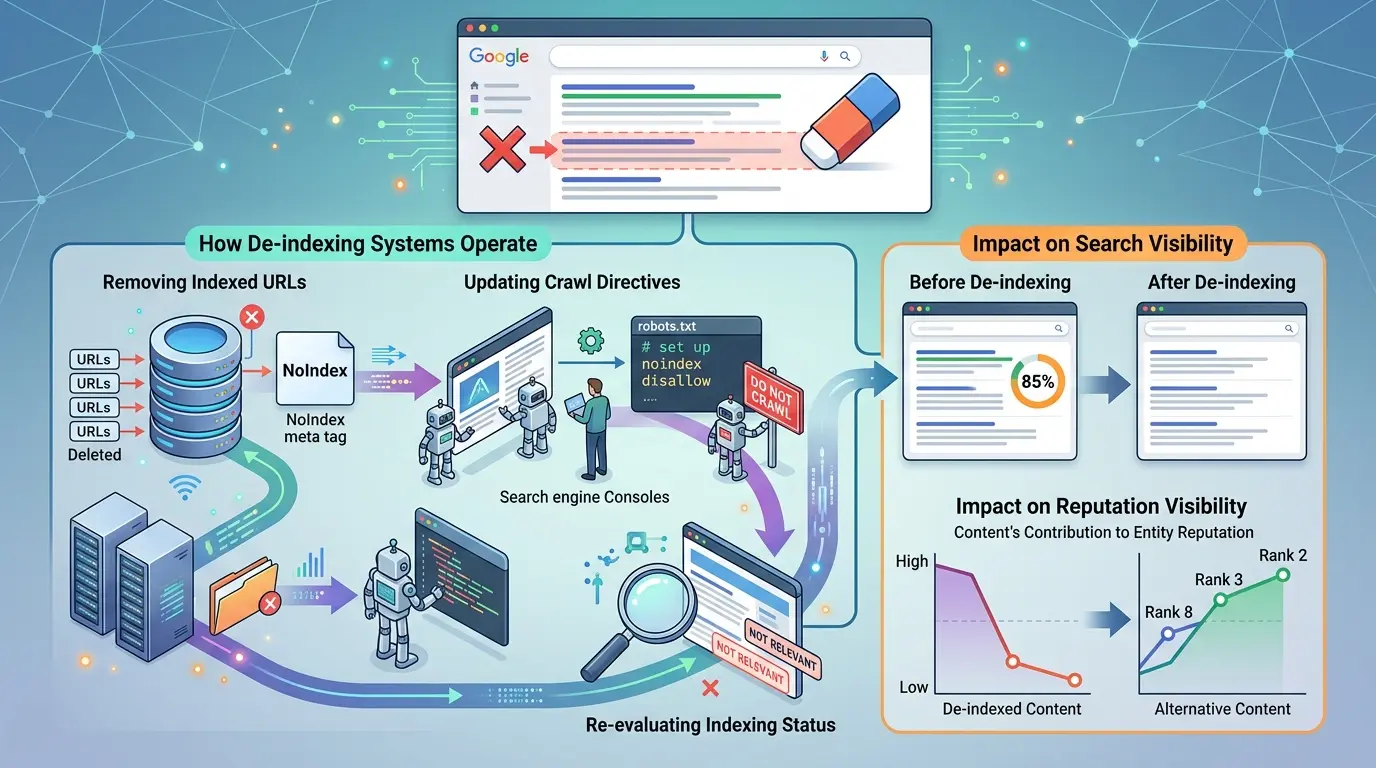
Removal operates by addressing content at its source, where a qualifying piece of information can potentially be deleted, restricted or de-indexed. This creates a direct change to the information environment because the original reputation signal is reduced or eliminated. Its effectiveness depends on the platform, ownership of the content, applicable policies and whether copies exist elsewhere.
Content enhancement operates differently by developing authoritative and relevant information that competes for search visibility. Professional profiles, academic pages, personal websites and credible publications can strengthen the surrounding entity structure. This approach does not eliminate an existing negative result but attempts to alter the composition of the SERP.
For university and scholarship research, the distinction is important because admissions-related searches frequently involve an individual’s name rather than a commercial brand query. Search engines therefore evaluate a mixture of social profiles, institutional references, professional information and third-party content when constructing results.
The appropriate evaluation therefore considers source control, search ranking influence, scalability, risk exposure and sustainability rather than treating one reputation technique as universally superior.
Is content removal more effective than content enhancement for applicant reputation?
Content removal provides a more direct intervention when an inaccurate, non-compliant or inappropriate piece of information qualifies for removal. Content enhancement provides broader control over the surrounding search environment but does not directly alter the original source.
Removal operates at the source level. When content is successfully removed and subsequently disappears from relevant indexes, the associated reputation signal loses one route to visibility. The effect is therefore relatively measurable because the intervention can be connected to a specific URL, profile, post or publication.
Content enhancement operates at the visibility level. New authoritative assets compete with existing results for search positions, creating changes in SERP composition rather than deleting the original information. The outcome depends on content quality, relevance, authority, indexing and the competitiveness of the name-based query.
The two approaches also differ in risk exposure. Removal requires a legitimate basis and depends on the platform or publisher accepting the request, whereas enhancement depends on creating and maintaining information that meets search and audience expectations.
For applicants, content removal is therefore more closely associated with source correction, while content enhancement is associated with search perception and information diversification. Evaluating the two requires separating the underlying reputation problem from the desired search outcome.
How does organic reputation management compare with reactive intervention?
Organic reputation management develops and maintains credible digital assets over time, while reactive intervention responds to a defined reputation issue after it becomes visible. The distinction concerns timing, purpose and the mechanism used to influence online perception.
Organic activity operates through continuous content development, profile consistency, professional publishing and structured digital identity signals. These assets can strengthen entity credibility by creating reliable references around an individual’s name before a specific reputation issue requires intervention.
Reactive intervention begins with an identified problem such as an inaccurate social post, harmful search result or disputed third-party reference. Its objective is to address a defined source or reduce the visibility of a specific reputation signal.
The principal advantage of organic activity is sustainability. A coherent digital footprint creates an established information structure that remains useful beyond a single admissions or scholarship review. Its limitation is that it does not directly resolve a problematic source.
Reactive intervention provides greater specificity because the strategy is tied to a particular reputation mechanism. Its limitation is that addressing one source does not automatically resolve duplicated, cached or independently published versions elsewhere.
A balanced evaluation therefore considers whether the reputation issue is structural or isolated. Structural issues benefit from broader digital footprint development, while source-specific problems require analysis of the original content and its distribution pathways.
Dive Deeper With Our Expert Guides:
What to Do Immediately After You’ve Been Doxxed
How to Push Down a Damaging Reddit or Forum Thread
Does content suppression work differently from content enhancement?
Content suppression and content enhancement influence SERP composition through different mechanisms. Suppression focuses on reducing the prominence of undesirable information, while enhancement focuses on increasing the visibility of relevant and credible information.
Suppression operates through competitive search visibility. New or existing authoritative pages can occupy positions that reduce the relative prominence of an unwanted result. The original content remains available, but its position within the search landscape changes.
Enhancement operates by creating stronger information assets around the target entity. These assets can include professional profiles, academic publications, institutional references and structured personal information. Their relevance and authority determine their ability to compete within search results.
The distinction becomes important when evaluating sustainability. Suppression can require ongoing content development because search rankings change as new information enters the index. Enhancement can also require maintenance, but its assets contribute positively to the broader digital footprint rather than existing solely to displace a specific result.
Neither approach changes the original source automatically. A suppressed result remains part of the underlying information ecosystem, while enhanced content adds new reputation signals around the entity.
The appropriate strategy therefore depends on whether the objective is to reduce visibility, strengthen credibility or address both mechanisms simultaneously.
How do different strategies influence SERP composition?

Different reputation strategies influence SERP composition by changing which information receives visibility for identity-related searches. Search engines construct results according to relevance, authority, query intent, content quality and other ranking signals rather than applying a single reputation score.
Content removal can reduce the number of reputation signals available for indexing when the original source disappears. This creates a direct change in the available information pool and can alter which results occupy visible positions.
Content enhancement expands the information pool by introducing additional pages and profiles that provide context around the entity. Stronger sources can receive search visibility and influence the balance between positive, neutral and negative information in the SERP.
Profile optimisation adds another layer by improving consistency between an individual’s name, professional identity, educational background and associated properties. Consistent entity information can help search systems connect relevant assets more accurately.
Search suppression combines elements of content enhancement and ranking competition. It seeks to increase the visibility of selected results while reducing the relative prominence of unwanted content.
SERP composition therefore provides a useful measurement framework. Instead of assessing reputation activity solely by the number of published pages, evaluation can examine which results appear, their positions, their source authority and the sentiment distribution visible for relevant queries.
Which approach provides better short-term results?
Reactive source-level intervention generally provides the clearest short-term result when a specific piece of content qualifies for removal and the responsible platform acts on the request. The intervention is closely connected to a defined source, making the initial change easier to measure.
A removal event can create a direct alteration in the information environment. Once the source disappears, search engines need to recrawl and update their indexes before the change becomes fully reflected in search results.
Content enhancement operates on a different timeframe. New pages require publication, crawling, indexing and ranking before they achieve meaningful search visibility. The process therefore involves multiple stages rather than one source-level action.
Suppression also depends on ranking dynamics. A newly created page does not automatically outrank an established result simply because it contains more favourable information. Authority, relevance, content quality and existing search competition influence ranking outcomes.
Short-term effectiveness therefore favours strategies with a direct mechanism when a legitimate source-level resolution exists. Where no source-level intervention is available, search visibility strategies provide an alternative route but require evaluation against ranking conditions.
Which strategy provides stronger long-term reputation value?
Long-term reputation value generally depends on whether an approach improves the underlying information structure rather than addressing only a temporary visibility change. Sustainable reputation management involves maintaining credible, accurate and relevant information associated with the entity.
Content enhancement has long-term value because well-developed digital assets can continue providing entity context after an individual university or scholarship review. Professional profiles, academic references and credible publications can reinforce consistent identity signals across different search environments.
Removal can also provide durable value when the underlying content is genuinely removed from its original source and does not reappear elsewhere. Its long-term effectiveness depends on whether copies, screenshots, syndications or independent references remain available.
Monitoring provides an additional sustainability mechanism. Search results, social profiles and third-party references change over time, creating new reputation signals that can alter the digital footprint.
The strongest long-term evaluation therefore examines persistence rather than initial visibility. An approach that produces a short-lived ranking change without strengthening the underlying information environment has a different value profile from one that establishes durable authority signals.
Long-term strategy consequently involves maintaining accurate information, monitoring search visibility and responding proportionately to changes within the reputation ecosystem.
How should applicants evaluate the risk of social media reputation strategies?
Applicants can evaluate reputation strategy risk by examining legitimacy, platform compliance, source control and the potential consequences of altering publicly available information. Reputation management requires a defensible relationship between the requested intervention and the underlying content.
Removal carries platform-specific risk because requests need to align with applicable policies and legitimate grounds. An unsupported removal attempt can fail without changing the original reputation signal.
Content creation carries a different risk profile. Poorly written, repetitive or artificially optimised material can weaken credibility rather than improve it. Search engines and users evaluate information quality, relevance and contextual consistency.
Identity consistency also requires careful management. Creating contradictory profiles or inaccurate descriptions can make entity recognition less reliable and introduce additional reputation signals that complicate future searches.
Reactive activity carries another form of risk because concentrating solely on one negative result can overlook connected sources. A damaging page can exist alongside copies, social references, forum discussions or archived information.
Risk evaluation therefore requires analysing the entire information pathway. The objective is not simply to change one result, but to understand how the intervention affects source credibility, search visibility and the wider digital footprint.
How does scalability differ between reputation management methods?
Scalability differs according to whether an approach addresses individual sources or builds reusable digital identity infrastructure. Source-level removal is highly specific, while content enhancement can be scaled across multiple platforms and search queries.
Removal requires separate evaluation of each relevant source. Different websites and social platforms have different policies, ownership structures and technical processes, limiting the ability to apply one intervention uniformly.
Content enhancement has greater structural scalability because a consistent identity framework can support multiple digital properties. A well-maintained professional profile, academic publication record or personal website can contribute to several related searches.

Monitoring also becomes more scalable when reputation signals are grouped by entity and search intent. Instead of examining isolated pages, evaluation can track the composition of results associated with an individual’s name and related queries.
Scalability does not automatically indicate effectiveness. Producing a large volume of content without sufficient authority or relevance can increase the information footprint without improving search perception.
The better measure is scalable relevance. Each additional digital asset needs a defined relationship with the individual’s identity, search intent and credibility requirements.
How can applicants compare reputation strategies before taking action?
Applicants can compare reputation strategies by evaluating the problem, mechanism, expected visibility change, risk exposure and sustainability of each option. This creates a structured basis for deciding whether source-level intervention or search-environment development is appropriate.
- Identify the reputation signal by determining whether the issue originates from a social post, search result, profile, review, forum reference or third-party publication.
- Evaluate source control by establishing who owns the content and whether a legitimate correction, privacy or platform-policy mechanism applies.
- Measure search visibility by examining where the information appears for relevant name-based queries and how prominently it is presented.
- Compare intervention mechanisms by distinguishing removal, suppression, enhancement and monitoring according to the specific reputation problem.
- Assess sustainability by determining whether the approach changes the underlying information environment or produces only a temporary ranking effect.
This framework separates reputation activity from assumptions about effectiveness. It also makes the relationship between intervention and outcome easier to evaluate through observable search signals.
How should social media be assessed before university or scholarship reviews?
Social media should be assessed as one component of the wider digital footprint rather than as an isolated reputation channel. The evaluation needs to consider public visibility, content context, entity consistency, search indexing and the relationship between social profiles and other online properties.
Public profiles need to be distinguished from private content because their search exposure operates through different mechanisms. Public posts can be indexed or surfaced through platform searches, while private material generally has restricted direct accessibility.
Content relevance also needs to be evaluated. An applicant’s name appearing alongside educational information, professional achievements or institutional references creates stronger entity connections than an unrelated account using the same name.
The wider SERP provides an additional evaluation layer. Searching the applicant’s name reveals how social profiles interact with university pages, professional profiles, publications, forums and other third-party sources.
The objective is not to create an artificial digital identity. It is to understand which reputation signals are visible, how search systems connect them to the entity and whether the overall information environment presents a coherent and credible digital footprint.
For applicants assessing the final stage of this process, Get Admissions-Ready Online represents the relevant BOFU search concept connected to preparing an online identity for admissions-related evaluation.
What is the best framework for comparing applicant reputation strategies?
The best comparison framework evaluates each strategy against the same set of mechanisms rather than judging effectiveness from a single outcome. Search visibility, entity credibility, risk exposure, scalability, sustainability and source control provide a consistent basis for comparison.
Removal performs strongly when the underlying source is controllable and the content qualifies for intervention. Enhancement performs strongly when the objective involves building stronger information signals around an entity rather than altering the original source.
Reactive approaches provide specificity because they address defined problems. Organic approaches provide continuity because they develop the digital footprint over time. Suppression focuses on ranking prominence, while enhancement focuses on increasing the visibility of credible information.
These distinctions also affect measurement. Removal can be assessed through source status and subsequent indexing, while enhancement can be measured through ranking changes, indexed assets and the composition of visible results.
No single method provides the same mechanism, risk profile or sustainability characteristics across every reputation problem. Effective evaluation therefore begins with the information source and ends with measurable changes in search perception.
Preparing social media for university or scholarship reviews requires comparison of reputation strategies rather than reliance on a single intervention. Content removal addresses qualifying source-level problems, content enhancement develops stronger information signals, suppression influences relative search visibility and monitoring identifies changes within the wider digital footprint.
Organic and reactive approaches also serve different purposes. Organic activity supports long-term entity credibility and information consistency, while reactive intervention addresses defined reputation signals with greater specificity.
The most useful evaluation considers effectiveness alongside scalability, risk exposure and sustainability. Examining SERP composition, source authority, content indexing, sentiment distribution and entity consistency provides a more accurate assessment of how each approach affects online perception.
The central distinction is between changing the source of information and changing the information environment around it. Understanding that difference allows applicants to evaluate reputation management strategies according to their actual mechanisms rather than treating all forms of online reputation activity as equivalent.
How can I prepare my social media for a university review?
Review your public social media profiles, remove content that is inappropriate, misleading, or no longer relevant, and check your privacy settings. Ensure that your visible profiles present accurate and consistent information about your academic interests and activities.
Do universities check applicants’ social media accounts?
Some universities or admissions teams can review publicly available social media information as part of broader background checks. Public posts, profiles, images, and comments can influence how an applicant is perceived if they are accessible and relevant to the review.
What social media content should I remove before applying for a scholarship?
Consider removing or addressing public content that contains offensive material, false claims, discriminatory language, or behaviour that conflicts with scholarship requirements. Keep legitimate achievements, academic interests, community involvement, and relevant professional content clearly presented.
How can I protect my online reputation before a scholarship review?
Start by auditing search results and public social media profiles for outdated, inaccurate, or damaging information. Reputation management can include privacy adjustments, content removal requests where appropriate, and publishing accurate information that reflects your current activities.
Can Clear My Name help prepare social media for university or scholarship reviews?
Answer: Clear My Name can support an online reputation review by identifying potentially damaging or outdated public information and assessing appropriate removal or suppression options. The process focuses on improving the accuracy and relevance of publicly visible information before an admissions or scholarship review.