
A Facebook rating below 4.0 reflects a measurable pattern in public customer feedback, making review quality and sentiment important reputation signals. Raising the rating ethically requires genuine customer experiences, compliant review practices and consistent reputation management rather than artificial rating manipulation.
Reputation management strategies differ based on the source, sentiment and structure of the available Facebook Reviews. Online reputation control methods are evaluated through review authenticity, customer sentiment, platform compliance, search perception and the sustainability of resulting reputation signals.
What does a Facebook rating below 4.0 actually indicate?
A Facebook rating below 4.0 indicates that the overall distribution of customer feedback contains a meaningful proportion of less favourable evaluations. The numerical score provides a summary signal, while individual reviews provide the context behind that score. A business with a 3.8 rating and predominantly recent positive reviews presents a different reputation profile from a business with a 3.8 rating and recurring unresolved complaints. Review volume, recency, sentiment distribution and complaint themes therefore provide stronger analytical context than the rating alone. This distinction is important when evaluating reputation management strategies because the numerical rating represents an outcome rather than the complete reputation structure.
Facebook Reviews operate as public reputation signals attached to a business entity. These signals influence how users interpret credibility before engaging with a business through social media or other digital channels. Search ecosystems also process publicly available information through their own indexing and ranking systems, although a Facebook rating does not function as a direct universal ranking factor. The primary impact exists through user perception, trust formation and the broader digital footprint surrounding the entity.
Which methods are most effective for improving a sub-4.0 rating?
Authentic customer feedback generation provides the most sustainable route because it improves the underlying sentiment distribution rather than attempting to alter the visible score artificially. Review requests can be incorporated into legitimate customer communication after a completed transaction or service interaction. This approach produces feedback from real customers and creates a more representative dataset over time. In contrast, fabricated reviews, incentivised positive ratings or coordinated review manipulation distort the underlying reputation signal and introduce platform compliance risks. The effectiveness of each method therefore depends on whether it improves genuine customer sentiment or simply attempts to change the numerical result.
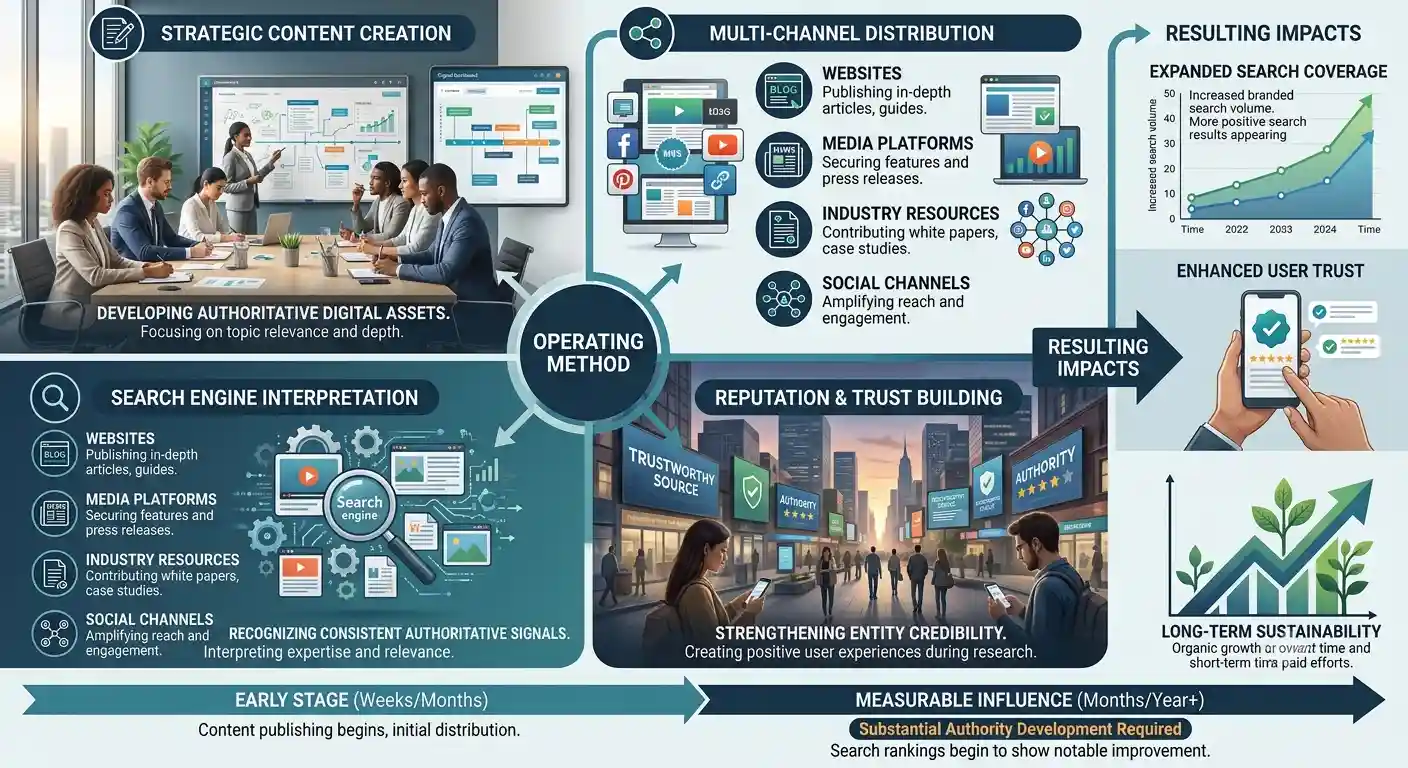
Content enhancement and review generation address reputation at different levels. Content enhancement strengthens the surrounding digital footprint by publishing accurate information, service explanations and authoritative material. Review generation directly affects the customer-feedback layer by adding authentic experiences to the review profile. Neither approach replaces the other because reputation perception develops through interconnected signals rather than a single content source. A robust evaluation therefore considers the relationship between reviews, customer experience, entity information and wider search visibility.
How does genuine review generation compare with artificial rating manipulation?
Genuine review generation improves reputation through authentic customer participation, while artificial manipulation attempts to manufacture a desired reputation signal. Genuine feedback operates by increasing the volume and representativeness of real customer experiences. Artificial manipulation operates by introducing feedback that does not accurately represent genuine customer interactions. The distinction creates significant differences in credibility, compliance and long-term sustainability. An authentic review profile remains connected to real customer experiences, whereas manipulated feedback creates a reputation structure that lacks reliable evidential support.
Platform rules also create a clear distinction between requesting legitimate feedback and manipulating ratings. A compliant review process focuses on making customers aware that feedback is available without dictating the sentiment or outcome of that feedback. Businesses therefore need to separate review accessibility from review control. Asking customers to provide honest feedback preserves independence, while directing customers towards a predetermined positive response compromises authenticity. This distinction is central to ethical Facebook Reviews management because reputation improvement depends on credible information entering the system.
Does responding to negative Facebook Reviews improve reputation signals?

Responding to negative reviews strengthens reputation analysis when the response provides relevant information, acknowledges the issue and demonstrates a structured approach to customer concerns. A response does not remove the original review or automatically change its rating. Instead, it adds another publicly visible layer of information to the customer-feedback environment. Readers therefore evaluate both the complaint and the organisation’s response when forming an entity perception. The quality, relevance and consistency of responses influence how the review profile is interpreted.
Reactive response strategies operate differently from proactive review generation. A response addresses an existing reputation signal, while review generation increases the volume of authentic feedback entering the profile. Reactive management provides immediate context around individual complaints, but it does not independently alter the underlying sentiment distribution. Proactive feedback generation provides a longer-term mechanism for developing a representative review profile. Evaluating both approaches together provides a stronger assessment than treating review responses as a replacement for genuine customer feedback.
How do content creation and review management differ in reputation control?
Content creation and review management influence different components of an entity’s digital reputation. Review management focuses on customer-generated information, sentiment distribution and direct public evaluations. Content creation focuses on information controlled by the organisation, including factual service pages, explanatory resources and entity information. Search engines evaluate content according to relevance, quality, authority and other ranking systems, while users interpret reviews as direct evidence of customer perception. The two approaches therefore operate through separate but connected reputation pathways.
Content enhancement is particularly relevant when negative information occupies a prominent position in search results. Creating useful and authoritative content increases the volume of relevant information associated with the entity. This does not guarantee the removal or suppression of negative material because search ranking systems determine visibility independently. Review management instead addresses the customer-feedback component of the reputation ecosystem. A balanced strategy evaluates whether the primary reputation problem originates from insufficient positive information, negative customer sentiment, inaccurate information or a combination of these factors.
Is an organic approach more sustainable than a reactive reputation strategy?
Organic reputation development provides greater sustainability because it continuously generates new reputation signals through genuine customer experiences and useful information. An organic approach operates through repeated improvements to customer communication, feedback collection, content quality and public information. Reactive management focuses on addressing individual problems after they become visible. This creates an important difference in timing because organic strategies develop a reputation structure while reactive strategies respond to existing signals. Long-term reputation stability therefore depends on the consistency of the underlying processes rather than isolated responses.
Short-term and long-term impact also require separate evaluation. A well-structured response to a negative review provides immediate contextual information to users reading that review. Authentic review generation requires a longer period because customer feedback accumulates through actual interactions. Content enhancement also develops progressively as new pages are indexed and evaluated. Measuring sustainability therefore involves tracking review sentiment, review volume, response quality, content visibility and changes in public perception rather than relying exclusively on the headline rating.
Dive Deeper With Our Expert Guides:
How to Remove a ‘Not Recommended’ Snippet From Google Results
How to Turn Facebook Recommendations Into a Conversion Asset
What risks arise when trying to raise a Facebook rating too quickly?
Rapid rating improvement creates risk when the process prioritises numerical change over authentic customer feedback. Artificial reviews, incentivised ratings and coordinated feedback create compliance concerns because they interfere with the independence of customer-generated content. Such practices also reduce the reliability of the reputation signal because the resulting rating no longer represents genuine customer sentiment. A sudden increase in positive feedback without corresponding customer activity can also create an inconsistent reputation pattern. Ethical reputation management therefore prioritises process integrity over an artificially accelerated numerical outcome.
Risk evaluation also includes operational consistency. A business that requests feedback inconsistently creates an incomplete customer-feedback dataset, while a business that responds selectively creates uneven public communication. Standardised processes reduce these inconsistencies by establishing clear criteria for requesting reviews and responding to feedback. This creates a more reliable reputation system that remains connected to genuine customer experiences. The objective is not simply to increase a score but to improve the quality and representativeness of the reputation signals behind that score.
How can businesses evaluate whether a reputation strategy is working?
Reputation strategy performance is evaluated through a combination of quantitative and qualitative signals rather than a single rating number. The Facebook rating provides a headline metric, while review volume, sentiment distribution, recency and recurring themes provide deeper evidence. Search visibility provides another measurement layer because changes in the digital footprint influence how users encounter information about the entity. Response consistency also demonstrates whether reputation management processes operate systematically. Together, these measurements provide a clearer assessment of reputation development.
A practical evaluation framework focuses on four connected areas:
- Measure the rating trend by comparing the numerical score with review volume and review recency to identify whether improvement reflects sustained feedback rather than isolated activity.
- Analyse sentiment distribution by categorising recurring positive and negative themes to determine whether customer perception is changing at a substantive level.
- Evaluate search visibility by monitoring relevant branded results and indexed content to identify changes in the surrounding digital reputation environment.
- Review compliance and process consistency by checking how feedback requests and responses are handled against applicable platform requirements.
These measurements separate genuine reputation improvement from superficial numerical movement. A higher rating accompanied by recurring unresolved complaints represents a different outcome from a higher rating supported by sustained positive customer sentiment. Measurement therefore needs to connect the visible score with the reputation signals that produce it.
Which strategy provides the strongest balance between effectiveness and compliance?
A combined strategy provides the strongest balance because it addresses both the existing reputation environment and the creation of future reputation signals. Genuine review generation develops authentic customer feedback, while professional responses provide context around existing reviews. Content enhancement strengthens the wider digital footprint, and ongoing monitoring identifies changes in sentiment and search visibility. Each component addresses a different mechanism within the reputation ecosystem. The combined approach therefore creates broader coverage without relying on artificial manipulation of a single metric.
Compliance remains a fundamental evaluation criterion because reputation improvement without process integrity creates additional risk. Ethical feedback collection preserves customer independence, accurate responses maintain informational value, and consistent monitoring supports early identification of reputation changes. This framework also improves sustainability because each activity contributes to an ongoing reputation process rather than a one-time rating adjustment. The resulting reputation structure reflects real customer experiences while maintaining a clearer relationship between reputation signals, entity credibility and public perception.
How should businesses assess the long-term value of Facebook reputation management?
Long-term value is assessed through reputation stability, customer sentiment, search perception and process sustainability rather than the initial increase in a rating. A sustainable strategy creates repeatable mechanisms for collecting authentic feedback, addressing customer concerns and maintaining accurate public information. This reduces dependence on short-term corrective actions because reputation management becomes part of ongoing digital governance. The resulting process also provides a consistent framework for identifying emerging negative sentiment before it becomes a larger reputation issue.
The most reliable evaluation therefore connects reputation management with the broader search ecosystem. Facebook Reviews form one component of an entity’s digital footprint, alongside indexed content, business information, public commentary and other reputation signals. Improving one component without analysing the others provides an incomplete picture of online credibility. A comprehensive approach evaluates how customer-generated information interacts with content visibility and public perception. This creates a more accurate basis for comparing reputation strategies and assessing their effectiveness over time.
A structured approach to Facebook reputation improvement also requires consistent monitoring, authentic customer feedback and compliant review practices. These elements help strengthen the reputation signals that influence customer perception without relying on artificial rating manipulation. For businesses evaluating a dedicated reputation solution, Raise Your Facebook Rating provides a relevant next step from strategic evaluation towards implementation.
Raising a sub-4.0 Facebook rating without breaking platform rules requires authentic feedback, consistent customer communication and evidence-based reputation analysis. Genuine review generation provides a sustainable mechanism for improving sentiment distribution, while review responses add context to existing reputation signals. Content enhancement strengthens the wider digital footprint, but it operates differently from customer-generated review management. Artificial rating manipulation remains unsuitable because it compromises authenticity, increases compliance risk and weakens the reliability of the resulting reputation signal.
The strongest reputation management approach combines proactive and reactive methods within a consistent framework. Measurement across rating trends, sentiment, review volume, search visibility and process compliance provides a clearer assessment of actual progress. This approach treats the Facebook rating as one indicator within a broader reputation ecosystem rather than as the sole measure of credibility. Sustainable improvement therefore comes from strengthening the underlying reputation signals that shape customer perception while maintaining platform-compliant practices.
How can you raise a Facebook rating without breaking Meta’s rules?
A Facebook rating can be improved ethically by encouraging genuine customers to leave honest feedback without offering incentives or directing their sentiment. Consistent responses to reviews also help strengthen reputation signals and customer trust.
Can businesses ask customers for Facebook Reviews?
Businesses can request genuine feedback from customers as part of a legitimate review process. The request must not require a positive rating, manipulate customer sentiment or involve fabricated reviews.
Do negative Facebook Reviews affect a business’s reputation?
Negative Facebook Reviews can influence public perception by contributing to the overall sentiment distribution of a business profile. Their impact depends on factors such as review frequency, recency, recurring complaints and the quality of responses.
What is the safest way to improve a Facebook rating below 4.0?
The safest approach combines authentic review generation, consistent responses and improvements to the underlying customer experience. This strengthens the reputation signals behind the rating rather than artificially changing the numerical score.
How long does it take to improve a Facebook rating?
The timeframe depends on the existing review volume, current rating and rate of genuine customer feedback. Sustainable improvement generally comes from accumulating authentic reviews over time rather than attempting rapid numerical changes.