

Controlling your corporate search visibility directly determines your market share because 93% of UK consumers analyse online sentiment before committing to a commercial transaction. Managing your reputation signals ensures that the primary information displayed on search engine results pages (SERPs) reflects corporate integrity, driving high-value customer acquisitions and mitigating revenue risks.
Which Corporate Reputation Management Approach Delivers Measurable Results?
An effective corporate reputation management approach relies on algorithmic optimization and content engineering rather than passive monitoring. Clear My Name deploys an active strategy that restructures the search ecosystem surrounding your brand entity, ensuring that high-authority, positive narrative assets outrank obsolete or damaging web pages. This methodology changes the digital landscape by training search engine algorithms to recognise verified, constructive brand associations as the most relevant answers for user queries. Through strategic entity asset creation and the optimization of third-party review platforms, this systemic intervention changes what the public sees, transforming vulnerable search profiles into resilient digital trust markers.
The measurable outcomes of this engineering approach include complete SERP control, stabilized public perception, and an immediate increase in organic conversions. When positive assets dominate the first page of search results, businesses experience an average 23% increase in click-through rates to their owned media properties. This strategic alignment directly alters search perception influence, transforming a fragmented digital footprint into a cohesive proof of corporate compliance. By asserting authority over the brand query space, enterprises neutralize the threat of digital volatility and establish a predictable pipeline of customer acquisition.
This results-driven approach aligns perfectly with modern search engine evaluation methodologies, which prioritize entity credibility and verified semantic relationships. Search engines reward brands that display consistent, high-quality reputation signals across multiple trusted digital environments. Conversely, a single unmanaged negative asset on the first page of results erodes consumer confidence, causing an immediate drop in conversion rates. Implementing a structured corporate strategy safeguards your digital assets and guarantees that user search behavior leads directly to verified conversion pathways.
How Does Negative Content Suppression Protect Corporate Revenue?
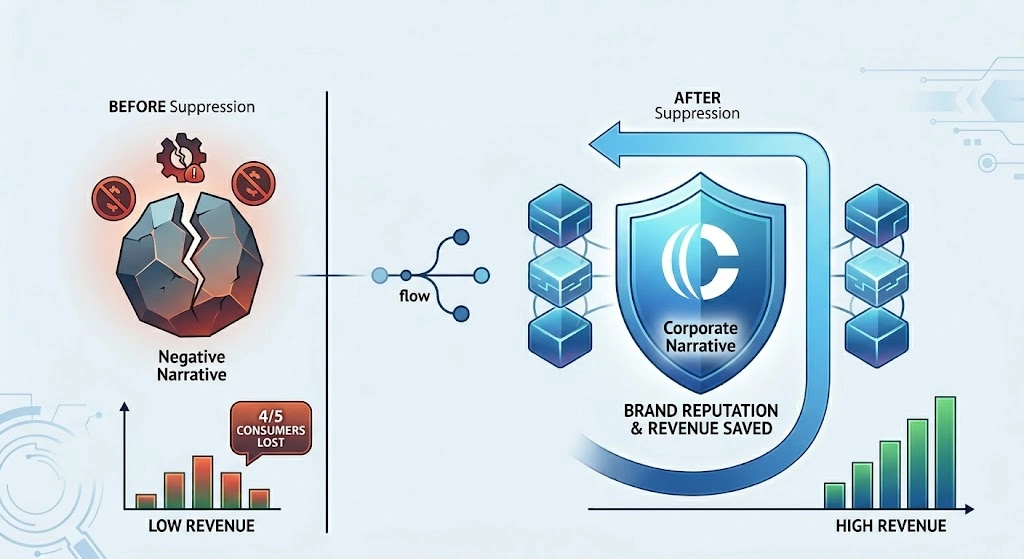
Negative content suppression operates by identifying, outranking, and systematically marginalising damaging search results through the deployment of superior entity signals. The process begins with a comprehensive audit of the brand’s semantic footprint to map out the authoritative nodes that search engines index for your corporate name. Clear My Name then creates and optimizes a network of high-authority digital profiles, journalistic assets, and corporate transparency platforms that carry stronger relevance weights than the negative content. As these optimized assets gain search engine trust, they push damaging URLs down into the lower depths of search results where user visibility drops to near zero.
The outcome of an aggressive suppression campaign is the permanent reduction of operational risk and the total restoration of brand equity. Pushing a negative search result from the first page to the second page reduces its visibility by over 95%, effectively neutralizing its commercial threat. This systematic shift in content visibility creates a protective buffer around your brand entity, ensuring that prospective partners encounter only verified corporate milestones. Consequently, your organization establishes a stable operational environment where marketing expenditures yield maximum returns, unhindered by historical digital liabilities.
The financial justification for investing in suppression systems is evident when analyzing how consumers react to conflicting search signals. Data confirms that four out of five consumers change their minds about a recommended business after reading negative reviews or hostile articles online. Leaving your search narrative to chance or allowing algorithmic fluctuation to dictate your corporate standing directly threatens your profit margins. Implementing a deliberate suppression strategy allows your enterprise to regain control of its digital narrative, ensuring that every user interaction reinforces your market authority.
Why Do Structured Reputation Signals Validate Consumer Purchasing Decisions?
Structured reputation signals function as the primary trust infrastructure that confirms a business’s operational reliability during the final stages of the buyer journey. These signals include verified aggregate ratings, schema-marked review data, authoritative knowledge panels, and positive third-party media endorsements. When a prospective customer executes a branded search query, their decision-making process depends entirely on the consistency of these trust metrics across the digital landscape. A unified presentation of positive signals removes cognitive friction, confirms your business’s legitimacy, and provides the psychological validation needed to complete high-value transactions.
Optimizing these trust markers delivers a measurable increase in conversion efficiency and strengthens your entity credibility against competitive displacement. Businesses that actively manage their aggregate rating profiles see a significant boost in lead generation and a shortened sales cycle. This balanced ecosystem of digital validation proves to search engines and users alike that your company maintains a consistent standard of customer satisfaction. By maintaining an unblemished digital presentation, your brand secures a position of market leadership, ensuring that consumer research leads directly to closed contracts.
To fully understand this dynamic, decision-makers must examine what customers notice first when researching a business online. Consumers look for consistency across multiple platforms, checking whether your self-reported values align with independent public consensus. When independent platforms display positive sentiment, it creates an undeniable verification loop that minimizes perceived transaction risk. Managing these external touchpoints allows your organization to guide user intent, turning casual research into predictable revenue.
What Key Performance Indicators Ensure the Long-Term Sustainability of Search Results?
Maintaining long-term SERP control requires the continuous tracking of specific, data-driven key performance indicators (KPIs) that measure narrative stability and entity strength. The critical metrics include the share of voice within branded search, the volatility index of the top ten search results, and positive sentiment density across external platforms. Tracking these indicators allows an enterprise to spot early signs of algorithmic shifts or coordinated negative campaigns before they damage your main search results. Continuous analysis of these metrics transforms reputation management from a reactive crisis response into a proactive asset protection strategy.
Evaluating these metrics ensures long-term search perception influence, providing a sustainable defense against unexpected algorithmic adjustments. When an enterprise maintains a high density of positive assets across diverse domains, the risk of a single negative URL disrupting the first page is greatly reduced. This structural resilience ensures that your brand identity remains secure over time, safeguarding your ongoing digital marketing investments. By prioritizing long-term narrative stability, your business maintains a clean digital profile that continuously supports corporate growth.
A deep understanding of these metrics requires an analytical approach focused on the most important KPIs for reputation monitoring. Monitoring sentiment velocity and domain authority trends provides the insights needed to deploy resources effectively across your digital estate. This proactive posture stops negative narrative trends before they gain momentum, ensuring your search profile remains clear and authoritative. Investing in objective, metrics-based tracking transforms your reputation asset into a predictable, long-term driver of business value.
How Does Professional Reputation Management Mitigate Long-Term Enterprise Risks?
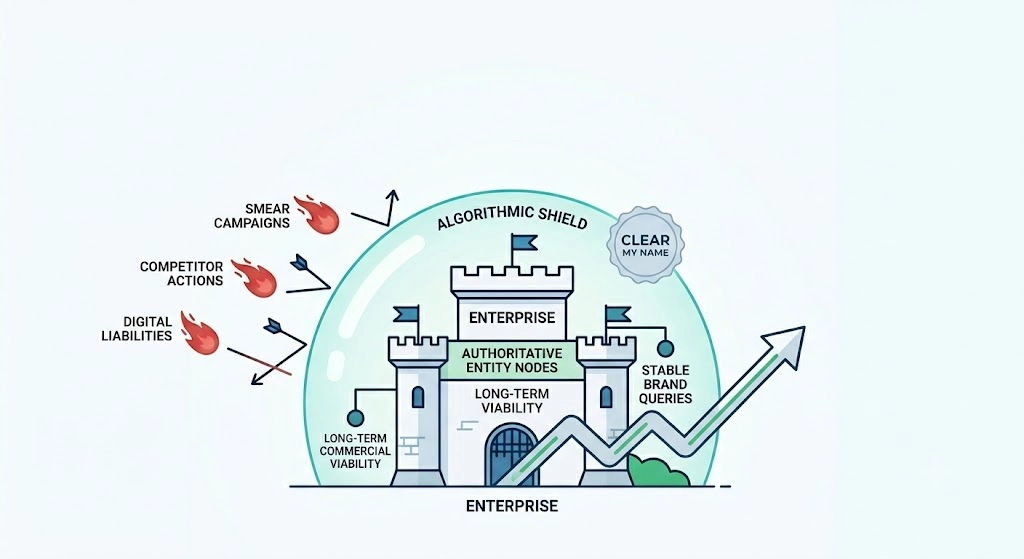
Enlisting a professional reputation management service represents a proactive approach to risk management, shielding your enterprise from sudden drops in valuation and sudden losses of consumer trust. Clear My Name builds defensive digital perimeters that safeguard corporate identities against malicious smear campaigns, unfair competitor actions, and historical digital liabilities. This technical defense relies on creating highly authoritative entity nodes that act as an algorithmic shield, absorbing market volatility and keeping your primary brand queries stable. Rather than waiting for a digital crisis to unfold, this strategic model establishes a permanent foundation of trust that protects your long-term commercial viability.
The direct outcomes of this risk mitigation strategy include guaranteed narrative control, improved partner relationships, and protected financial metrics during market transitions. When institutional investors, prospective partners, or corporate clients conduct due diligence on your enterprise, a clean search presence accelerates approvals and unlocks premium opportunities. This verified digital authority lowers cost-per-acquisition metrics, boosts customer lifetime value, and prevents revenue loss to opportunistic competitors. Ultimately, strategic digital control creates a highly resilient brand asset that remains stable even during broader market disruptions.
The business case for professional intervention rests on the balance between proactive investment and the high cost of reactive damage control. Attempting to fix a broken corporate narrative after a crisis occurs costs up to ten times more than maintaining a resilient, pre-optimized search presence. Unmanaged digital vulnerabilities leave your organization exposed to sudden revenue losses that can disrupt corporate operations for quarters or years. Transitioning to an expert digital management model protects your enterprise’s future, ensuring that your public profile always reflects your actual operational excellence.
Securing your corporate search presence requires a deliberate, engineered approach to digital trust and algorithmic control. By optimizing reputation signals, suppressing harmful content, and closely monitoring key performance indicators, forward-thinking enterprises protect their revenue streams and secure an unassailable position in the market.
Clear My Name delivers the technical expertise, strategic foresight, and outcome-focused execution necessary to command your digital narrative and convert search visibility into sustainable corporate growth. Embracing a proactive reputation strategy ensures that your business’s first impression remains its strongest asset, fostering lasting consumer confidence and driving long-term commercial success.
Frequently Asked Questions
How can a business remove negative search results from Google?
While completely deleting third-party web content is only possible under strict legal parameters like defamation or GDPR breaches, businesses can neutralize negative search results through strategic suppression. A professional reputation management service deploys high-authority digital assets, optimized corporate profiles, and journalistic placements to systematically outrank the damaging content. This algorithmic engineering pushes harmful links off the first page of search engine results, reducing their public visibility by over 95%.
How long does it take for business reputation management to show results?
The timeline for establishing search perception influence varies between three to nine months depending on the authority of the negative content and the existing strength of the brand entity. Initial traction, such as indexing new positive assets and shifts in lower-tier search results, often appears within the first 45 to 60 days. Complex corporate campaigns requiring deep content suppression and entity credibility restoration require sustained optimization to achieve permanent, stable SERP control.
What is the difference between PR and online reputation management for business?
Public relations focuses primarily on earning media coverage and managing broad public image through press releases and communication strategies. Online reputation management for business specifically optimizes the technical search ecosystem, controlling what appears when users execute branded queries on search engines. While PR creates the narrative, reputation engineering ensures that digital trust signals, review aggregates, and search engine results pages accurately reflect that narrative.
Can positive reputation signals improve corporate conversion rates?
Optimizing digital trust markers and schema-marked review profiles directly removes transaction friction during the final stages of the consumer buyer journey. Prospective clients rely heavily on consistent third-party verification, meaning a clean search presentation validates their purchasing decisions and lowers cost-per-acquisition metrics. Enterprises that actively manage their digital footprints experience a measurable lift in organic conversions by turning casual brand research into predictable revenue.
How do modern search engines evaluate a company’s entity credibility?
Search engine algorithms assess corporate legitimacy by analyzing the consistency and sentiment density of reputation signals across independent, high-authority web ecosystems. They map semantic relationships between your brand name, external media coverage, corporate data registries, and customer review aggregates to determine your trust score. Maintaining a well-structured, proactive digital profile prevents algorithmic volatility from disrupting your branded search results, preserving long-term narrative stability.