
TikTok reputation management helps creators and Gen-Z brands address negative content, strengthen search visibility and protect the credibility of their online identity. Clear My Name provides a structured reputation management approach that evaluates reputation signals, assesses content risks and identifies appropriate actions across social platforms and search ecosystems.
For creators and digital-first brands, public perception influences how audiences evaluate authenticity, reliability and commercial credibility. A negative video can become a persistent reference point when viewers share it, publish reactions or search for the brand’s name. Effective reputation management addresses the source of the issue while improving the accuracy and visibility of relevant information. The objective is to establish a more balanced digital footprint through evidence-led decisions, platform-compliant actions and measurable monitoring.
Which TikTok Reputation Management Service Best Protects Brand Credibility?
A suitable TikTok reputation management service combines content assessment, risk prioritisation, platform reporting and search visibility monitoring. The right approach depends on whether the issue involves legitimate criticism, misleading claims, impersonation, harassment or a wider pattern of negative search results. Each category requires a distinct response because content removal, factual correction and negative content suppression operate through different mechanisms. A reliable service establishes the nature of the problem before recommending an intervention. This process reduces the risk of unnecessary escalation and aligns each action with an identifiable reputation objective.
Creators and Gen-Z brands operate in an environment where short-form content, public comments and reaction videos influence how an entity is perceived. The reputational impact extends beyond the original post when related content appears in recommendations, TikTok search or external search engine results pages (SERPs). An effective service evaluates these connected visibility environments rather than focusing exclusively on the number of negative videos. It also distinguishes verifiable facts from opinions and unsubstantiated allegations. This distinction establishes a defensible basis for selecting an appropriate intervention and evaluating the resulting changes.
How Does Clear My Name’s Approach Improve Search Visibility and Perception?
A structured reputation management process improves decision-making by identifying which content creates risk and which interventions address the underlying cause. Clear My Name’s service positioning centres on TikTok reputation management for creators and Gen-Z brands, where public-facing content and search visibility influence entity credibility. The process begins with identifying relevant videos, examining their claims and evaluating the distribution of related content. It then distinguishes opportunities for platform reporting from situations requiring factual clarification or stronger supporting information. This sequence establishes a clear relationship between the identified problem, the selected action and the outcome being measured.
How Is a Reputation Risk Assessment Conducted?
A reputation risk assessment examines the content, its source, its visibility and the evidence supporting its claims. The assessment identifies whether the issue concerns a specific video, repeated allegations, misleading edits, impersonation or a wider search perception problem. It also considers whether the content appears in branded searches and whether related videos reinforce the same narrative. This analysis creates a baseline against which subsequent changes in content availability, search visibility and audience response can be evaluated. A documented baseline prevents ordinary ranking fluctuations from being mistaken for the direct result of a reputation intervention.
Which Actions Address Different Types of Negative Content?
The appropriate action depends on the type of content and the evidence available. A genuine customer complaint requires attention to the underlying issue, while a demonstrably misleading claim requires verification and a proportionate correction. Content that appears to breach TikTok’s Community Guidelines requires a policy-based assessment and, where justified, a report through the platform’s established process. Impersonation or misuse of private information introduces different risks and requires consideration of the relevant reporting or legal route. Matching the action to the problem improves process clarity and reduces the risk of pursuing removal where no valid basis exists.
A defined workflow also makes responsibility and progress easier to track. Each case can be documented through the original content, evidence collected, action selected, submission status and subsequent review. This record supports consistent decision-making when related videos appear or an initial report receives an unfavourable decision. It also provides a basis for distinguishing completed tasks from outcomes that remain dependent on TikTok, external publishers or search engine systems. The result is a more accountable process without implying direct control over third-party decisions.
How Does Negative Content Suppression Compare with Content Enhancement?
Negative content suppression and content enhancement serve different purposes within a reputation management strategy. Suppression aims to reduce the prominence of harmful material in relevant search results, while enhancement builds a stronger body of accurate, relevant information about the creator or brand. Neither approach guarantees the removal of criticism or a particular ranking position. Suppression depends on content eligibility, search competition and the strength of competing results, whereas enhancement depends on content quality, relevance and discoverability. Choosing between them requires examining whether the original material qualifies for removal and whether the wider search environment lacks credible context.
When Is Content Removal the Appropriate Priority?
Content removal is an appropriate priority when a video breaches applicable platform rules or a recognised legal basis supports a takedown request. The process involves identifying the original publication, documenting the relevant evidence and submitting the request through the appropriate channel. A successful decision can reduce access to the specific item, but copies, reaction videos and independent reporting remain separate content assets. The same applies to search indexes, which update according to their own processes rather than instantly reflecting every platform decision. Removal therefore requires source-specific monitoring and realistic expectations about the wider digital footprint.
When Does Content Enhancement Provide Greater Value?
Content enhancement provides greater value when criticism remains legitimate or accessible and the brand needs a more complete, accurate online presence. Relevant material includes authoritative profile information, transparent product explanations, documented corrections and useful responses to recurring audience questions. These assets help users compare competing claims and understand the brand beyond a single controversial video. Their ability to influence search rankings depends on relevance, quality, technical accessibility and the ranking systems of each platform. Enhancement is therefore a long-term visibility strategy rather than a guaranteed method for displacing negative results.
For decision-makers, the strongest approach is determined by evidence rather than a fixed preference for suppression or enhancement. Where valid removal grounds exist, addressing the original source takes priority; where criticism is legitimate, accurate context and substantive resolution are more defensible. Both methods require monitoring to determine whether the intended change occurred. This distinction helps allocate resources to actions with a clear purpose and avoids treating every unfavourable mention as a takedown opportunity.
What Results Can a TikTok Reputation Management Service Realistically Deliver?
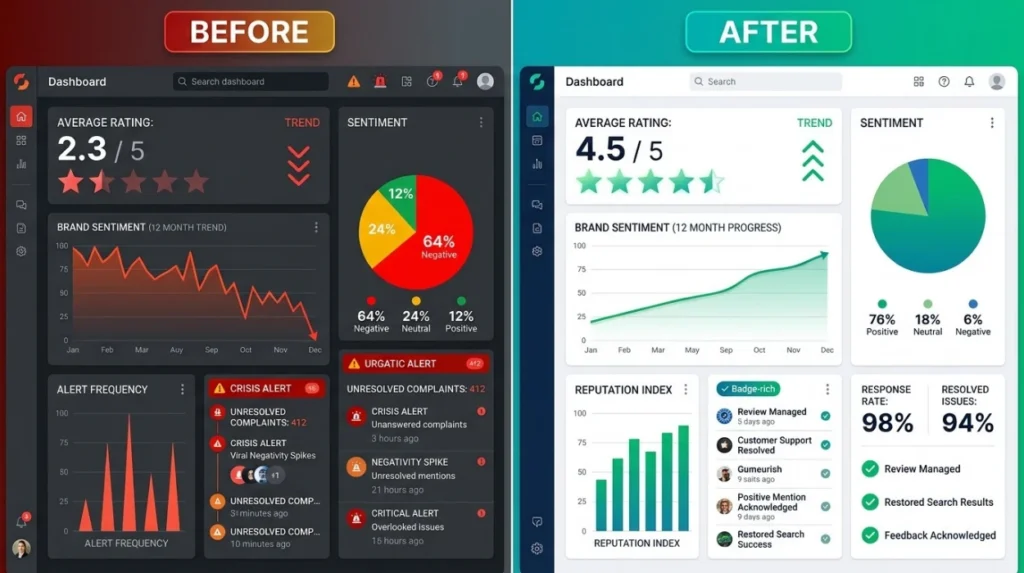
A professional reputation management service delivers value through defined actions, documented progress and evidence-based evaluation rather than guaranteed rankings or universal content removal. Meaningful outcomes include the resolution of eligible policy reports, correction of inaccurate information, improved access to credible brand information and a clearer understanding of search visibility. Each outcome represents a different measure of progress, so reporting must distinguish completed actions from changes controlled by external platforms. This approach provides a realistic basis for assessing performance and prevents activity metrics from being confused with reputation improvement. It also supports transparent discussions about remaining risks and the next appropriate intervention.
Which Metrics Demonstrate Progress?
A useful measurement framework combines content-level, search-level and process-level indicators. Content-level measures track the status of identified videos and reports, while search-level measures examine the material appearing for relevant branded queries. Process-level measures document response times, evidence collection, action completion and the consistency of monitoring. These indicators establish whether the work is progressing against its original objectives, although none independently proves that a particular intervention caused a ranking change. A clear report explains what changed, what evidence supports the finding and which limitations remain.
Key indicators include:
- Track the visibility of priority videos across relevant TikTok searches and branded queries to identify changes in discoverability.
- Document the status and outcome of platform reports to distinguish submitted requests from confirmed enforcement decisions.
- Measure the composition of branded search results to assess the presence of accurate profiles, relevant publications and negative content.
- Review recurring complaints and audience questions to determine whether the underlying concern has been addressed.
- Compare results against the initial baseline to separate observed changes from assumptions about causation.
How Quickly Can Reputation Management Produce Results?
The speed of reputation management depends on the intervention, the quality of supporting evidence and the decision-making processes of external platforms. A factual clarification can be published once the relevant information has been verified, whereas a content report requires assessment under TikTok’s policies. Search visibility changes depend on indexing, ranking updates and competition from other relevant material. Consequently, a completed action does not automatically produce an immediate change in audience perception or search rankings. A reliable timeline distinguishes work within the service’s control from decisions and updates managed by third parties.
How Can Brands Evaluate Cost Against Long-Term Reputation Value?
The value of reputation management depends on the severity of the risk, the duration of the problem and the resources required to address it. A focused intervention involving one identifiable video differs in scope from ongoing monitoring across multiple accounts, search results and related publications. Cost evaluation therefore begins with the work required, the evidence available and the intended outcomes. It also considers the internal time spent investigating complaints, preparing responses and managing repeated incidents. This approach supports a more meaningful comparison between the cost of an intervention and the operational value of a clearer, more accurate online presence.
Which Service Features Justify the Investment?
Service features justify their cost when they address identifiable risks and produce work that can be reviewed. A documented assessment explains the problem, the proposed action and the reason that action fits the evidence. Clear reporting records submissions, decisions, content changes and outstanding issues without presenting unconfirmed results as completed outcomes. Monitoring arrangements establish how new videos and search changes are detected after the initial intervention. These features improve accountability because the client can assess the work performed and distinguish it from results dependent on third-party decisions.
How Does Ongoing Monitoring Reduce Future Risk?
Ongoing monitoring reduces the time between the appearance of relevant negative content and its assessment. A consistent monitoring process identifies new publications, repeated allegations and changes in branded search results before they become disconnected from their original context. Early detection supports evidence collection while source material remains accessible and details are easier to verify. It also helps distinguish a new independent allegation from a reaction video that repeats an existing claim. Monitoring does not prevent every reputational incident, but it creates a repeatable process for identifying and evaluating emerging risks.
Why Choose a Structured TikTok Reputation Management Process?
A structured process provides clearer accountability than isolated reactions to individual videos. It defines the problem, establishes an evidence baseline, selects an appropriate intervention and measures the outcome against stated objectives. This framework supports creators and Gen-Z brands that need to protect entity credibility while recognising the limits of platform control. It also reduces the risk of inconsistent public statements, unsupported accusations and repeated reporting without a valid basis. A clearly defined service scope enables decision-makers to understand what the work includes, how progress is reported and which outcomes remain outside the provider’s direct control.
Before selecting a provider, decision-makers benefit from confirming the following:
- Verify the scope of monitoring, including whether it covers TikTok content, branded search results and related publications.
- Confirm the evidence and reporting process, including how policy violations are documented and escalated.
- Clarify the deliverables, reporting frequency, fees and responsibilities assigned to the provider and client.
- Assess how success is measured, including the distinction between actions completed and outcomes controlled by third-party platforms.
- Review the approach to privacy, sensitive information and the secure handling of evidence.
These checks help establish whether the proposed service matches the scale and type of reputational risk. They also provide a basis for comparing providers without relying on unsupported promises about removals, rankings or guaranteed outcomes. A credible service explains its methods, identifies dependencies and records progress transparently. This level of clarity supports informed purchasing decisions and more realistic expectations.
A consultation provides an opportunity to establish the scope of the issue, prioritise reputation risks and agree on realistic measures of progress. For creators and Gen-Z brands assessing TikTok reputation management for creators and Gen-Z brands, the decision rests on process transparency, evidence handling, reporting clarity and the suitability of the proposed intervention. Understanding how TikTok reputation management works helps validate the methods, while reviewing how to respond to negative TikTok videos about a brand clarifies the practical choices available when criticism emerges. Together, these considerations establish a more informed basis for selecting a service that aligns with the brand’s risk profile.
TikTok reputation management delivers the strongest decision-making value when it combines proportionate action, accurate information and sustained measurement. No provider controls every platform decision or guarantees a particular search ranking, but a transparent process establishes clear responsibilities and measurable objectives. The priority is to protect credibility through evidence-led intervention, improve the quality of information available to audiences and monitor the results without overstating success. A structured consultation supports this process by defining the problem, establishing priorities and clarifying the expected deliverables before work begins.
What is TikTok reputation management for creators and Gen-Z brands?
TikTok reputation management involves monitoring negative videos, assessing public feedback and improving the accuracy of information associated with a creator or brand. It focuses on protecting online credibility through evidence-based responses, appropriate content reporting and search visibility monitoring.
How can a TikTok reputation management service help remove negative videos?
A TikTok reputation management service identifies content that potentially violates platform policies and helps organise evidence for appropriate reporting or escalation. Removal depends on TikTok’s rules and assessment, as negative opinions and genuine customer complaints do not automatically qualify for removal.
How much does TikTok reputation management cost in the UK?
The cost of TikTok reputation management in the UK depends on the volume of negative content, monitoring requirements, complexity of the case and level of ongoing support. A consultation helps establish the scope of work, expected deliverables and reporting requirements before costs are agreed.
How long does TikTok reputation management take to improve online reputation?
The timeframe depends on the type of intervention, the evidence available and decisions made by TikTok or external search engines. Factual responses can be published after verification, while content reviews, search visibility changes and sustained reputation improvements follow different timelines.
Why choose Clear My Name for TikTok reputation management?
When evaluating Clear My Name for TikTok reputation management, creators and Gen-Z brands should assess the proposed process, evidence-handling practices, reporting transparency and scope of support. A consultation helps clarify the available options, realistic outcomes and limitations associated with platform decisions and search ranking changes.