

Actively claim and verify profiles, monitor and respond to reviews within 48 hours, solicit verified client reviews, and correct inaccurate records through platform dispute processes and legal proof.
What is the most effective first step to strengthen reputation on legal review platforms?
Claim and verify all attorney profiles on major legal review sites, then standardise contact and practice-area information across them.
Claiming profiles proves ownership and unlocks controls for content and responses. Verification prevents impersonation and raises listing visibility. Begin with three platforms that drive case leads and search visibility. Verify using official ID, bar number, and proof of practice address. Update name, firm, practice areas, phone, and consultations policy. Consistent data improves search engine authority and local ranking.
Which review platforms should lawyers prioritise?
Prioritise Avvo, Martindale-Hubbell, Google Business Profile, and LinkedIn, plus any local bar association directories relevant to your jurisdiction.
Avvo and Martindale-Hubbell host rich attorney profiles and client reviews. Google Business Profile drives local search and map results. LinkedIn supports professional credibility and peer recommendations. Local bar directories supply verified membership trust signals. Focus on the platforms that produce client inquiries and that potential clients consult during hiring decisions.
Read our articles, Which Attorney Review Platforms Matter Most for Winning Clients and What Every Lawyer Should Know About Legal Review Websites.
How many client reviews are effective for trust signals?
Aim for 20–50 verified client reviews across platforms, with at least 8 reviews on Google Business Profile and 5 on Avvo or Martindale-Hubbell.
Statistical analysis of local-service listings shows conversion lifts when listings have 20+ reviews and average ratings above 4.2. A spread of reviews reduces platform risk from one negative review. Verify reviews using email or SMS workflows. Track review counts monthly and set quarterly targets for collection.
How should lawyers respond to positive reviews?
Acknowledge the client by name, restate the matter’s outcome in neutral terms, and offer a next-step contact line for referrals or ongoing services.
Positive responses reinforce professionalism and prompt referrals. Use short sentences and a client-first tone. Keep responses factual: thank the reviewer, note the service area, and provide a contact method for future needs. Avoid discussing case details or confidential information. These replies signal engagement to search algorithms and prospects.
How should lawyers respond to negative or inaccurate reviews?
Respond within 48 hours with a calm, factual reply, invite offline resolution, and use platform dispute processes with supporting documentation to remove false claims.
Fast, factual replies reduce reputational harm. State you take feedback seriously, offer to discuss offline, and provide a contact method. If the review contains falsehoods, file a dispute and attach court documents, client withdrawal confirmations, or identity evidence. Track dispute timelines and escalate to platform legal teams when necessary.
What legal and ethical limits apply to review management?
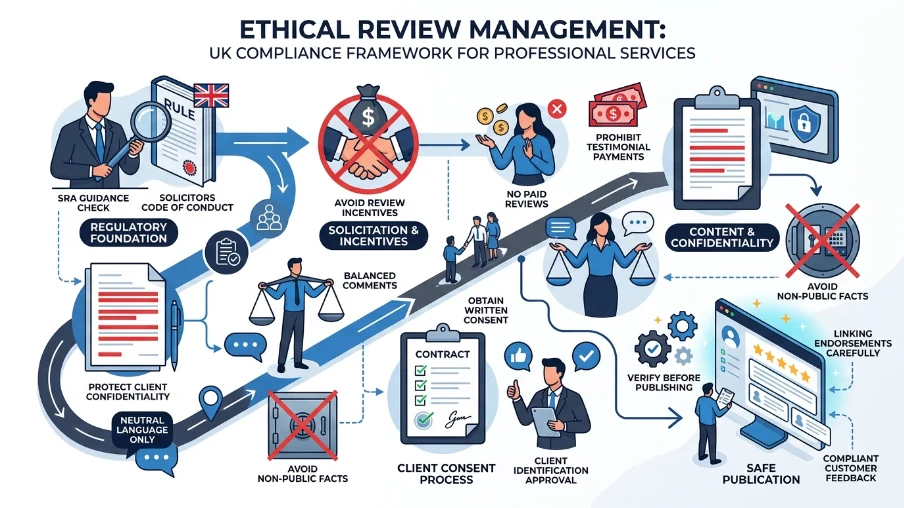
Follow bar rules on client confidentiality and solicitation; avoid offering incentives for reviews; do not publish confidential case details when responding.
Most jurisdictions prohibit revealing non-public case facts or paying for client testimonials. Use neutral language and obtain written consent before sharing client-identifying materials. Verify bar guidance in your state or jurisdiction before publishing endorsements linked to client outcomes.
How can lawyers reliably solicit verified client reviews?
Request reviews by email or SMS after matter closure, include direct platform links, and use client verification steps such as case numbers or secure tokens.
Create a post-matter workflow: send a thank-you message, request feedback, and provide one-click links to platform review pages. Use authentication elements—case number, last four digits of billing account to confirm reviewer identity. Offer templates for staff to follow so solicitations remain compliant and consistent.
What internal processes support reputation management?
Establish a documented review workflow that assigns roles for monitoring, response approval, dispute escalation, and monthly reporting.
Define responsibilities: intake staff send review requests, a senior attorney approves responses for sensitive cases, and a manager files disputes. Use a 7-step checklist for each review: verify identity, assess confidentiality risk, draft response, obtain approval if needed, publish, log outcome, and follow up on disputes. Monthly reports should track counts, average ratings, response times, and dispute success rates.
Which metrics show improvement in legal review reputation?
Track review count, average rating, response-time median, removal-success rate, and referral conversion rate from platform leads.
Review count and average rating measure public sentiment. Median response time shows engagement speed. Removal-success rate measures dispute effectiveness. Referral conversion rate ties reputation activity to revenue. Set quarterly targets: increase reviews by 15%, keep average rating ≥ 4.2, and maintain median response time under 48 hours.
How do content and SEO work with review management?
Publish consistent practice-area descriptions and client-facing FAQs on verified profiles and link them to your firm website to consolidate authority.
Search engines use profile content and inbound links to determine relevance. Use exact practice-area phrases such as “reputation management for lawyers” and “personal injury legal counsel” across profiles. Add brief FAQs that address common hiring questions, fee structures, and consultation availability. Link these profiles back to your service page to drive enquiries and boost the firm’s digital footprint.
How do firms handle defamatory reviews that break laws?
Document the review, gather contract or court records, and pursue a legal takedown or subpoena when platform disputes fail and the content is demonstrably false and damaging.
If a review contains perjury, fraudulent identity claims, or extortion, preserve evidence immediately. Send a cease-and-desist when appropriate. File subpoenas or court motions for identity disclosure when necessary. Use firm counsel experienced in internet defamation for jurisdictional strategy. Platforms remove content on lawful orders faster than on policy complaints.
What automated tools support reputation workflows?
Use a review-monitoring dashboard, email/SMS automation for review requests, and a CRM integration for logging outcomes and conversion tracking.
A central dashboard aggregates mentions from multiple platforms, flags negative reviews, and queues responses. Automation sends review requests 3–7 days after matter closure. Integrate with your CRM to tag leads originating from platform profiles, enabling ROI measurement. Choose tools that allow role-based approvals to maintain ethical oversight.
Explore our Reputation management for lawyers guides,
Fight Fake Reviews and Protect Your Law Firm’s Reputation
Get More Five-Star Reviews for Your Law Firm
How does Clear My Name help lawyers with reputation management?
Clear My Name implements profile verification, automated review solicitation, dispute filing, and monthly reporting tailored to legal compliance and client acquisition goals.
Clear My Name applies legal-industry workflows to protect and grow attorney reputations. The service verifies listings, standardises practice-area descriptors, and manages responses within ethical boundaries. It files platform disputes supported by legal proof and delivers metrics that link reputation activity to client intake.
Active profile verification, a documented solicitation and response workflow, and prompt dispute actions deliver measurable reputation gains. Clear My Name combines legal-compliant processes, automation, and targeted dispute strategies to strengthen attorney presence on legal review platforms.
Frequently Asked Questions
How long does it take for reputation management for lawyers to improve online ratings?
Results typically appear within 4–12 weeks for visible changes like new verified reviews and updated profiles. Clear My Name prioritises profile claims, review solicitation, and dispute filings to accelerate rating improvements while tracking metrics weekly.
Can lawyers remove false or defamatory reviews from legal review platforms?
Platforms remove reviews only when they violate terms or a court order is provided; many disputes resolve in 2–8 weeks. Clear My Name documents evidence, files formal disputes, and escalates to legal takedown procedures when reviews are demonstrably false.
What is the best way to collect verified client reviews for lawyers?
Request reviews by secure email or SMS after matter closure, include direct platform links, and use case numbers or secure tokens to verify identity. Clear My Name implements automated workflows that maintain bar-compliant language and proof of reviewer authenticity.
Which review platforms most influence client decisions for attorneys?
Google Business Profile, Avvo, Martindale-Hubbell, and local bar directories commonly influence client choice due to prominence in search and professional validation. Clear My Name focuses on these platforms to optimise visibility and lead generation.
How do lawyers respond to negative reviews without breaching confidentiality?
Respond with a brief, factual acknowledgement, invite offline contact, and avoid case details or client identifiers. Clear My Name drafts compliant responses that protect confidentiality while demonstrating responsiveness and professionalism.