
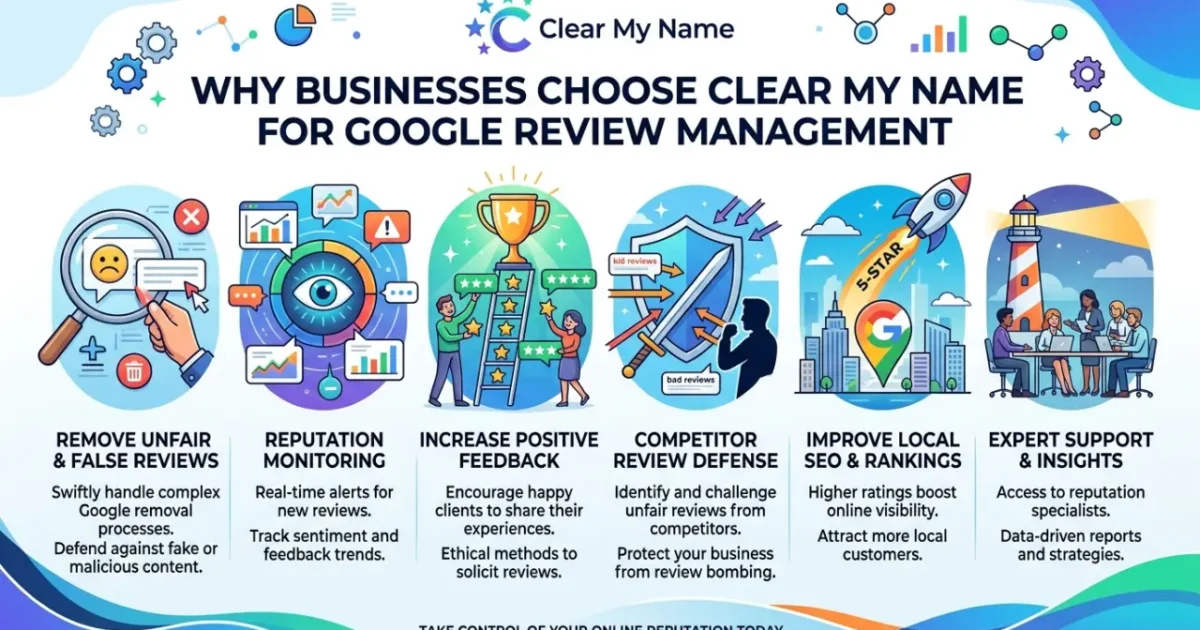
Google Reviews directly influence purchasing decisions, local search visibility, and brand trust. Businesses that actively manage review reputation strengthen search perception, improve customer confidence, and maintain greater control over how they appear in search results.
Reputation signals shape consumer behaviour long before a prospect visits a website or makes contact. Google evaluates review quality, review frequency, review responses, and overall sentiment as indicators of business credibility. Effective Google Reviews management ensures that positive experiences become visible trust assets while reducing the impact of damaging perception signals that affect conversions and local search performance.
Why does Google Review management deliver measurable business value?
Google Review management delivers measurable value because reviews function as both search signals and trust signals. They influence how potential customers interpret a business before engaging with its products or services. Strong review profiles increase confidence, reduce hesitation, and improve conversion potential across local search journeys.
Businesses operate within a search ecosystem where reputation signals continuously shape visibility and perception. Review quality, sentiment consistency, response activity, and customer engagement all contribute to entity credibility. When these elements remain unmanaged, negative experiences gain disproportionate visibility and influence.
Professional review management creates structure around reputation development. It establishes processes that encourage authentic customer feedback, strengthen positive sentiment visibility, and maintain a balanced public narrative. This approach improves search perception influence while reducing the risk of reputation instability.
The connection between reputation and consumer behaviour is well documented. Businesses that understand the importance of Google review buying behaviour gain greater insight into how customer decisions are formed and how trust develops before a transaction occurs.
Which Google Review management approach delivers the strongest long-term results?
The strongest approach combines reputation monitoring, review optimisation, customer engagement, and search perception control within a unified strategy. Isolated actions fail to produce sustainable outcomes because review ecosystems continuously evolve.
Businesses require a structured framework that addresses both visibility and perception. Review management becomes effective when it aligns customer feedback, local search performance, and brand credibility objectives. This creates consistency across search results and customer interactions.
A professional process focuses on maintaining accurate reputation signals while ensuring positive experiences remain visible. This strengthens public confidence and reduces the influence of isolated negative experiences that distort perception.
Long-term success depends on:
- Strengthening review acquisition processes to increase authentic positive feedback volume.
- Responding to customer reviews to improve engagement signals and public trust.
- Monitoring sentiment trends to identify emerging reputation risks early.
- Maintaining consistent reputation signals that support local search performance.
- Improving review quality indicators that strengthen entity credibility.
This integrated approach ensures that review management supports both reputation growth and commercial objectives.
How does Clear My Name strengthen Google Review performance?
Clear My Name strengthens review performance by applying reputation management principles that align with search engine evaluation systems and consumer trust behaviour. The service focuses on creating measurable improvements in visibility, credibility, and perception stability.
Google Reviews represent public evidence of customer experience. Every review contributes to how search engines and potential customers evaluate a business. Managing this environment requires more than responding to feedback. It requires strategic control of reputation signals that influence rankings and trust formation.
The process begins with identifying reputation strengths, weaknesses, and visibility challenges. Existing review patterns, sentiment trends, competitor positioning, and customer engagement indicators are assessed to determine where perception gaps exist.
Following assessment, targeted actions improve review quality, response consistency, and sentiment balance. This strengthens entity credibility while supporting stronger local search performance. Businesses gain improved control over public perception because positive experiences become more visible within the search ecosystem.
The result is a more stable reputation profile that supports customer acquisition, retention, and long-term trust development.
How does professional review management improve local search visibility?
Professional review management improves local search visibility because reviews contribute directly to Google’s evaluation of relevance, prominence, and trustworthiness. Strong review ecosystems provide positive signals that support local rankings.
Search engines interpret reviews as indicators of business quality and user satisfaction. Consistent positive feedback demonstrates operational reliability while reinforcing entity credibility. Businesses with stronger review signals often achieve greater visibility across local search results.

Review management also improves behavioural signals. Positive review profiles increase click-through rates, encourage engagement, and strengthen conversion potential. These interactions create additional indicators of relevance within search environments.
Visibility improvements occur through:
- Increasing review frequency to maintain fresh reputation signals.
- Improving review sentiment to strengthen trust indicators.
- Enhancing response activity to demonstrate customer engagement.
- Identifying reputation weaknesses that reduce local search performance.
- Supporting stronger brand credibility across search touchpoints.
The combination of these factors creates a stronger reputation foundation that contributes to sustainable local visibility growth.
What risks does unmanaged Google Review activity create?
Unmanaged Google Review activity creates significant reputation risks because search users often interpret visible reviews as direct evidence of business quality. Negative perceptions formed during search frequently influence purchasing decisions before direct contact occurs.
A single negative review rarely causes long-term damage. However, unmanaged patterns create perception problems that compound over time. Unanswered criticism, declining ratings, inconsistent engagement, and poor sentiment trends weaken public trust and reduce confidence.
Search ecosystems reward credibility and consistency. Businesses that ignore review management allow competitors with stronger reputation signals to gain a comparative advantage. This affects visibility, trust, and conversion performance simultaneously.
Key risks include:
- Reducing customer trust through visible negative sentiment.
- Weakening local search visibility due to poor reputation signals.
- Allowing negative narratives to dominate public perception.
- Increasing customer acquisition costs through reduced conversion rates.
- Damaging entity credibility within competitive local markets.
Professional management reduces these risks through continuous monitoring and reputation signal optimisation.
How quickly can businesses expect reputation improvements?
Reputation improvements begin as soon as review management processes establish stronger customer engagement and sentiment control. Search perception changes occur progressively because reputation ecosystems rely on accumulated signals.
Immediate improvements often appear through enhanced review responses, stronger customer communication, and more visible engagement. These actions demonstrate accountability and professionalism to prospective customers reviewing public feedback.
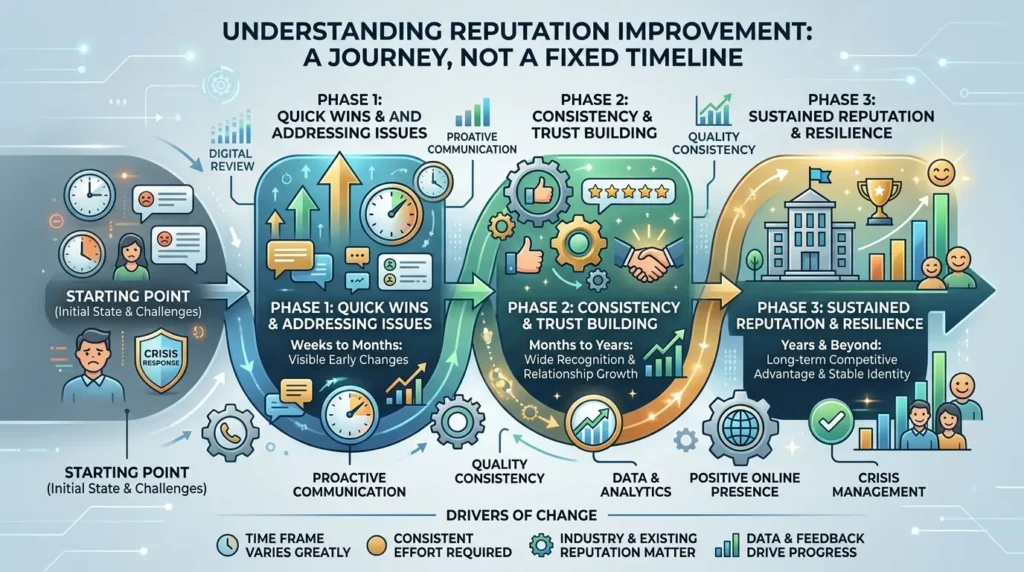
Medium-term improvements emerge as positive reviews increase and sentiment distribution becomes more balanced. This strengthens trust indicators and improves public confidence. Search visibility benefits develop as reputation signals become more consistent and credible.
Long-term improvements deliver the greatest value because sustained review quality contributes to stronger entity credibility. Consistent management creates a reputation profile that supports ongoing trust development and competitive differentiation.
Businesses seeking predictable results benefit from structured evaluation processes such as a Google Reviews reputation audit, which identifies the specific factors influencing visibility, trust, and customer perception.
Does the cost of Google Review management justify the investment?
Yes. Google Review management generates value because reputation directly affects revenue, customer acquisition efficiency, and brand trust. Businesses that invest in reputation control reduce the financial impact of negative perception while strengthening conversion opportunities.
The cost of reputation damage extends beyond lost sales. Negative perception increases customer hesitation, weakens trust, reduces enquiry rates, and creates barriers throughout the buying journey. These effects accumulate over time when reputation remains unmanaged.
Professional review management creates measurable value through stronger trust signals and improved search perception influence. Businesses gain greater control over how potential customers interpret their brand during critical decision-making moments.
Investment value is created through:
- Improving conversion rates through stronger trust indicators.
- Reducing reputation risks before they escalate.
- Strengthening local search visibility and customer discovery.
- Enhancing customer confidence during evaluation stages.
- Supporting long-term reputation stability and brand credibility.
When measured against customer lifetime value and acquisition costs, effective review management delivers sustainable business benefits.
Why is ongoing Google Review management more effective than reactive reputation repair?
Ongoing management is more effective because reputation is continuously shaped by new customer experiences and evolving search signals. Reactive strategies address visible problems after damage occurs, while proactive management prevents instability from developing.
Search engines and consumers favour consistency. Businesses that maintain active reputation management establish stronger credibility because positive experiences remain visible and engagement remains consistent. This creates a stable trust environment.
Proactive review management also improves resilience. Occasional negative feedback has less influence when supported by a strong foundation of positive sentiment and visible customer engagement. The overall narrative remains balanced and trustworthy.
Clear My Name applies this long-term perspective by focusing on reputation sustainability rather than short-term fixes. The objective is not merely to manage reviews but to strengthen reputation signals that support ongoing visibility, trust, and business growth.
Which solution provides the greatest confidence for businesses evaluating Google Review management services?
The solution that provides the greatest confidence combines transparency, process clarity, measurable outcomes, and consistent reputation signal management. Businesses require evidence-based methods that strengthen credibility while supporting sustainable growth.
Google Reviews influence search perception, customer trust, and local visibility. Effective management ensures these signals work in favour of the business rather than against it. A structured reputation framework creates stronger control over public perception while reducing exposure to reputation-related risks.
Businesses evaluating review management services should prioritise providers that focus on entity credibility, SERP control, reputation signal optimisation, and long-term perception stability. These factors determine whether improvements remain sustainable within competitive search environments.
Clear My Name provides a structured approach centred on visibility improvement, trust reinforcement, and reputation stability. Through consistent review management, businesses gain stronger control over how customers interpret their brand, creating a reliable foundation for long-term growth and search performance.
Can a business remove fake Google reviews that are hurting its reputation?
Businesses can report fake Google reviews that violate Google’s policies, but removal is not always guaranteed. Clear My Name helps businesses identify policy violations and navigate the review dispute process while maintaining a strong review management strategy.
Why are my Google reviews disappearing after customers leave them?
Google may automatically filter reviews it considers suspicious, spammy, or inconsistent with its guidelines. Google review management helps businesses understand review filtering issues and encourages authentic customer feedback that complies with platform policies.
How many negative Google reviews does it take to affect customer trust?
Even a small number of negative reviews can influence purchasing decisions if they remain unanswered. Effective Google review management focuses on responding professionally, improving customer experiences, and maintaining a balanced review profile.
Is it legal to pay a company to help manage Google reviews?
Hiring a company to manage and respond to reviews is generally acceptable, but buying fake reviews or manipulating ratings violates Google’s policies. Clear My Name focuses on ethical review management and reputation monitoring practices.
What should I do if a competitor is posting negative Google reviews about my business?
Suspected competitor reviews should be documented and reported through Google’s review reporting process. A structured Google review management approach can help businesses monitor suspicious activity, gather evidence, and protect their online reputation.