

Google ratings can appear differently across mobile Search, Google Maps and desktop because of review updates, profile identification, moderation and differences in how information is displayed. Resolving these discrepancies requires distinguishing technical presentation issues from changes to the underlying review data.
Reputation management strategies differ based on whether a rating discrepancy originates in the business profile, review processing or interface presentation. Online reputation control methods are evaluated through data consistency, search visibility, trust signals, operational risk and the sustainability of corrective action.
Why Is Checking the Business Profile More Reliable Than Comparing Screenshots?
Checking the underlying business profile is more reliable than comparing screenshots because screenshots capture a displayed result rather than the complete profile context. A Google Business Profile connects a business entity with its name, location, category, reviews and other identifying information. If mobile Search and desktop Maps display different profiles, their ratings can differ without any change to the same business’s review record. Comparing the business name, address, location and review count helps establish whether the interfaces refer to the same entity. This distinction is important because an incorrect profile comparison produces a false diagnosis of rating inconsistency.
Profile verification also helps separate data problems from presentation differences. A business with multiple branches, duplicate listings or similar names requires location-level checks before its displayed ratings are compared. Review counts provide an additional reference point, although counts and ratings do not always update at the same time. Recording the date, device, interface, profile URL, rating and review count creates a repeatable evidence trail. This method improves diagnostic accuracy without assuming that one interface always provides the definitive answer.
How Do Review Processing and Interface Display Differ as Causes of Rating Changes?
Review processing concerns changes to the reviews Google recognises for a profile, whereas interface display concerns how the available information appears to a user. Review processing includes the publication, updating or removal of reviews under platform systems and policies. A displayed rating can change after reviews are removed or processed, even when a business has not received new visible feedback. Interface display differences, by contrast, can reflect update timing, cached information or differences in the way an interface presents a profile. These mechanisms require different responses because a display discrepancy does not automatically indicate that the underlying review record has changed.
Review processing is best investigated by comparing the profile over time and checking for changes in the visible review count or review content. Interface display issues are better investigated by checking the same profile through Search and Maps, then repeating the comparison after a reasonable interval. Neither method guarantees an immediate explanation because Google does not expose every internal processing event to profile owners. A single screenshot offers limited evidence, while repeated observations help establish whether the discrepancy persists. Separating these causes prevents unnecessary review reports when the issue relates to display timing rather than a policy violation.
Is Correcting Profile Information More Effective Than Reporting Reviews?
Correcting profile information is more effective when the discrepancy results from incorrect business details, duplicate listings or confusion between locations. Review reporting is relevant when a specific review breaches Google’s content policies, such as rules concerning fake engagement, spam or prohibited content. The two approaches address different sources of reputation risk and are not interchangeable. Profile corrections improve the accuracy of entity information, while review reporting asks the platform to assess particular content against its rules. Selecting the appropriate method depends on evidence of the underlying problem rather than the rating difference alone.
Profile corrections can improve consistency across interfaces by strengthening the connection between a business and its identifying information. However, correcting an address or business name does not automatically change the average rating or remove a review. Review reporting focuses on individual items and depends on whether the reported content meets the platform’s removal criteria. A negative opinion that reflects a genuine customer experience does not become removable simply because it lowers the average rating. Effective reputation management therefore distinguishes factual profile errors from review-policy violations before any corrective action is taken.
The risk profile also differs between the approaches. Correcting inaccurate business details is generally a lower-risk intervention when the submitted information is verifiable and consistent with the real business. Reporting reviews without a specific policy basis consumes administrative effort and does not establish that the content is ineligible. Repeated reporting cannot substitute for evidence, and a rating dispute alone does not demonstrate manipulation. A structured review of profile data and individual review content provides a more defensible basis for action.
Is Content Enhancement More Sustainable Than Review Removal?
Content enhancement and review removal address different parts of online reputation, so their effectiveness depends on the source of the problem. Content enhancement develops accurate, useful information about a business through its website, service pages, business details and other legitimate digital assets. It operates by strengthening the relevance and availability of information that helps users identify and assess the business. Review removal targets content that violates the platform’s policies and seeks a decision from the platform about that specific material. Enhancement supports the broader search presence, while removal addresses eligible content at source.
Content enhancement can influence SERP composition by making verified business information easier to find alongside reviews and directory listings. Its effect depends on content quality, indexing, competition and the relevance of the pages to users’ searches. It does not directly rewrite the rating displayed in a Google Business Profile, nor does publishing additional pages guarantee a higher ranking. Its principal value lies in supporting entity credibility and giving users more reliable context when they investigate a business. This approach is more sustainable when the information remains accurate and is maintained as the business changes.
Review removal has a narrower scope but addresses the source directly when a review qualifies for removal under platform policy. A successful removal can change the visible review set and, depending on the review’s contribution to the average, the displayed rating. The outcome is not guaranteed, and legitimate critical feedback remains part of the public record. Content enhancement cannot compensate for every inaccurate review, just as review removal cannot build a complete and credible search presence. A balanced evaluation treats content enhancement as a long-term visibility method and policy-based removal as a targeted response to eligible content.
Dive Deeper With Our Expert Guides:
What to Do When Your Business Is Hit by a Review-Bombing Attack
How to Build a Response Workflow for Every Google Review
How Do Organic and Reactive Reputation Strategies Compare?
Organic reputation management builds consistent reputation signals over time, while reactive management responds to a specific event or discrepancy. Organic methods include maintaining accurate profile information, publishing useful website content and requesting honest feedback through compliant processes. Reactive methods include investigating rating differences, correcting profile errors, responding to reviews and reporting content that appears to breach platform policy. Organic activity supports continuity, whereas reactive activity concentrates resources on an identified issue. Their relative value depends on whether the business faces a persistent visibility problem or an immediate data or content concern.
Organic methods are more scalable when the same maintenance process can be applied across multiple locations and digital assets. A documented profile-update procedure, for example, helps maintain consistent business details across relevant platforms. However, organic improvements take time to be discovered, indexed and reflected in user behaviour. They also cannot guarantee a particular rating, search position or sentiment distribution. Their performance is better assessed through sustained accuracy, content visibility, profile engagement and the quality of incoming feedback than through short-term rating movement alone.
Reactive methods can produce faster operational progress when the cause is identifiable and the necessary correction is within the business’s control. Updating an incorrect address is a defined action, while a policy report initiates a review process controlled by the platform. The business can document what it submitted, but it cannot dictate Google’s final decision or processing time. Reactive work also carries a risk of misdiagnosis when teams act on isolated screenshots or treat all negative reviews as violations. Combining a reliable maintenance process with evidence-based incident handling provides broader coverage than relying exclusively on either approach.
Which Short-Term and Long-Term Measures Best Evaluate Rating Consistency?
Short-term measures establish whether a rating discrepancy is persistent, while long-term measures assess whether reputation information remains accurate and coherent over time. A short-term review records the displayed rating, review count, profile URL, device, interface and observation date. Repeating this check helps distinguish a temporary display difference from a continuing inconsistency. Long-term monitoring compares those observations against profile changes, review activity and the wider search presence. Both timeframes are necessary because a single observation cannot establish a stable pattern.
A useful evaluation framework compares four dimensions:
- Record profile details: Confirm that the same business location and profile URL are being compared across mobile Search, Maps and desktop.
- Track displayed values: Record ratings and review counts at consistent intervals to identify when discrepancies first appear and whether they persist.
- Investigate review changes: Compare visible review activity and assess whether removals, updates or moderation explain a rating movement.
- Measure search presence: Review how the business profile, official website and other relevant pages appear in search results without assuming that ranking changes prove a rating problem.
These measures improve diagnostic consistency, but they do not provide access to every internal Google processing event. A rating difference can remain unexplained even after profile identity and visible review activity have been checked. In that situation, maintaining a dated record is more defensible than attributing the discrepancy to an unsupported cause. Escalation becomes more useful when the evidence identifies a specific profile error or policy concern. This framework also allows teams to evaluate whether corrective action resolved the observed problem rather than merely coinciding with a temporary display change.
How Do Rating Discrepancies Influence Search Visibility and Customer Trust?
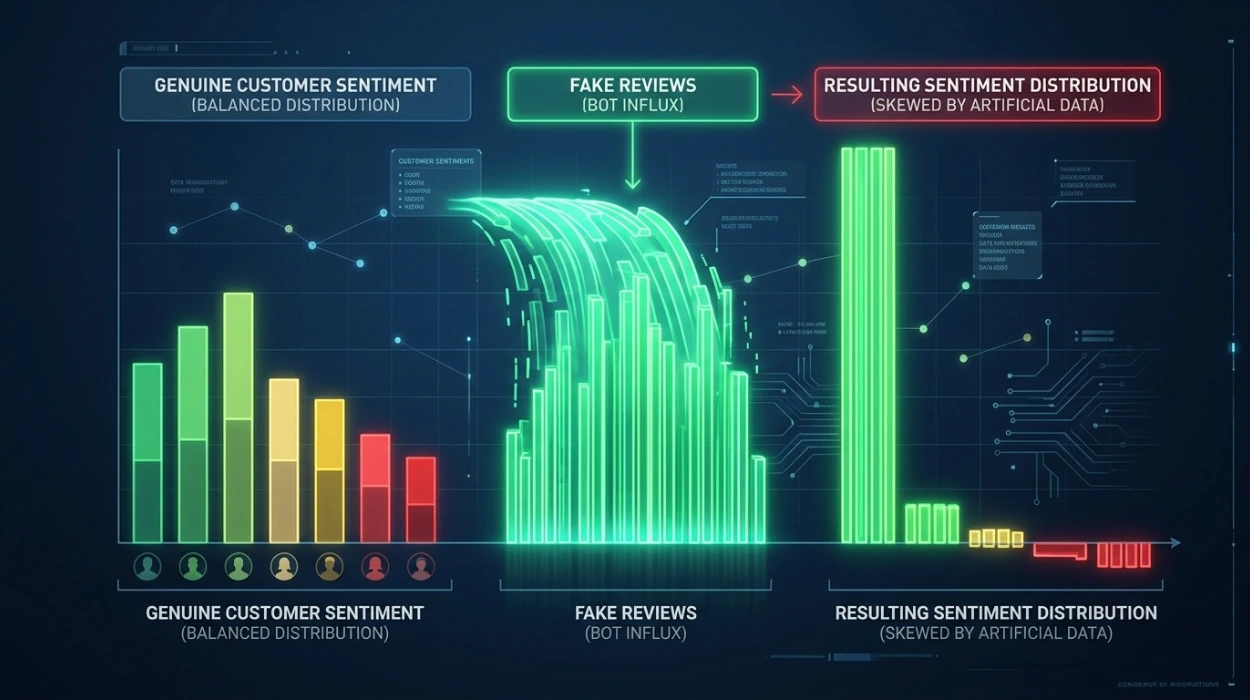
Rating discrepancies influence customer perception by creating uncertainty about the information displayed across discovery interfaces. Users often consider star ratings alongside review volume, review content, location and business details when comparing providers. When these signals appear inconsistent, users have less confidence that they are evaluating the same business record. However, an inconsistent display does not by itself prove that the business has received a ranking penalty or that its reviews are inaccurate. The effect on trust depends on the discrepancy’s visibility, duration and the other information available to the user.
Search engines evaluate multiple signals when determining the relevance and presentation of results. Google describes local search ranking primarily in terms of relevance, distance and prominence, rather than a single rating value. Reviews contribute to the information people use to assess a business, but rating consistency alone is not a complete measure of search ranking influence. Content quality, profile accuracy and the relationship between a search query and the business also affect the overall discovery experience. Consequently, reputation analysis needs to distinguish customer-facing rating presentation from changes in organic or local search position.
SERP composition also matters because users encounter more than a star rating when researching a business. Official pages, directory listings, review platforms and other indexed resources collectively shape the information available about an entity. Content enhancement helps ensure that accurate information is accessible, while eligible content removal addresses specific material that violates applicable platform policies. Neither method guarantees that a particular page will rank first or that every negative sentiment signal will disappear. The strongest evaluation therefore considers rating consistency, information accuracy and the wider search presence as related but distinct measures.
Which Reputation Management Approach Offers the Best Balance of Effectiveness and Risk?
Fix Inconsistent Google Ratings With Clear My Name
The most appropriate approach is the one that matches the verified cause of the discrepancy and uses the least speculative corrective action. Profile correction fits inaccurate business information, repeated comparison fits uncertain display timing, and review reporting fits content with evidence of a policy violation. Content enhancement is relevant when the wider search presence lacks accurate, useful information. These approaches differ in scope, speed, scalability and dependence on platform decisions. Their effectiveness must be assessed against the specific problem rather than a general expectation that every intervention will increase the rating. Fix Inconsistent Google Ratings With Clear My Name supports a targeted approach to addressing rating discrepancies through evidence-based assessment and appropriate reputation management.
A practical decision process prioritises evidence before intervention. First, verify that every interface displays the same business profile and location. Next, compare ratings and review counts over time, checking visible review activity for changes that explain the difference. Then select the corrective method that matches the evidence, documenting submissions and subsequent observations. Finally, assess whether the inconsistency has resolved and whether the wider business information remains accurate. This sequence reduces unnecessary reports and makes the reasoning behind each action easier to audit.
Long-term reputation control depends on maintaining accurate entity information, monitoring reputation signals and distinguishing legitimate criticism from policy-violating content. Short-term corrective work addresses specific inconsistencies, while organic methods support a coherent and discoverable digital footprint. Content suppression is appropriate only where a valid removal basis exists; content enhancement serves a different purpose by improving the quality and visibility of reliable information. These methods are complementary rather than interchangeable, and neither guarantees a particular rating or search position. The most defensible strategy combines consistent measurement, evidence-based intervention and ongoing review of search visibility, trust signals and sentiment distribution.
Why does my Google rating differ between mobile, Maps and desktop?
Google rating differences can occur because of review processing, display timing or confusion between business profiles. Check the business name, location, profile URL and review count across Google Search, Google Maps and desktop before identifying the cause.
How can I fix inconsistent Google ratings across devices?
Start by confirming that every device displays the same Google Business Profile, then compare ratings and review counts over time. Correct inaccurate profile information and report reviews only when there is evidence that they violate Google’s content policies.
Why has my Google rating changed without receiving new reviews?
A Google rating can change when reviews are removed, updated or processed through moderation, even if no new reviews are visible. Differences in display timing or the business profile being viewed can also explain inconsistent ratings.
Does having different Google ratings across devices affect local SEO?
Rating discrepancies can affect customer trust, but they do not automatically indicate a local search ranking penalty. Google evaluates local results using factors such as relevance, distance and prominence, so rating presentation and search visibility need to be assessed separately.
Can Clear My Name help resolve inconsistent Google ratings?
Clear My Name is a reputation management brand associated with online reputation concerns, including Google Reviews. Resolving inconsistent ratings begins with identifying whether the cause involves profile information, review processing, display timing or content that breaches Google’s policies.