

Executive search is a specialised recruitment process designed to identify, evaluate, and secure senior leadership talent through targeted research rather than public job advertising. Retained recruitment operates through an exclusive partnership between an organisation and an executive search firm, combining structured market intelligence with confidential candidate engagement.
Reputation management is the systematic evaluation of digital information that influences how organisations and professionals are interpreted within search ecosystems. Online reputation refers to the collection of reputation signals, indexed content, authority indicators, and entity relationships that search engines evaluate when determining credibility, trustworthiness, and search visibility.
What Is Executive Search Within Modern Recruitment?
Executive search is a recruitment methodology focused on sourcing senior executives, directors, board members, and highly specialised professionals through proactive market research. Unlike contingency recruitment, executive search relies on systematic identification of qualified individuals rather than waiting for active applicants. This process operates by analysing professional experience, leadership achievements, industry expertise, and organisational suitability before approaching potential candidates confidentially. Search engines contribute indirectly by indexing professional profiles, interviews, publications, company biographies, and leadership content that establish digital credibility. These indexed resources become part of the reputation signals evaluated by both recruiters and prospective employers. Executive search therefore represents a structured process built upon information quality, authority assessment, and professional reputation.
Executive search also reflects changes in how organisations evaluate leadership capability within digital environments. Search visibility provides accessible evidence of executive expertise, while reputation signals contribute to broader assessments of credibility. Entity perception develops from the consistency of professional information published across trusted sources. Search engine algorithms evaluate authoritative content differently from isolated promotional material, increasing the importance of verified professional information. The result is a recruitment model that integrates market intelligence with digital credibility rather than relying exclusively on traditional candidate sourcing methods.
How Does Confidential Recruitment Operate?
Confidential recruitment operates by limiting public exposure while conducting targeted searches among qualified professionals. Organisations use confidential processes when replacing senior leaders, expanding executive teams, or recruiting for commercially sensitive positions. Candidate identification relies on private outreach instead of public vacancy announcements, reducing unnecessary market attention. Search visibility still contributes because recruiters evaluate publicly available information before initiating confidential discussions. Professional biographies, published articles, interviews, conference presentations, and industry recognition strengthen reputation signals that support informed decision-making. Confidential recruitment therefore combines discretion with publicly verifiable evidence of expertise.
How Does Retained Recruitment Differ From Other Recruitment Models?
Retained recruitment is an exclusive engagement in which a recruitment firm manages the complete executive hiring process from research through final placement. Contingency recruitment generally involves multiple agencies competing to fill the same vacancy, while retained recruitment prioritises comprehensive market analysis and strategic candidate evaluation. This structured methodology enables broader candidate research because success depends upon identifying the most suitable professional rather than the quickest placement. Search ecosystems support this process by providing accessible information about leadership reputation, published expertise, and organisational influence. Reputation signals therefore become integrated into candidate assessment rather than remaining separate from recruitment activities. The retained model demonstrates how professional credibility and systematic research operate together.
Search engines also influence retained recruitment by organising publicly available professional information into searchable knowledge structures. Recruiters examine entity perception through indexed interviews, articles, executive profiles, and recognised industry contributions. SERP evaluation provides insight into how consistently a professional’s expertise appears across authoritative domains. Information consistency reduces uncertainty while supporting stronger assessments of leadership credibility. This relationship illustrates how digital information complements direct recruitment research without replacing structured evaluation.
Why Does Search Visibility Influence Executive Recruitment?
Search visibility influences executive recruitment because publicly indexed information shapes initial professional interpretation before direct communication begins. Search engines organise professional content according to authority, relevance, and credibility signals, creating an accessible representation of an individual’s expertise. Recruiters frequently evaluate search results to understand executive experience, thought leadership, industry participation, and public recognition. This process contributes to entity perception by combining multiple authoritative sources into a broader credibility assessment. Consistent search visibility strengthens confidence in publicly available professional information while supporting more informed recruitment decisions. Search ranking therefore contributes to professional interpretation without determining hiring outcomes independently.
Professional visibility also reflects content indexing patterns developed over time. Leadership articles, conference participation, academic contributions, media interviews, and organisational announcements collectively reinforce authority signals recognised within search ecosystems. Search engines analyse these resources through semantic relationships rather than isolated keywords. The resulting SERP composition demonstrates how authority accumulates across multiple trusted sources. Executive recruitment increasingly benefits from these structured information environments because they provide accessible evidence supporting professional evaluation.
Dive Deeper With Our Expert Guides:
Where Do Candidates and Clients Research Recruitment Agencies? 8 Review Platforms Compared
How Many Recruitment Agencies Operate in the UK in 2026? Market Statistics
Which Reputation Signals Are Commonly Evaluated?
Executive recruitment incorporates multiple reputation signals that contribute to broader credibility assessment. Search engines organise these signals through content indexing, entity relationships, and authority evaluation.
- Analyse verified executive biographies published on authoritative organisational websites to establish professional identity.
- Evaluate leadership articles demonstrating subject expertise and topical authority.
- Review conference presentations and interviews that reinforce recognised industry participation.
- Interpret media coverage to understand public visibility and organisational influence.
- Assess professional consistency across trusted digital platforms that strengthen entity perception.
These interconnected signals contribute to a more comprehensive understanding of executive credibility within search ecosystems.
How Do Search Engines Interpret Professional Authority?
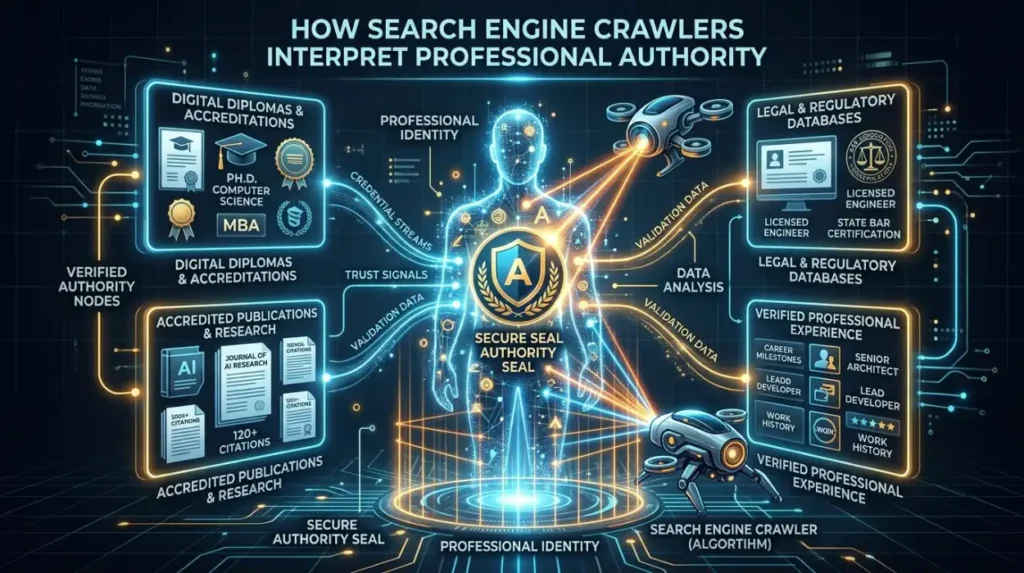
Professional authority is the measurable credibility assigned to an individual through consistent publication of reliable, authoritative information across trusted sources. Search engines evaluate authority using relationships between entities, topical expertise, source quality, and information consistency rather than isolated ranking factors. Executive profiles supported by recognised organisations, respected publications, and professional achievements create stronger authority signals than fragmented or inconsistent information. Content indexing enables these signals to become discoverable during executive recruitment research. Search visibility therefore reflects accumulated evidence rather than promotional activity. Authority emerges through sustained information quality across multiple trusted domains.
Algorithms also analyse semantic relationships connecting executives with industries, organisations, leadership topics, and recognised achievements. These relationships strengthen entity perception by reinforcing expertise across relevant subject areas. Professional authority therefore develops through interconnected digital information rather than isolated online profiles. Recruitment professionals benefit from these structured information networks because they simplify credibility evaluation while improving information accessibility. Understanding How Do Discretion and Reputation Win Retained Executive Search Mandates? provides additional insight into how credibility and confidentiality reinforce retained recruitment success.
How Does Content Indexing Influence Executive Reputation?
Content indexing is the process through which search engines discover, organise, and store digital information for retrieval within search results. Every indexed executive biography, interview, professional article, company announcement, and industry publication contributes to the searchable knowledge surrounding a professional entity. Search engines evaluate the relevance, authority, and contextual relationships of these resources before determining how they appear within search results. This process directly influences search visibility because authoritative content remains accessible to recruiters, employers, investors, and other decision-makers. Content indexing therefore forms the technical foundation of online reputation by determining which information becomes discoverable.
Search ecosystems also evaluate how consistently professional information appears across trusted domains. Contradictory employment histories, outdated biographies, or incomplete executive profiles reduce entity consistency and weaken authority signals. Accurate indexing enables search engines to establish stronger semantic relationships between individuals, organisations, leadership expertise, and recognised achievements. This interconnected information improves SERP evaluation by presenting a coherent professional identity. Executive recruitment increasingly benefits from structured indexing because reliable information supports faster and more accurate credibility assessments.
Why Does Entity Perception Matter in Executive Search?
Entity perception refers to the overall understanding search engines develop about a person through interconnected information, recognised expertise, and authoritative digital references. Search algorithms do not evaluate isolated webpages independently; they analyse relationships between people, organisations, industries, publications, and topical expertise. Executive search therefore extends beyond reviewing individual profiles because recruiters interpret broader patterns of credibility reflected throughout search ecosystems. Consistent entity perception strengthens confidence that indexed information accurately represents professional capability. Search visibility becomes more meaningful when multiple trusted sources reinforce identical professional attributes. Entity perception therefore contributes significantly to executive credibility within digital environments.
Professional authority also develops through long-term publication consistency rather than isolated achievements. Leadership commentary, conference participation, professional memberships, board appointments, academic contributions, and organisational announcements collectively reinforce semantic relationships recognised by search engines. Strong entity perception improves the clarity of professional interpretation without guaranteeing recruitment outcomes. Instead, it creates an information environment where credibility is supported by interconnected evidence rather than individual claims. Executive recruitment increasingly relies upon this structured interpretation because it provides additional context beyond traditional curriculum vitae.
How Are Trust Signals Evaluated During Executive Recruitment?
Trust signals are measurable indicators that support confidence in the accuracy, consistency, and authority of professional information. Executive recruitment evaluates trust signals because senior appointments involve strategic leadership responsibilities requiring strong professional credibility. Search engines interpret verified company profiles, respected media publications, professional certifications, industry awards, academic qualifications, and recognised speaking engagements as evidence contributing to digital trust. These signals influence entity perception by reinforcing relationships between expertise and authoritative sources. Trust signals therefore strengthen the quality of publicly available professional information. Recruitment research benefits from these signals because they provide independently accessible evidence supporting leadership evaluation.
Trust also depends upon information consistency throughout search ecosystems. Search engines compare data across multiple authoritative sources to identify alignment between professional history, published expertise, organisational affiliations, and recognised accomplishments. Consistent information supports stronger SERP evaluation by reducing ambiguity surrounding professional identity. Reliable trust signals therefore improve digital credibility while enhancing the interpretation of executive expertise. This systematic evaluation demonstrates how search ecosystems organise authority using structured information rather than isolated reputation indicators.
How Do Reputation Signals Shape Search Results for Executive Professionals?
Reputation signals influence search results by helping search engines evaluate the relevance, authority, and credibility of professional information. These signals include authoritative publications, organisational profiles, leadership content, verified biographies, media references, and recognised professional achievements. Search algorithms combine these resources to determine how executive information appears within search engine results pages. Reputation signals therefore contribute to search visibility by reinforcing semantic relationships surrounding an executive’s expertise. Strong information quality supports clearer entity perception throughout the recruitment process. Search ecosystems continuously refine these evaluations as additional authoritative content becomes available.
Search ranking also reflects broader patterns rather than isolated webpages. Consistent publication across respected sources strengthens topical authority while supporting long-term discoverability. Professional information that demonstrates expertise across multiple trusted domains creates stronger semantic associations within search ecosystems. Executive recruitment increasingly incorporates these reputation signals because digital information frequently represents the earliest stage of candidate research. Understanding search behaviour therefore explains why reputation remains closely connected to executive credibility.
Executive search is a structured recruitment methodology that combines confidential candidate identification with comprehensive evaluation of professional expertise and leadership capability. Retained recruitment differs from broader recruitment models because it integrates market intelligence, detailed research, and systematic candidate assessment throughout the hiring process. Search visibility, content indexing, authority signals, entity perception, and trust indicators collectively influence how executive professionals are interpreted within modern search ecosystems. Search engines organise professional information by analysing semantic relationships, authoritative sources, and information consistency rather than isolated webpages or promotional content.
As executive recruitment continues to evolve, digital credibility becomes increasingly connected to discoverability, authority, and structured information quality. Understanding how search engines evaluate professional entities provides greater insight into why reputation influences executive recruitment without replacing formal hiring assessments. These interconnected concepts demonstrate how search ecosystems contribute to informed recruitment research while reinforcing the importance of accurate, authoritative, and consistently indexed professional information.
What is executive search, and how does it differ from traditional recruitment?
Executive search is a specialised recruitment process focused on identifying senior leaders through targeted research and confidential outreach. Unlike traditional recruitment, retained executive search evaluates leadership experience, reputation signals, and industry expertise before approaching candidates.
How does retained recruitment work in 2026?
Retained recruitment operates through an exclusive partnership between an organisation and an executive search firm. The process includes market mapping, candidate assessment, confidential engagement, and reputation evaluation to identify executives who align with strategic leadership requirements.
Why does online reputation matter in executive search?
Online reputation influences how recruiters and employers interpret a candidate’s credibility before direct contact. Search visibility, authoritative content, and consistent professional profiles strengthen reputation signals that support informed executive hiring decisions.
What reputation signals do executive search firms evaluate?
Executive search firms commonly assess professional biographies, leadership articles, media mentions, speaking engagements, company profiles, and industry recognition. These reputation signals help establish entity credibility and improve confidence in leadership capability across search ecosystems.
How does reputation management support recruiters during executive search?
Reputation management for recruiters helps maintain accurate, authoritative, and consistent professional information across search results. While companies such as Clear My Name provide reputation management for recruiters, the objective is to improve search visibility, strengthen entity credibility, and support informed recruitment decisions rather than influence hiring outcomes.