
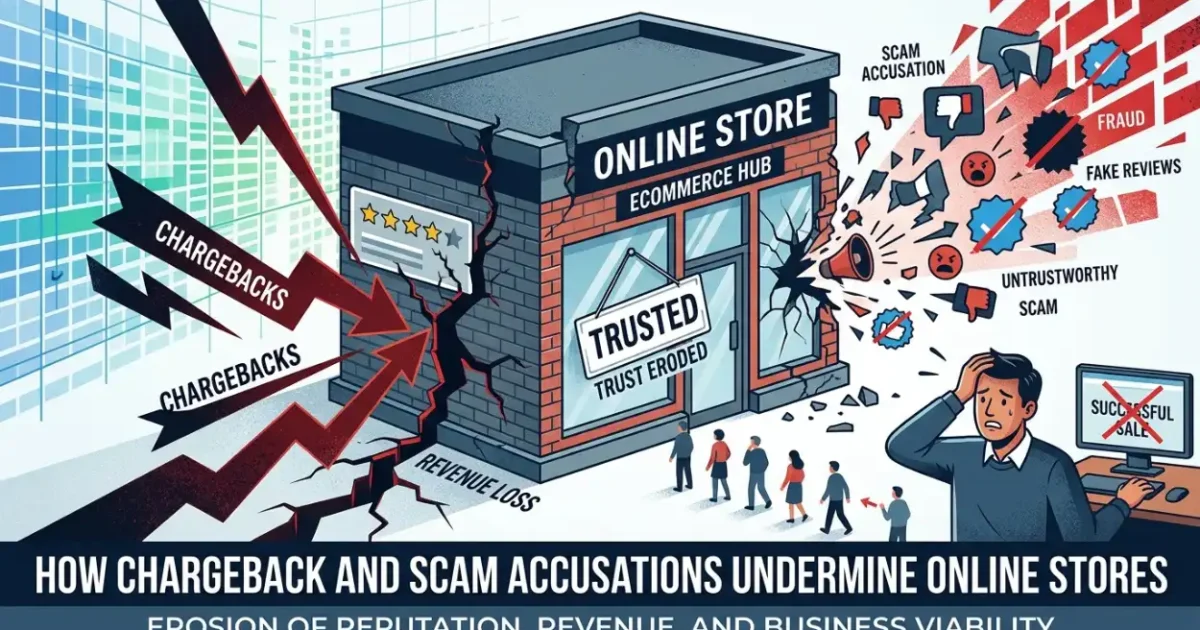
Chargeback and scam accusations undermine online stores by creating negative reputation signals that influence how customers, platforms and search systems interpret an ecommerce entity. Reputation management is the structured process of monitoring, analysing and influencing information that shapes an organisation’s perceived credibility across digital environments.
Online reputation refers to the collection of information, reviews, claims, discussions and other signals associated with an online store across search engines and digital platforms. When scam accusations or repeated chargeback complaints become visible and indexable, they contribute negative information to the store’s digital footprint. Search ecosystems evaluate this information alongside other signals when determining relevance, credibility and entity perception. The result is a reputation environment where customer concerns become part of the broader information structure surrounding the business.
Why do scam accusations affect an online store’s reputation?
Scam accusations affect an online store’s reputation because they introduce negative claims into the information environment surrounding the business. A scam accusation is a public statement alleging dishonest, misleading or fraudulent behaviour by an organisation. When such claims appear on review platforms, forums, social networks or websites, they create reputation signals connected to the store’s name or entity. Search engines process these pages according to relevance, authority, content quality and other ranking factors. Their visibility therefore influences what users encounter when researching the store.
The reputational impact depends on how accusations are represented across the digital footprint. A single unverified statement has a different information structure from repeated complaints published across independent platforms. Search engines do not simply treat every accusation as an established fact; they evaluate the content and its relationship with the wider information ecosystem. However, indexed negative content remains discoverable when it satisfies a search query and receives sufficient relevance or authority. This makes content indexing an important component of online reputation analysis.
Scam-related terminology also creates strong semantic associations around an ecommerce entity. When pages repeatedly connect a store with terms such as “scam”, “fraud”, “fake” or “rip-off”, those concepts become part of the searchable context surrounding the entity. Entity perception develops through the relationships between names, topics, claims and sources across the web. Search visibility therefore extends beyond the store’s own website. External content also contributes to the information users encounter during brand research.
How do chargebacks influence online reputation?
Chargebacks influence online reputation by creating a measurable indication of transaction disputes and customer dissatisfaction. A chargeback occurs when a cardholder disputes a transaction through their card issuer, resulting in a formal payment dispute. The chargeback itself is not equivalent to a public accusation, but related complaints frequently produce reviews, forum discussions or consumer reports. These public records create additional reputation signals around the online store. The combined information contributes to how the entity is evaluated across digital search environments.
Chargeback-related content becomes particularly relevant when customers describe disputes as evidence of deceptive or dishonest trading. Such descriptions transform a payment issue into a reputational claim. Search systems process the resulting content according to its textual relevance, source authority, indexing status and relationship to the search query. This creates a distinction between the underlying transaction event and the public information describing that event. Reputation analysis therefore requires evaluation of both the original issue and the content generated around it.
The volume and distribution of chargeback-related discussions also affect the structure of the digital footprint. A concentrated set of complaints on one platform creates a different search environment from similar complaints appearing across multiple authoritative sources. Search visibility depends on the pages that become relevant for queries involving the business name, product categories or trust-related terms. Consequently, chargeback activity becomes a reputation concern when associated content gains persistent visibility. The search ecosystem then contains more negative information connected to the store’s entity.
How do search engines interpret negative information about online stores?
Search engines interpret negative information through content relevance, source characteristics, contextual relationships and ranking dynamics rather than through a simple positive-or-negative reputation score. Search algorithms evaluate indexed pages to determine how well their content satisfies a particular query. A complaint page containing the store’s name and scam-related terminology has semantic relevance for searches about that business and its credibility. Its position within the SERP depends on multiple ranking signals. This process determines how prominently users encounter the information.
SERP evaluation refers to the process through which search systems determine which indexed results appear for a query and in what order. Reputation-related searches frequently include navigational, transactional and investigative intent. Queries such as a store name followed by “reviews”, “scam” or “legit” indicate an explicit interest in credibility. Pages addressing these concepts therefore possess strong contextual relevance to the search. The resulting SERP composition directly influences the information available to users researching the business.
Search engines also distinguish between the existence of information and the credibility of individual claims. An indexed accusation does not automatically establish that an online store committed wrongdoing. Instead, the search ecosystem contains a source making a particular claim, and users evaluate that claim alongside other available information. Authority, evidence, corroboration, recency and source context influence how people interpret the results. Reputation management analysis therefore examines the complete information environment rather than treating rankings as direct judgements of factual guilt.
Why do reviews and sentiment influence store credibility?
Reviews influence store credibility because they provide user-generated reputation signals that directly describe experiences with products, payments, delivery and customer support. Review content forms a visible layer of an online store’s digital footprint. Search engines index review pages when they meet their indexing and relevance conditions, allowing those pages to appear for brand-related queries. Users then interpret recurring themes, ratings and written feedback as evidence about the organisation. Sentiment becomes part of the broader entity perception created through this information.
Sentiment analysis refers to the classification and interpretation of expressed opinions within content. Positive, neutral and negative statements create different contextual associations with an entity. Repeated negative language concerning refunds, delivery failures or disputed payments establishes a different reputation context from reviews focused on successful transactions. The semantic relationship between the store and these topics becomes visible through search queries and indexed content. Review signals therefore operate as part of a wider credibility framework rather than as isolated ratings.
The structure of review content also affects how users interpret reputation signals. Detailed reviews contain contextual information about products, transactions and service interactions, while short accusations contain limited explanatory context. Search engines process both as content, but their visibility depends on the characteristics of the hosting page and its relevance to the query. A reputation assessment therefore requires analysis of review volume, sentiment, source distribution and search prominence. This provides a more accurate representation of the store’s search reputation.

How does negative content affect an online store’s search visibility?
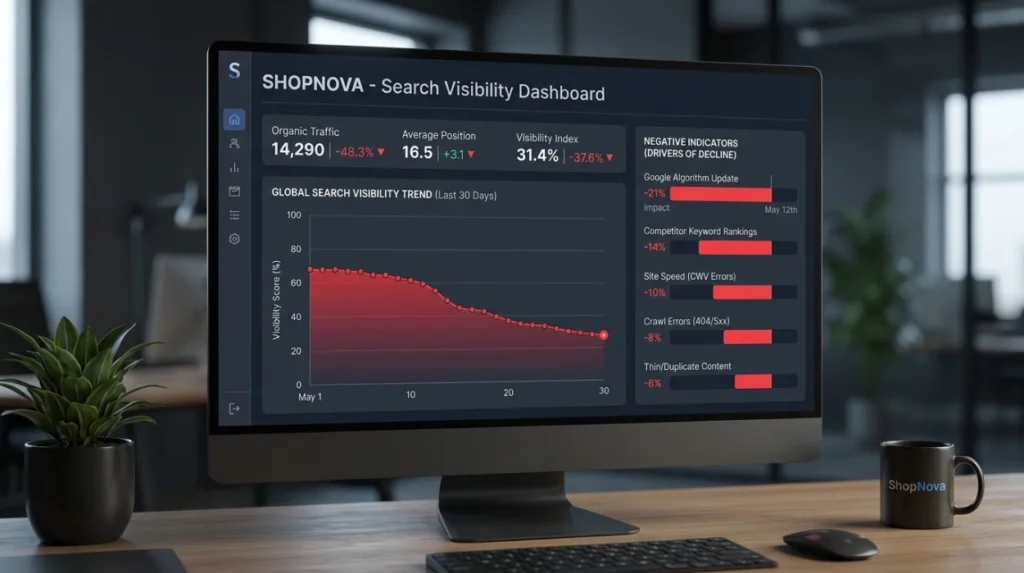
Negative content affects search visibility when relevant pages achieve prominence for queries associated with the store. Search visibility refers to the extent to which an entity and its associated information appear within search results for relevant queries. A store can retain strong visibility for product-related searches while simultaneously experiencing negative visibility for branded reputation queries. These two search environments represent different aspects of the same digital entity. Reputation analysis must therefore distinguish between general organic visibility and reputation-focused SERP visibility.
Negative pages become particularly significant when they occupy prominent positions for branded searches. Users researching whether an online store is trustworthy often search the business name alongside terms such as “reviews”, “complaints”, “scam” or “fraud”. These queries create a specific SERP environment where reputation-related content competes directly with official business information and independent reviews. Content indexing determines whether a page enters this environment at all. Ranking dynamics then determine how prominently that page appears.
Search perception is shaped by the total information presented across these results. When negative content occupies prominent positions, users encounter those signals earlier during their research process. This does not mean that search engines have assigned a definitive reputation score to the store. Instead, the visible SERP composition changes the information available for evaluation. The distinction is important because reputation concerns involve information prominence, interpretation and context rather than a single algorithmic reputation measurement.
What role does an online store’s digital footprint play in reputation?
An online store’s digital footprint is the complete collection of publicly accessible digital information associated with its entity across websites, platforms and search environments. This footprint includes the official website, product pages, customer reviews, social profiles, business listings, consumer discussions and third-party publications. Each source contributes information to the wider entity ecosystem. Search engines connect these sources through names, topics, links and semantic relationships. Reputation therefore develops across an interconnected information environment rather than within one website.
A strong digital footprint contains consistent and identifiable information about the business. Consistency helps establish clear relationships between the organisation, its website, products, contact information and external profiles. In contrast, fragmented or contradictory information creates additional complexity during entity evaluation. Search systems rely on identifiable relationships between entities and content to understand what different pages refer to. Entity credibility therefore depends partly on the clarity and consistency of information surrounding the business.
Negative content becomes more influential when it forms a persistent part of this footprint. A complaint page that remains indexed for a long period continues to provide information for relevant searches. New reviews or discussions can add further contextual signals to the same entity. This creates an evolving reputation environment where content accumulation affects the overall information landscape. Monitoring the digital footprint therefore provides a foundation for understanding how reputation changes over time.
How do authority and trust signals shape online store perception?
Authority and trust signals shape online store perception by influencing how users and search systems evaluate the reliability of information sources. Authority refers to the recognised expertise, relevance or standing associated with a source, while trust relates to the perceived reliability and consistency of the information provided. These concepts operate at the source and entity levels. A highly authoritative external publication can receive substantial visibility for information about a store. Its content therefore becomes an important component of the store’s searchable reputation environment.
Trust signals also include transparent business information, consistent entity details, credible reviews and established relationships between the store and recognised platforms. These signals create contextual evidence about the organisation. Search systems evaluate content and sources according to their own ranking and quality frameworks rather than applying a universal reputation score. Users, however, interpret the combined results when assessing credibility. The relationship between algorithmic visibility and human interpretation therefore forms an important part of search perception.
Authority does not automatically validate every statement published by a source. A reputable platform can host user-generated claims that still require contextual interpretation. Reputation analysis therefore evaluates the source, content, evidence and surrounding information together. This prevents isolated claims from being treated as complete representations of an entity. It also demonstrates why online reputation is fundamentally an information-analysis problem.
Dive Deeper With Our Expert Guides:
Why Trade Association Membership Signals Business Credibility
How Boycott Campaigns Start and Spread Against Businesses
How can online stores understand their reputation signals in search?
Online stores can understand their reputation signals by analysing the information associated with their entity across branded searches, review platforms and indexed third-party content. The process begins by identifying the queries users employ when researching credibility. These queries reveal which topics, claims and sources are connected to the business in search results. SERP evaluation then identifies the pages occupying prominent positions for those queries. This creates a structured view of the store’s search perception.
A systematic analysis evaluates content type, source authority, sentiment, indexing status and ranking position. It also identifies recurring associations between the store and specific reputation-related concepts. For example, repeated connections between a business name and refund complaints represent a distinct semantic pattern from general product reviews. The analysis separates factual business information from user-generated claims and editorial commentary. This distinction improves the accuracy of reputation assessment.
Defending Your Online Store Against Scam and Chargeback Accusations represents a related consideration because reputation analysis extends beyond identifying negative content to understanding how accusations become part of the searchable information environment. Examining these relationships helps clarify how content creation, indexing and ranking influence the perception of an ecommerce entity.
What does reputation management mean for online stores?
Reputation management for online stores is the structured analysis and oversight of information that influences how an ecommerce entity is perceived across digital platforms and search ecosystems. It involves understanding the sources, claims, reviews, reputation signals and content relationships associated with the business. The objective at an informational level is to understand the composition of the entity’s digital footprint. This includes analysing both positive and negative information rather than focusing exclusively on criticism.
Online reputation refers to the observable information environment surrounding an entity, while reputation management refers to the structured process of analysing and managing that environment. Search visibility forms an important part of this process because indexed content determines what information users encounter through search. Content indexing, ranking dynamics and SERP composition therefore connect reputation with search behaviour. The resulting perception depends on the interaction between available information and how prominently it is presented.
Understanding these systems also clarifies why chargebacks and scam accusations require contextual analysis. A transaction dispute, customer complaint and public accusation represent different information types. Their reputational significance depends on how they are published, indexed, connected to the entity and surfaced in search results. Defending Your Online Store Against Scam and Chargeback Accusations requires understanding these distinctions and assessing how different forms of information influence online perception. Evaluating these mechanisms provides a clearer framework for understanding online credibility without treating search rankings as direct judgements of business conduct.
Chargeback disputes and scam accusations become reputation concerns when associated information enters the public digital footprint of an online store and gains visibility in relevant search environments. Reputation management is the structured analysis of this information ecosystem, including reviews, claims, authority signals, sentiment, indexing and SERP composition.
The key distinction is between an underlying event and the information created around that event. Search engines evaluate indexed content according to relevance, authority and other ranking dynamics, while users interpret the resulting information through their own research behaviour. Understanding these mechanisms provides a clearer basis for analysing entity perception, search visibility and online credibility. A store’s reputation therefore exists as an evolving information environment shaped by the content connected to its entity across the web.
How do scam accusations affect an online store’s reputation?
Scam accusations create negative reputation signals when they appear in reviews, forums, social platforms or search results. If the content becomes indexed and visible for branded searches, it can influence customer perception and the store’s search reputation.
Do chargebacks damage an online store’s online reputation?
Chargebacks are payment disputes rather than direct reputation scores, but related complaints can generate negative reviews and public discussions. These indexed sources contribute to the digital footprint associated with the online store.
Can negative reviews affect an online store’s search visibility?
Negative reviews can appear prominently for searches involving a store’s name, complaints, scams or legitimacy. Their visibility forms part of the SERP environment that users evaluate when assessing an online business.
How do search engines interpret scam-related content about businesses?
Search engines evaluate scam-related content according to factors such as relevance, source characteristics, content quality and ranking signals. An accusation appearing in search results does not automatically establish that the claim is factual.
What is reputation management for an online store?
Reputation management is the structured process of monitoring and analysing information that shapes an online store’s digital reputation. It includes reviews, third-party content, reputation signals, search visibility, entity information and SERP composition.