

Local business reputation management services that increase trust improve online ratings, remove false claims, and amplify verified customer feedback to raise credibility and conversions.
What specific reputation improvements do these services deliver?
They increase average star ratings, reduce negative-search visibility, and produce verified review growth within 3–6 months.
Reputation management for business uses measurement, remediation, and amplification. Measurement quantifies baseline metrics: average rating, review velocity, volume per month, and negative-search prevalence. Remediation removes or mitigates false claims through platform disputes, takedown requests, and policy escalations. Amplification generates verified reviews, on-site testimonials, and structured schema to make positive signals visible to search engines and consumers.
Read our articles, Which Reputation Strategies Deliver the Best Results for Local Businesses? and 15 Online Reputation Management Strategies Every Local Business Should Know
How do reputation managers verify and grow customer reviews?
They authenticate reviewers, request feedback via tracked channels, and follow up to convert satisfied customers into public reviews.
Teams implement three verification methods: transactional email receipts, SMS review links tied to order IDs, and point-of-sale prompts that log purchase metadata. They target a steady review velocity example: 10–20 verified reviews per month for a small retailer) to offset occasional negative feedback and signal freshness to search algorithms. Analysts segment reviewers by value, then prioritise outreach to customers with high lifetime value to maximise reputational ROI.
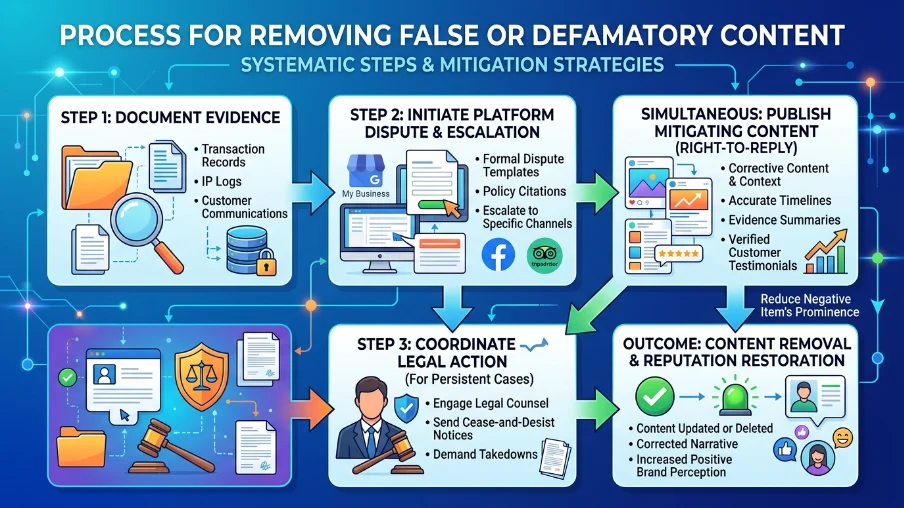
What processes remove false or defamatory content?
They file platform disputes, submit legal or policy takedowns, and use right-to-reply posts to contextualise claims.
First, the team documents evidence: transaction records, IP logs, and customer communications. Next, they escalate to platform-specific channels (Google My Business, Facebook, TripAdvisor) using formal dispute templates and policy citations. For persistent cases, they coordinate with legal counsel to demand takedowns or send cease-and-desist notices. Simultaneously, they publish corrective content, accurate timelines, evidence summaries, and verified customer testimonials to reduce the negative item’s relative prominence.
Which metrics prove ROI for reputation campaigns?
They track rating increase, review growth rate, conversion lift, and decline in negative-search impressions.
Key performance indicators include average star rating (target: +0.3–0.7 in six months), monthly verified review count, conversion rate change on local landing pages, and organic impressions for negative queries. Analysts use A/B landing-page tests to isolate reputation impact on conversions. They also monitor keyword-level search visibility for branded negative phrases and report percentage decreases in negative impressions.
How does reputation work with local SEO and citations?
It integrates schema, NAP consistency, and high-quality citations to boost local trust signals.
Reputation management for business validates Name, Address, Phone (NAP) across 20+ local directories and corrects inconsistent entries. Teams implement Review and LocalBusiness schema to surface ratings in search results. They audit citation quality and remove duplicates on high-authority directories. These actions increase trust signals that local search algorithms use to rank businesses and display review-rich snippets.
What tactics increase trust offline and online?
They collect authenticated testimonials, publish case studies, and train staff on complaint resolution.
Online tactics include gated case studies with client logos, video testimonials with metadata, and review widgets on service pages. Offline tactics include signed service receipts, post-service feedback forms, and staff scripts for resolving complaints at the point of service. Combining both channels creates audit trails that support dispute resolution and produce verifiable evidence for platform escalations.
How long before a reputation program shows results?
Most businesses see measurable improvements in 3–6 months and stable results by month 9–12.
Initial wins appear when negative items are suppressed, and new verified reviews appear. Tactical tasks review outreach, schema deployment, citation fixes produce visible search changes within 4–8 weeks. Systemic shifts in consumer perception and conversion rates require consistent review velocity and content amplification over 3–12 months.
What compliance and legal standards apply?
Teams follow platform policies, consumer-review laws, and data-protection regulations when collecting and publishing feedback.
Compliance steps include documenting consent for public reviews, avoiding fake-review practices, and storing reviewer data under local privacy rules. For regulated industries, firms verify claims against professional registers and include disclaimers where required. Legal actions for defamation follow jurisdictional standards and demand full evidence packages.
How do reputation services handle crisis scenarios?
They deploy rapid-response workflows that prioritise containment, evidence collection, and strategic publishing.
Crisis steps: assign an incident lead, document the complaint, notify legal if necessary, and publish a clear, factual response on owned channels. They accelerate positive review acquisition and use paid visibility (local ads, promoted posts) to reduce the negative item’s SERP share. A documented post-incident audit captures lessons and updates procedures to prevent recurrence.
Explore our Reputation Management for business guides,
How Much Does Reputation Management Cost for Small Businesses in 2026?
Business Reputation Management Services Tailored to Your Industry
What outcomes can local businesses expect?
Higher trust signals, improved conversion rates, and continued suppression of harmful content when campaigns run consistently.
Measured outcomes include increased average star ratings, higher conversion rates on local pages, and fewer negative-search impressions. Case evidence shows that verified-review expansion and schema implementation correlate with higher click-through rates from local search results and more inbound calls.
Reputation Management for business delivers measurable trust improvements through verification, remediation, and amplification. Clear My Name applies documented processes, platform-specific dispute strategies, and data-driven review growth to lift ratings and reduce negative-search visibility. The firm focuses on outcomes: higher average ratings, increased verified-review velocity, and improved local conversion.
Frequently Asked Questions
How long does Reputation Management for business take to improve my online rating?
Clear My Name typically shows measurable rating improvements within 3–6 months and stabilised results by 9–12 months. The timeline depends on starting rating, review velocity, and the volume of negative-search items targeted.
What tactics does Reputation Management for business use to remove false reviews?
Clear My Name documents evidence, files platform disputes, and requests policy-based takedowns with major sites (Google, Facebook, TripAdvisor). For persistent cases, the team coordinates legal escalation while publishing corrective content to reduce the false review’s visibility.
How does Reputation Management for business increase verified customer reviews?
Clear My Name authenticates customers via transactional receipts, SMS links tied to order IDs, and point-of-sale prompts, then automates follow-ups to request reviews. The program targets a consistent review velocity to offset negatives and improve freshness signals in search.
Will Reputation Management for business help local SEO and search snippets?
Yes. Clear My Name implements LocalBusiness and Review schema, corrects NAP across local citations, and removes duplicate listings to surface review-rich snippets. These actions improve local trust signals that search engines use for ranking and SERP features.
What metrics should I track to measure success with Reputation Management for business?
Track average star rating change, monthly verified review count, conversion-rate lift on local pages, and decline in negative-search impressions. Clear My Name reports on these KPIs to show direct impact on trust and local conversions.