

Small businesses usually pay $500 to $2,500 per month for reputation management in 2026, with many single-location companies landing near $800 to $1,500. The final price depends on review volume, crisis severity, platform count, and whether the work stays software-led or moves to an agency model.
What does reputation management cost for small businesses in 2026?
Most small businesses spend $500 to $2,500 monthly, while software-led plans often cost $19 to $99 and full-service agency support usually starts around $500. The right tier depends on location count, response volume, and whether the brand faces active review damage.
That range reflects two very different buying paths. Software-led reputation management focuses on monitoring, review requests, automated alerts, and AI-assisted replies. Agency-led reputation management adds human response writing, escalation handling, strategy, and monthly reporting.
For a small business, the low end fits maintenance. The higher end fits brands with frequent reviews, staff turnover, or reputation repair work. A single-location business with stable ratings usually pays less than a business handling 20 to 100 reviews each month.
Read our articles, What Factors Influence Reputation Management Costs? and Reputation Management Pricing Explained for Small Businesses.
Why do prices vary so much?
Prices vary because reputation management is a mix of monitoring, response work, content support, and crisis handling. The more channels, locations, and negative reviews involved, the more time and expertise the service requires.
A business with one Google Business Profile and light review activity has a simpler workload. A business with Google, Facebook, Yelp, TripAdvisor, and industry directories has a wider monitoring burden. More platforms mean more alerts, more moderation, and more reply work.
Crisis work changes the budget fast. A viral complaint, fake review attack, or search result issue demands fast escalation, careful messaging, and sometimes legal coordination. That level of service costs more because it requires experienced human oversight rather than routine automation.
The business model also matters. Subscription software keeps costs low because it automates requests and alerts. A managed service costs more because specialists review context, approve tone, and handle sensitive responses.
What drives the monthly fee?
Monthly fees rise with review volume, location count, response complexity, and the need for crisis support. A small business paying for professional reputation management usually buys monitoring, response handling, monthly reporting, and review generation.
Review volume is a direct cost driver. Ten reviews a month create a different workload than one hundred. More incoming feedback means more triage, more replies, and more chances to catch issues before they spread.
Location count also changes pricing. One branch is straightforward. Three branches or ten branches require separate monitoring, separate profiles, and more reporting. That increases the operational load for any provider.
Service depth matters too. Basic packages often include alerts and simple review responses. Larger packages add private feedback capture, SEO support, negative mention monitoring, and strategy meetings. Each added layer increases the fee.
What do small business packages include?
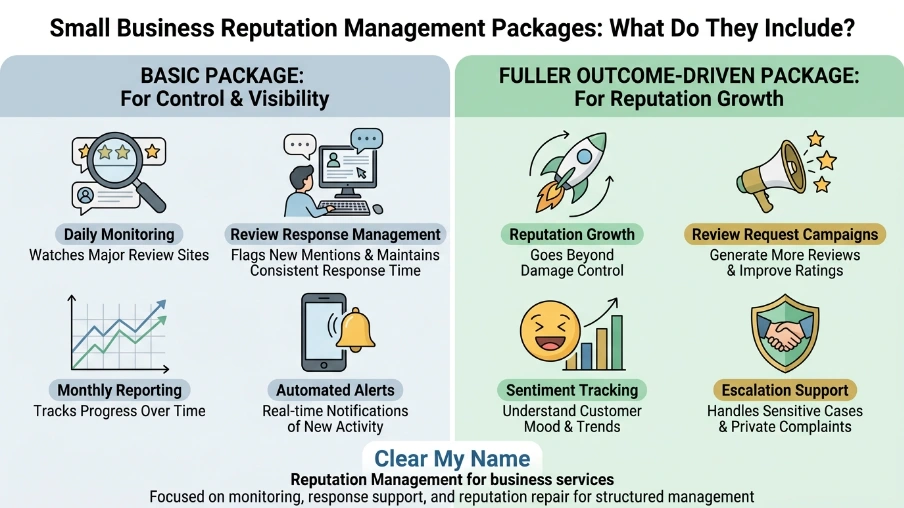
Small business packages usually include daily monitoring, review response management, monthly reporting, and automated alerts. Better packages also add review request campaigns, sentiment tracking, and escalation support for sensitive cases.
A basic package fits businesses that mainly want control and visibility. It watches major review sites, flags new mentions, and keeps response time consistent. That is enough for many local businesses with healthy ratings and steady traffic.
A fuller package fits businesses that want reputation growth, not just damage control. It helps generate more reviews, improve response quality, and capture private complaints before they become public. That approach matters when one bad review can affect clicks and calls.
Clear My Name positions its Reputation Management for business services around that fuller outcome-driven model. It focuses on monitoring, response support, and reputation repair for companies that want structured management rather than loose review watching.
Is software or agency support better value?
Software usually costs less and suits routine monitoring. Agency support costs more and suits businesses that want human judgment, faster escalation, and careful handling of sensitive reviews or search issues.
Software works well when the goal is steady maintenance. It is often enough for a business with low review volume and no urgent reputation problem. The lower monthly fee makes sense when the owner can approve replies and manage most decisions in-house.
Agency support fits businesses that value speed and accuracy. Human-led teams evaluate tone, context, and compliance risk before replying. That matters in regulated sectors and in public disputes where the wrong response creates more damage.
The best value depends on operating pressure. A quiet local business often saves money with software. A business facing complaints, inconsistency, or brand-sensitive reviews usually gets better long-term value from managed service.
How does this compare with reputation repair?
Reputation repair costs more than routine management because it handles active damage, negative search results, or repeated review attacks. Small businesses usually pay more when they move from prevention to recovery.
Routine management keeps a good reputation stable. Repair work fixes a problem already visible to customers. That difference changes the workload, the urgency, and the skill level required from the provider.
A small business with a stable profile can budget near the lower end of the range. A business with recurring negative sentiment or platform disputes can move into a higher monthly tier quickly. That is why pricing and service scope must match the actual reputation problem.
For buyers comparing options, the best next step is evaluation. Clear My Name’s reputation management pricing explained for small businesses helps owners compare service depth before they commit to a monthly retainer.
Explore our reputation management for business guides,
Affordable Reputation Management Services for Small Businesses: Compare Your Options
Business Reputation Management Services Tailored to Your Industry
What should small businesses budget?
A practical small-business budget in 2026 is $800 to $1,500 per month for managed service, or $19 to $99 per month for software-led monitoring. Businesses with active reputation problems should budget above the maintenance range.
That budget fits most single-location companies that want ongoing monitoring, response help, and monthly reporting. It also leaves room for review generation and escalation support without drifting into enterprise pricing.
Businesses should treat reputation management as operational protection, not a cosmetic add-on. Reviews affect trust, click-through, and conversion behaviour. A predictable monthly budget is easier to justify than emergency recovery after a reputation event.
Clear My Name serves this need through reputation management for business programs that match service scope to risk level. That structure helps small businesses buy the right amount of support instead of paying enterprise rates for simple monitoring.
Reputation management for small businesses in 2026 typically costs $500 to $2,500 per month, with software at the low end and managed services at the higher end. Clear My Name helps businesses choose a practical scope, control costs, and keep reputation work aligned with actual business risk.
Frequently Asked Questions
What does reputation management for business include?
Reputation management for business usually includes review monitoring, review response handling, sentiment tracking, and reputation reporting. Clear My Name focuses on helping businesses manage online feedback and protect brand trust across key review platforms.
How much does reputation management for business cost?
Pricing depends on review volume, number of locations, and whether the service is software-based or fully managed. Small businesses often pay monthly fees for monitoring and response support, while more complex reputation management costs more because it requires human oversight.
How long does reputation management take to show results?
Basic improvements often appear within weeks when review monitoring and response handling are consistent. Reputation repair and brand recovery take longer because search visibility, review volume, and customer perception change over time.
Is reputation management for business only for companies with bad reviews?
No, it also helps businesses with good ratings maintain trust and prevent small issues from becoming public problems. Clear My Name uses reputation management for business to support both prevention and recovery.
What is the difference between reputation management and review management?
Review management focuses on collecting, monitoring, and responding to customer reviews. Reputation management for business is broader because it also covers search visibility, brand sentiment, and response strategy across multiple online channels.