

Hostile media interviews can remain visible online for years because recorded statements, news reports, transcripts, clips and commentary continue to be indexed and ranked by search engines. Reputation management is the process of understanding and influencing how information about a person or entity is represented across digital environments, while online reputation refers to the information and reputation signals that shape public perception through search ecosystems.
Why do hostile media interviews remain visible online for years?
Hostile media interviews remain visible because digital publications create persistent information records that search engines can continue to index. A broadcast interview does not exist only at the moment it is transmitted; recordings, written reports, video clips, quotations and subsequent commentary create multiple searchable assets. Each asset can receive its own URL, title, metadata, links and engagement signals, allowing the same interview to occupy different positions across search results. Search engines evaluate these pages independently while also connecting them through semantic relationships. This process gives an old interview continuing relevance when other websites repeatedly reference, quote or embed the original material.
Online reputation refers to the accumulated representation of a person across these indexed information sources. For politicians, reputation signals include official statements, parliamentary records, media coverage, interviews, biographies, opinion pieces, social profiles and third-party publications. A hostile interview becomes part of this digital footprint when its content is repeatedly associated with the politician’s name or entity. Search engines do not interpret the event solely according to its original publication date. Content indexing and continued references determine whether historical material remains discoverable for future searches.
How does a hostile interview become part of a politician’s digital footprint?
A hostile interview becomes part of a politician’s digital footprint when information derived from the interview is published, indexed and connected to the politician as a recognisable entity. The digital footprint is the collection of online information associated with an individual, organisation or public identity. In search ecosystems, this footprint includes both information directly controlled by the subject and information published by independent sources. A single interview therefore represents one information event within a wider network of documents. Repeated references to the same event strengthen its relationship with the politician’s name and related search entities.
The structure of digital publishing also extends the lifespan of interview content. A broadcaster can publish a full recording, while a newspaper publishes a written report and another publication creates an analysis based on selected statements. Social platforms can then generate additional posts containing clips or quotations. These documents create separate indexing opportunities even when they originate from the same interview. Search engines evaluate the relationship between these pages through entities, links, text similarity and contextual relevance, allowing one interview to generate a wider reputation footprint.
How do search engines evaluate old interview content?
Search engines evaluate old interview content through signals related to relevance, authority, content quality, links, freshness and user intent. The age of a page does not automatically remove it from search results because historical content remains relevant for queries seeking information about past statements or controversies. SERP evaluation considers how closely a document satisfies the meaning of a search query rather than simply prioritising the newest publication. An old interview therefore remains searchable when its subject matter continues to match queries associated with the politician.
Authority also influences the visibility of historical media coverage. A report published by an established news organisation can possess stronger authority signals than an isolated page with little external recognition. Links from other authoritative publications reinforce the relationship between the source and the subject. Search engines use these signals to establish which documents provide useful information for particular queries. The resulting ranking position determines how prominently the historical interview appears when users search for the politician’s name or related topics.
Why do repeated references increase the visibility of a hostile interview?
Repeated references increase visibility because each publication creates additional contextual evidence connecting the interview to the politician. A news report can quote an interview, an opinion article can analyse the exchange, and another publication can reference the same statements in a later political discussion. These pages create a network of related documents rather than a single isolated record. Search engines analyse these relationships as part of understanding entities and topics. The interview therefore gains broader semantic relevance when other indexed sources repeatedly associate it with the same person and subject.
This mechanism is particularly important for search perception because users rarely encounter information through one source alone. A search results page can contain the original interview, subsequent reporting, video material, commentary and reference pages at the same time. The combined SERP composition creates an information environment around the politician. Individual pages therefore contribute to a broader entity perception rather than functioning independently. Repetition across authoritative sources can reinforce the prominence of a particular event within that environment.
How does sentiment influence the interpretation of political interview content?
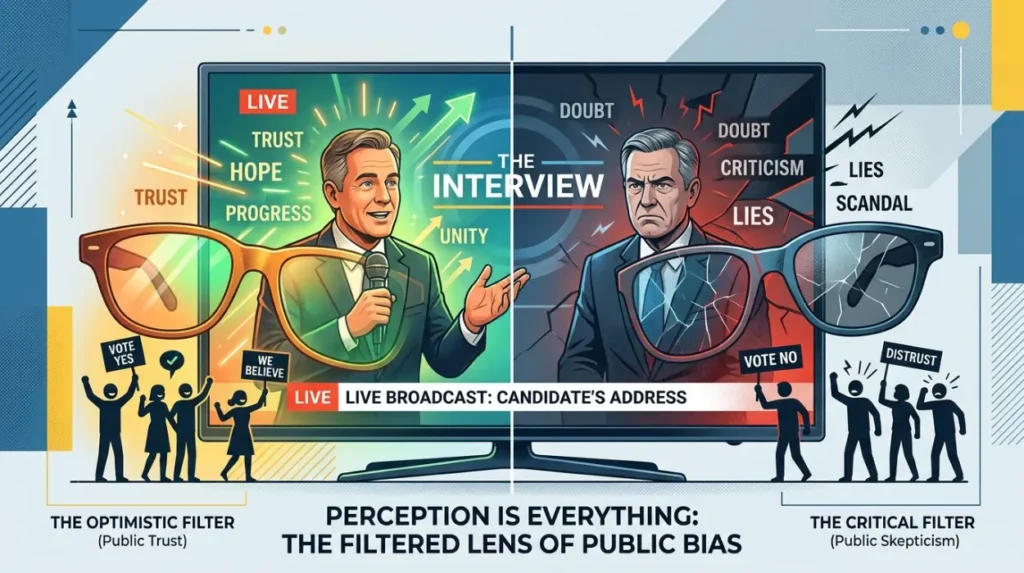
Sentiment influences interpretation by providing contextual signals about how published information describes a politician, although search engines do not treat sentiment as a simple positive-or-negative ranking score. Sentiment analysis refers to the classification of language according to expressed attitudes, opinions or evaluations. Media reports can use neutral descriptions, critical language or favourable framing when discussing the same interview. These linguistic patterns affect how readers interpret the information surrounding an entity. Search systems also analyse language and context to understand relationships between people, subjects and concepts.
Review signals operate differently from media sentiment because reviews generally relate to experiences with products, services or organisations. For political entities, broader reputation signals include commentary, editorial coverage, public statements and third-party assessments rather than conventional customer reviews. The distinction matters because reputation analysis must identify the type of information being evaluated. Treating every negative reference as an equivalent review signal produces an inaccurate representation of the search ecosystem. Entity perception depends on the source, context, authority and relationship of each document to the politician.
Why can short interview clips create long-term search visibility?
Short interview clips can create long-term search visibility because video fragments are easily redistributed across multiple digital platforms. A brief section of an interview can become a standalone video, social post, news article or embedded media asset. Each publication creates another location where the same statement is available to users and search engines. The surrounding title, description and accompanying text can also alter the context in which the statement appears. This transforms one media event into a collection of related searchable assets.
The duration of a clip does not determine its search significance. A short extract containing a statement frequently searched in connection with a politician can remain relevant long after the original broadcast. Search visibility is determined by the relationship between content and search intent, supported by indexing and authority signals. When third-party pages continue to reference the clip, its semantic connection to the politician becomes more established. This explains why a short media segment can contribute to a digital footprint for an extended period.
How does search intent affect the visibility of historical interviews?
Search intent determines which historical interview content becomes relevant because search engines match documents to the underlying purpose of a query. A navigational query seeks information about a specific politician, while an informational query can seek details about a past statement, controversy or interview. Different intents produce different SERP compositions even when the same interview is involved. Search engines evaluate the relevance of available documents against the meaning of the query. Historical content therefore becomes more visible when it directly satisfies a continuing information need.
Entity-based searches are particularly important for politicians because a person’s name functions as a central search entity. Queries containing the name can retrieve official profiles, news coverage, interviews, biographies and commentary. The ranking of these documents influences which information users encounter first. Search perception is therefore shaped by the composition and ordering of information rather than by the existence of one individual page. Understanding search intent provides a framework for analysing why particular interview references remain prominent.
Dive Deeper With Our Expert Guides:
Why Former Officials Struggle With Reputation After Leaving Office
How Attack Ads Live On in Search Results After a Campaign
What role does authority play in the long-term visibility of political interviews?
Authority determines how strongly a published source competes for visibility within search results. A page from an established media organisation can carry stronger authority signals through its reputation, links, publication history and references from other sources. These signals help search engines evaluate the reliability and significance of information within a particular topic. Authority does not guarantee a permanent ranking position, but it contributes to the ability of a page to remain competitive. Political interviews published by high-authority sources therefore have a substantial presence within search ecosystems.
Trust signals also operate across the wider information environment. Consistent factual information, identifiable sources, clear authorship and reliable references provide contextual evidence about the quality of a document. Search engines evaluate these characteristics alongside relevance and other ranking signals. Entity perception consequently develops from the combined information available across multiple sources. The long-term visibility of a hostile interview is therefore connected to both the original publication and the authority of the wider network that continues to reference it.
How can the long tail of a hostile interview be understood?
The long tail of a hostile interview refers to the continuing appearance of interview-related information across search results, publications and digital platforms after the original event has ended. This long tail develops through secondary reporting, archived pages, video clips, quotations, commentary and repeated references. Each new document adds another searchable representation of the original event. Over time, these representations can become associated with different queries concerning the politician, topic or statement. The interview therefore develops a broader semantic footprint than its original publication suggests.
Understanding Managing the Long Tail of a Hostile Media Interview requires analysing how the original event becomes distributed across an information network. The analysis includes identifying indexed documents, mapping repeated references, evaluating source authority and examining the queries connected to the content. This approach separates the original interview from the subsequent information structures that maintain its visibility. It also demonstrates why historical reputation signals cannot be assessed by looking at a single search result alone.
Why does search perception matter when historical media remains indexed?
Search perception matters because users form impressions from the information presented within search results rather than from the complete history of every available source. A historical interview can occupy a prominent position because it continues to satisfy relevant queries and receives ongoing references. The surrounding SERP can reinforce particular themes through repeated headlines, excerpts, videos and commentary. Search perception therefore reflects the relationship between content availability, ranking position and user interpretation. It is an observable outcome of how indexed information is organised around an entity.
Reputation systems operate across this wider information environment. A politician’s online reputation is not defined by one interview, one article or one ranking position. It emerges from the cumulative interaction of authoritative sources, indexed content, search intent, contextual language and recurring reputation signals. Understanding these mechanisms provides a clearer explanation of why historical media remains discoverable and how it contributes to entity perception.
Hostile media interviews can follow politicians online for years because digital information persists through indexing, redistribution, linking and repeated reference. Reputation management is therefore closely connected to the structure of search ecosystems, where content continues to influence entity perception according to relevance, authority and search intent. A single interview can generate multiple indexed assets, including reports, clips, transcripts and commentary, each contributing to the politician’s digital footprint.
The long-term effect is determined by the wider information network surrounding the original event. SERP evaluation, content indexing, authority signals and contextual sentiment all influence how historical media appears to users. Understanding these mechanisms provides an objective framework for analysing political search reputation without treating one piece of media as an isolated event.
Why do hostile media interviews remain online for years?
Hostile media interviews remain online because recordings, transcripts, news reports, video clips and commentary can continue to be indexed and referenced after the original broadcast. These separate pages can keep the interview connected to a politician’s name within search results.
How do hostile media interviews affect a politician’s online reputation?
A hostile interview can become part of a politician’s digital footprint when search engines index related reports, clips and commentary. Its visibility can influence search perception by contributing recurring reputation signals around the politician’s entity.
Can old political interviews still appear in Google search results?
Yes, historical political interviews can remain visible when their content continues to match relevant search queries. Search visibility depends on factors such as relevance, authority, content indexing and references from other websites.
Why do short clips from political interviews remain searchable?
Short interview clips can be republished across news websites, social platforms and video services, creating multiple indexed copies or references. Titles, descriptions, links and surrounding commentary can further strengthen their association with the politician.
How does search engine ranking affect a politician’s reputation?
Search engine ranking determines which information users encounter most prominently when searching for a politician. The resulting SERP composition can influence entity perception by bringing particular news reports, interviews, videos and commentary to the user’s attention.