
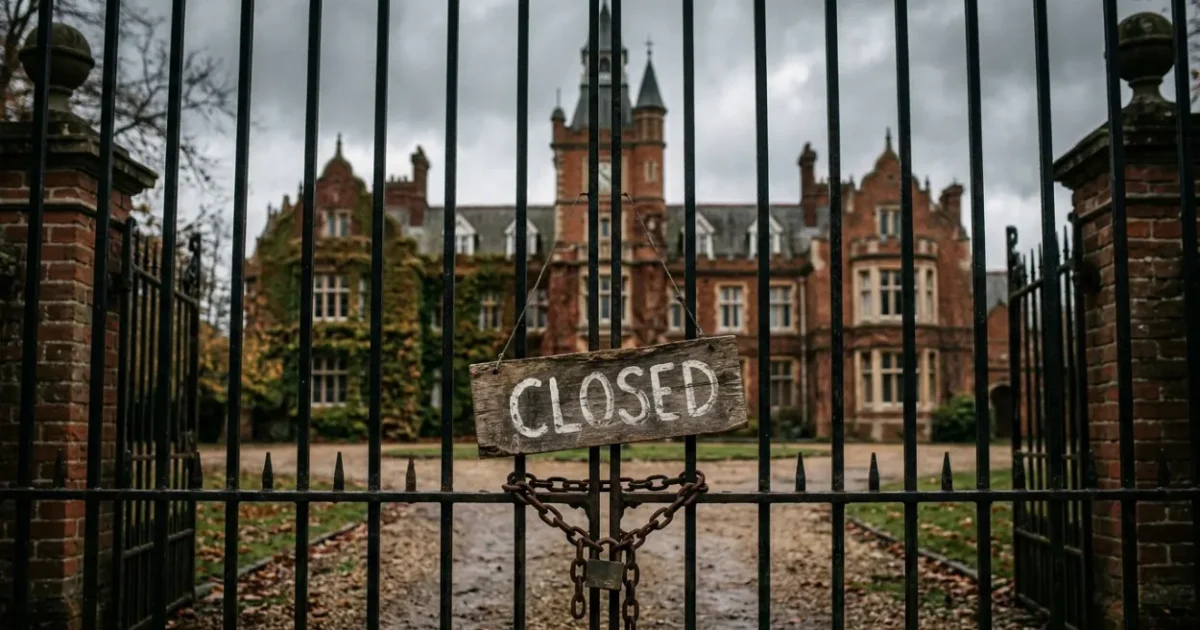
There were 129 private school closures in England between 1 January 2024 and 31 December 2025, comprising 58 closures in 2024 and 71 in 2025. The latest government data also records 51 closures between 1 September 2025 and 31 July 2026, although that figure covers a different academic-year period and is not directly added to the 129.
Reputation management is the structured process of understanding, monitoring and influencing how an organisation is represented and interpreted across digital information systems. Online reputation refers to the collection of information, signals and associations that shape perceptions of an entity across search engines, websites, reviews and other online sources. For private schools, closures form part of a wider information environment in which financial stability, educational performance, leadership, reviews and institutional credibility can influence entity perception.
How Many Private Schools Have Closed Since 2024?
The clearest official figure currently available is 129 closures in England across 2024 and 2025. The Department for Education recorded 58 independent school closures in 2024 and 71 in 2025, providing a direct comparison between the two calendar years.
This figure requires careful interpretation because education is devolved across the UK. Department for Education closure statistics apply to England, rather than providing a single consolidated figure for England, Scotland, Wales and Northern Ireland. Earlier parliamentary responses explicitly identified England as the geographical scope when discussing independent-school closures.
The distinction matters for search evaluation because a query containing “UK” can return information covering different geographical datasets. A search engine evaluates the relevance of a result against the wording and context of the query, while users interpret numerical claims according to the implied geographical scope. Accurate entity information therefore depends on clearly identifying whether a statistic concerns England or the wider UK.
Why Did Private School Closures Increase Between 2024 and 2025?
The number of recorded closures increased from 58 in 2024 to 71 in 2025, but closure statistics do not establish a single cause for every school. The Department for Education has identified financial viability, school performance, demographic changes and regulatory action among factors affecting closures. Government responses also state that VAT is not the only factor influencing the closure rate.
The introduction of VAT forms an important part of the post-2024 information environment. From 1 January 2025, private-school education and boarding services supplied for a charge became subject to the standard 20% VAT rate. This policy changed the financial context in which independent schools operate, creating a significant subject for reporting, commentary and public discussion.
From a reputation perspective, the distinction between cause, association and timing is essential. A closure occurring after a policy change does not automatically establish that the policy caused the closure. Search content that separates verified facts from interpretation provides stronger informational clarity, while unsupported causal statements can create inaccurate associations around an educational entity.
How Does School Closure Information Affect Online Reputation?
School closure information affects online reputation by becoming part of the digital footprint associated with the institution. A digital footprint is the collection of publicly accessible information connected to an organisation across websites, news publications, directories, databases, social platforms and other indexed sources. Search engines use this information to understand entities and determine which pages are relevant to particular queries.
A closure announcement can therefore become an enduring reputation signal even after the original event has passed. News reports, archived pages, regulatory records and commentary can continue appearing for searches involving the school’s name, leadership, location or financial position. The resulting SERP evaluation reflects the availability, relevance and authority of those sources rather than simply the date on which the closure occurred.
This process does not mean that a closure automatically produces a negative reputation. A factual closure record is an information signal, while the interpretation of that record depends on surrounding content. Search results containing official information, accurate reporting and contextual institutional material create a different information environment from one dominated by unsupported allegations, incomplete accounts or repetitive negative commentary.
How Do Search Engines Interpret Private School Reputation?
Search engines interpret reputation through interconnected information signals rather than through a single reputation score. These signals include the relevance and authority of pages, references between entities, structured information, user-generated content, reviews, news coverage and the consistency of information across sources. Search systems evaluate these signals to determine which content best satisfies a particular query.
Authority represents the strength and reliability associated with a source or page. An official regulatory record carries a different informational function from an anonymous comment, while established journalism provides a different type of evidence from an unverified social-media post. Entity perception develops through the interaction of these information sources rather than through one isolated page.
Content indexing also determines whether information becomes available for search evaluation. Indexed pages can enter the information ecosystem for branded and non-branded queries, while content that is not indexed has limited direct visibility in conventional search results. Consequently, the digital footprint surrounding a private school influences how users encounter information when researching its identity, history or reputation.
How Do Reviews Influence the Reputation of Private Schools?
Reviews function as reputation signals because they provide user-generated information about perceived experiences with an institution. For private schools, review content can address teaching, pastoral care, communication, facilities, leadership, admissions and other aspects of the educational experience. Search systems can associate these recurring topics with the entity when review pages are indexed and relevant to user queries.
Sentiment interpretation adds another layer to review analysis. Positive, neutral and negative language provides contextual information about how users describe an organisation, although sentiment does not independently establish whether a claim is accurate. A large volume of similar statements can create a strong perception signal, while isolated comments provide a narrower representation of user experience.
Review information also interacts with other reputation signals. A negative review appearing alongside authoritative institutional information does not carry the same contextual meaning as the same review appearing alongside multiple independent reports. SERP evaluation therefore depends on the broader content environment surrounding the school rather than on review sentiment alone.
What Reputation Signals Shape a Private School’s Search Visibility?
Private school search visibility is shaped by the combination of institutional, editorial, user-generated and third-party information. The digital footprint can include the school’s official website, regulatory records, examination information, news coverage, review platforms, directories, educational databases and social profiles. Each source contributes a distinct type of information to the entity’s online representation.
Several core signals help explain this process:
- Evaluate source authority by distinguishing official records, established publications, specialist education sources and user-generated pages according to their informational role.
- Analyse content relevance by examining whether indexed pages directly address the school’s identity, location, leadership, educational provision or reported events.
- Compare information consistency by checking whether names, addresses, leadership details, school status and historical information remain consistent across authoritative sources.
- Interpret sentiment context by examining recurring themes in reviews and commentary rather than treating individual positive or negative statements as complete representations of the institution.
These mechanisms demonstrate why search visibility is an information-architecture issue as well as a ranking issue. The pages visible for a school-related query determine which facts, opinions and interpretations users encounter first.
How Does Negative News Influence Private School Entity Perception?
Negative news influences entity perception by associating an organisation with specific events, subjects or claims within indexed content. When a private school closure receives substantial coverage, reports can become connected with the school’s name across search results, news databases and third-party websites. The association remains part of the searchable information environment as long as relevant pages remain indexed and accessible.
The effect depends on the characteristics of the content. A factual report from an authoritative publication provides a documented account, while commentary adds interpretation and user-generated discussion adds individual perspectives. Search engines do not need to determine whether an organisation is “good” or “bad”; they retrieve and rank information according to relevance and other ranking signals.
This distinction is central to reputation analysis. Search perception is formed by the information users encounter, while reputation itself involves the broader interpretation of that information. A school associated with closure reports can therefore have an accurate digital footprint while still requiring contextual analysis of what those reports actually communicate.
Why Does Accurate Information Matter for Private School Reputation?
Accurate information matters because search users frequently use online sources to evaluate organisations before making decisions. Parents, prospective pupils, staff, journalists and other stakeholders can examine search results when researching a school’s status, leadership, educational record or financial circumstances. Inconsistent information increases the difficulty of distinguishing verified facts from outdated or speculative material.
Accuracy also strengthens entity clarity. When authoritative sources consistently identify the same organisation, search systems receive clearer signals about the relationship between names, locations, websites and institutional attributes. This supports more coherent indexing and improves the informational consistency of the digital footprint.
For reputation analysis, accuracy does not mean presenting only favourable information. It means ensuring that claims, dates, statistics and contextual explanations correspond with reliable evidence. A balanced information environment therefore provides stronger foundations for understanding how an institution is represented online.
Dive Deeper With Our Expert Guides:
Why Are Private School Pupil Numbers Falling in the UK? 2026 Data Analysis
Private School Funding Crisis: Why 2026 Is a Turning Point
How Can Private School Reputation Be Analysed After a Closure?
Private school reputation can be analysed after a closure by examining the information ecosystem surrounding the school’s entity. The analysis begins with identifying indexed pages, official records, news coverage, reviews, directories and other sources that reference the institution. Each source is then assessed according to authority, relevance, factual accuracy, date and relationship to the entity.
The next stage evaluates how those sources interact within search results. Branded searches reveal what information users encounter when looking specifically for the school, while broader searches reveal how the institution appears in educational, geographical or topical contexts. Comparing these query groups demonstrates whether closure information is isolated to specific searches or forms a broader association.
This approach also distinguishes historical information from current entity status. A school that closed in 2024 can continue generating search results years later because historical pages remain indexed and relevant to searches about its name. Reputation analysis therefore requires temporal context alongside ranking analysis, ensuring that older information is interpreted according to its original date and present relevance.
What Does the Number of Private School Closures Tell Us About Reputation?
The number of closures provides an important factual indicator of change within the independent-school sector, but it does not independently measure reputation. Official data records the occurrence of closures, while reputation analysis examines how those events are represented, interpreted and connected to individual entities across digital sources.
The wider data also demonstrates why numerical claims require context. Government data records 129 closures in England across 2024 and 2025, while the latest available academic-year figures show that 108 private schools opened and 51 closed between 1 September 2025 and 31 July 2026. The presence of new school registrations demonstrates that sector movement includes both openings and closures rather than representing a one-directional change.
For search ecosystems, this distinction affects entity perception. A closure statistic becomes meaningful when users understand its geographical scope, time period, definition and relationship to wider sector data. Accurate contextualisation therefore forms a central component of online credibility.
How Are Private School Closures Represented in Search Results?
Private school closures are represented in search results through the interaction of official records, journalism, educational databases, reviews and other indexed content. Search engines organise these sources according to query relevance and ranking signals, meaning different searches can produce different representations of the same institution.
A branded query containing a school’s name can prioritise institutional or historical information, while a query focused on school closures can prioritise news reporting and government data. The same closure therefore exists within multiple search contexts. Understanding these contexts helps explain why reputation cannot be evaluated by examining one search result alone.
The broader principle is that online reputation is an information system. Reputation signals, content indexing, source authority, review sentiment, entity associations and ranking dynamics collectively influence what users see and how they interpret an organisation. For private schools, closure statistics form one factual component of this system rather than a standalone measure of institutional credibility.
The relationship between enrolment, public perception and online information also becomes relevant when analysing what happens after reputational disruption. For a deeper consideration-stage analysis, How Do Private Schools Recover Enrolment After a Reputation Crisis? examines the relationship between reputation perception and enrolment recovery.
What Is the Key Reputation Insight From Private School Closures?
The key insight is that school closures are both factual events and searchable information signals. Official statistics establish the number of closures, while search ecosystems determine how those events are presented, associated with entities and interpreted by users.
The available government evidence records 129 private school closures in England during 2024 and 2025, with 58 occurring in 2024 and 71 in 2025. The latest data also shows continued sector movement through both closures and openings during the 2025/26 academic year. These figures demonstrate the importance of separating verified statistics from broader claims about the condition or reputation of private education.
From a semantic SEO perspective, reputation is therefore best understood as the information environment surrounding an entity. Search visibility reflects which sources are accessible and relevant, while entity perception develops through the cumulative interpretation of those sources. Accurate data, clear attribution, source authority and contextual information provide the foundations for understanding how private schools are represented within search ecosystems.
How many private schools have closed in the UK since 2024?
Government data records 129 private school closures in England during 2024 and 2025, including 58 closures in 2024 and 71 in 2025. This figure applies to England rather than the whole UK, because education statistics are devolved.
Why have private schools closed since 2024?
Private school closures have been linked to factors including financial viability, demographic changes, school performance and regulatory pressures. The introduction of VAT on private-school fees from January 2025 is also part of the wider financial context, but it does not explain every closure.
How do private school closures affect online reputation?
A closure can become part of a school’s digital footprint through news reports, official records, reviews and indexed webpages. These reputation signals can influence search visibility and how users interpret the school’s history and credibility.
Can private school closure news affect search results?
Yes, closure reports can remain visible in search engine results when relevant pages continue to be indexed. Their prominence depends on factors such as source authority, query relevance, content quality and the wider information ecosystem surrounding the school.
How does reputation management for private schools address closure-related information?
Reputation management for private schools involves analysing how closure information, reviews, news coverage and other reputation signals appear across search results. The process focuses on factual accuracy, entity consistency, source credibility and the overall digital footprint rather than removing legitimate information.