

Law firms face five core online reputation challenges: negative client reviews, inaccurate legal directory listings, outdated case information, search engine visibility gaps, and regulatory compliance risks. These issues reduce client trust, weaken digital authority, and directly impact client acquisition and retention rates.
What types of negative feedback impact law firms most?
Negative feedback affecting law firms includes one-star reviews, unresolved complaints, and detailed service criticisms. These signals influence 87% of prospective clients who evaluate legal services online, directly impacting consultation rates and perceived professional credibility.
Client reviews act as primary trust indicators in legal services. Platforms like Google Business Profile, Trustpilot, and legal directories such as Avvo aggregate feedback that influences decision-making. A single unresolved complaint can remain visible for years, affecting perception long after resolution.
Detailed complaints carry more weight than ratings. For example, three types of damaging feedback include billing disputes, communication delays, and unsuccessful case outcomes. These narratives shape expectations and amplify perceived risk.
Search engines prioritise fresh and relevant user-generated content. Negative reviews often rank higher because they receive more engagement. This creates a visibility imbalance where criticism dominates branded search results.
Law firms also face limitations in responding. Confidentiality rules restrict how much detail can be disclosed publicly. This constraint weakens the ability to counter inaccurate claims effectively.
How do inaccurate listings affect a law firm’s online reputation?
Inaccurate listings create inconsistencies in contact details, practice areas, and lawyer credentials. These discrepancies reduce search engine trust signals and confuse potential clients, leading to a measurable decline in local search rankings and inquiry conversions.
Legal directories and business listings serve as verification layers for search engines. Google evaluates consistency across sources such as Yelp, Chambers, and local bar association listings. Mismatched information signals unreliability.
Three common inaccuracies include outdated office addresses, incorrect phone numbers, and misclassified legal specialities. These errors disrupt client journeys and lead to lost inquiries.
Search algorithms rely on entity consistency. When a law firm’s name, address, and phone number vary across platforms, ranking performance declines. This directly affects visibility in local search results.
Inconsistent listings also impact voice search. Devices like Google Assistant prioritise verified, consistent data. Firms with fragmented listings lose visibility in these high-intent queries.
Correcting these issues requires systematic auditing and verification across multiple platforms. Without active management, inaccuracies reappear due to third-party data aggregation.
Why does outdated content damage legal credibility?
Outdated content signals inactivity and reduces perceived expertise. Law firms with blogs, case results, or attorney profiles older than 12 months experience lower engagement rates and reduced authority in search engine rankings.
Legal information evolves rapidly. Changes in regulations, case law, and compliance standards require constant updates. When content remains static, it becomes irrelevant and misleading.
Prospective clients assess expertise through published content. Three critical content areas include blog articles, attorney bios, and case summaries. Outdated material in these sections reduces confidence.
Search engines prioritise freshness. Google’s algorithm favours recently updated content in competitive industries like legal services. Firms that fail to update content lose ranking positions to more active competitors.
Outdated case results also create risk. Clients may assume similar outcomes are achievable without considering current legal frameworks. This mismatch leads to dissatisfaction and negative feedback.
Content updates require structured workflows. Law firms must audit existing pages, validate legal accuracy, and refresh metadata to maintain visibility and credibility.
For a deeper understanding of foundational importance, see this guide on why online reputation matters for law firms.
How do search engine results shape a law firm’s reputation?
Search engine results form first impressions, with 75% of users never scrolling past the first page. Negative articles, low-quality profiles, or irrelevant results can dominate visibility and distort a law firm’s professional image.
Branded search queries reveal a firm’s digital footprint. Results typically include website pages, directory listings, news mentions, and reviews. The composition of these results defines public perception.
Three types of harmful search results include negative press coverage, outdated directory profiles, and irrelevant third-party content. These elements dilute authority and create confusion.
Search engines rank content based on relevance, authority, and engagement. If a law firm lacks optimised content, external sources fill the gap. This reduces control over brand narrative.
Rich snippets and knowledge panels also influence perception. Missing or incorrect structured data leads to incomplete or misleading information displayed directly in search results.
Reputation management involves optimising owned assets to outrank negative or irrelevant content. This includes website pages, authoritative backlinks, and verified profiles.
Businesses seeking structured solutions often rely on Reputation Management for business to systematically improve search visibility and control narrative positioning.
What compliance risks affect online reputation for law firms?
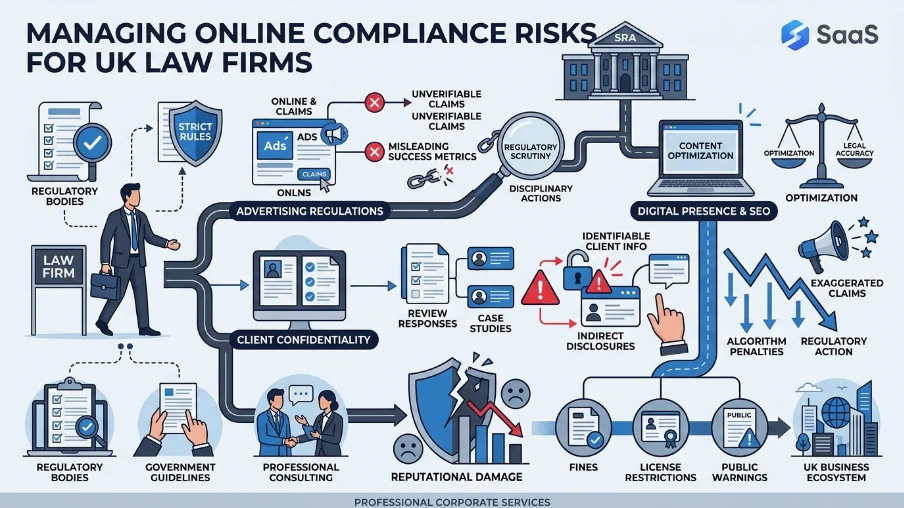
Compliance risks include breaches of advertising regulations, confidentiality violations, and misleading claims. Regulatory bodies impose strict guidelines, and non-compliance can result in penalties, public warnings, and long-term reputational damage.
Legal advertising is heavily regulated. Jurisdictions impose rules on claims, testimonials, and success rates. Violations can trigger disciplinary actions and public notices.
Three major compliance risks include publishing unverifiable claims, sharing identifiable client information, and using misleading success metrics. These issues attract regulatory scrutiny.
Client confidentiality remains a critical concern. Responding to reviews or publishing case studies requires strict adherence to privacy laws. Even indirect disclosures can lead to violations.
Bar associations and regulatory authorities monitor digital presence. Non-compliant content can result in fines, license restrictions, or public disciplinary records, which further damage reputation.
Compliance also affects SEO strategies. Content must balance optimisation with legal accuracy. Over-optimisation or exaggerated claims can trigger both algorithm penalties and regulatory action.
How does competition intensify reputation challenges online?
High competition among law firms increases the volume of content, reviews, and directory listings. This crowded environment makes it harder to maintain visibility, requiring continuous optimisation and active reputation management strategies.
Legal services represent one of the most competitive digital sectors. Keywords such as “personal injury lawyer” or “corporate attorney” attract high bidding costs and intense SEO competition.
Three competitive pressures include aggressive review generation, paid advertising dominance, and content saturation. These factors push smaller firms lower in search rankings.
Competitors actively build backlinks, publish content, and manage reviews. Firms that remain passive lose authority and visibility over time.
Search engines reward consistent activity. Firms that frequently update content, engage with reviews, and optimise listings maintain stronger positions.
Reputation challenges escalate when competitors outperform in visibility. Even firms with strong offline reputations struggle to compete without digital strategy alignment.
For firms evaluating solutions, exploring reputation management services for law firms provides insight into structured approaches for competitive positioning.
Explore our Reputation Management for business guides,
Proven Ethical Ways to Increase Customer Reviews
How to Compare Enterprise Reputation Management Platforms
What role does proactive reputation management play?
Proactive reputation management monitors, analyses, and improves online presence through structured processes. This includes review management, content optimisation, and search result control, ensuring consistent visibility and trust across digital platforms.
Reputation management operates as an ongoing process rather than a one-time fix. It integrates monitoring tools, SEO strategies, and compliance frameworks.
Three core processes include:
- Monitor brand mentions using search tracking tools and alerts
- Optimise content across websites and directories
- Respond to reviews within regulatory guidelines
Monitoring identifies emerging risks early. For example, detecting a negative review within 24 hours allows timely response before it gains traction.
Content optimisation strengthens authority. Updating service pages, publishing relevant legal insights, and improving metadata enhances search performance.
Review management builds trust. Responding professionally to feedback demonstrates accountability while maintaining compliance.
Firms using Reputation Management for business achieve measurable improvements in visibility, trust signals, and client acquisition metrics.
Clear My Name applies structured methodologies to identify reputation gaps, correct inaccuracies, and enhance search presence using data-driven strategies.
Law firms operate in a high-trust, high-visibility environment where online reputation directly affects client decisions. Negative reviews, inaccurate listings, outdated content, search visibility issues, and compliance risks create measurable challenges.
Clear My Name delivers Reputation Management for business by addressing these issues through systematic monitoring, content optimisation, and compliance-focused strategies. This approach ensures consistent visibility, accurate representation, and stronger client trust across digital platforms.
Frequently Asked Questions
What is reputation management for business and how does it work?
Reputation Management for business involves monitoring, improving, and protecting a company’s online presence across search engines, review platforms, and directories. Clear My Name uses structured processes such as review tracking, content optimisation, and search result management to maintain accurate and trustworthy brand visibility.
How long does it take to improve a business’s online reputation?
Reputation improvements typically begin within 30 to 90 days, depending on issue severity and existing online presence. Clear My Name focuses on consistent updates, review responses, and content enhancements to achieve measurable changes in search rankings and public perception over time.
Can negative reviews be removed from the internet?
Negative reviews can only be removed if they violate platform policies, such as containing false information or abusive language. Reputation Management for business by Clear My Name focuses on reporting invalid reviews, promoting accurate content, and improving overall rating balance through verified strategies.
Why is online reputation important for business growth?
Online reputation directly influences customer trust, with 87% of users researching businesses before making decisions. Reputation Management for businesses ensures accurate information, positive visibility, and consistent messaging, which supports higher conversion rates and long-term client retention.
What platforms are included in business reputation management?
Business reputation management covers search engines, review platforms like Google Business Profile and Trustpilot, and business directories such as Yelp. Clear My Name monitors and optimises these platforms to ensure consistent data, accurate listings, and improved search engine performance.