
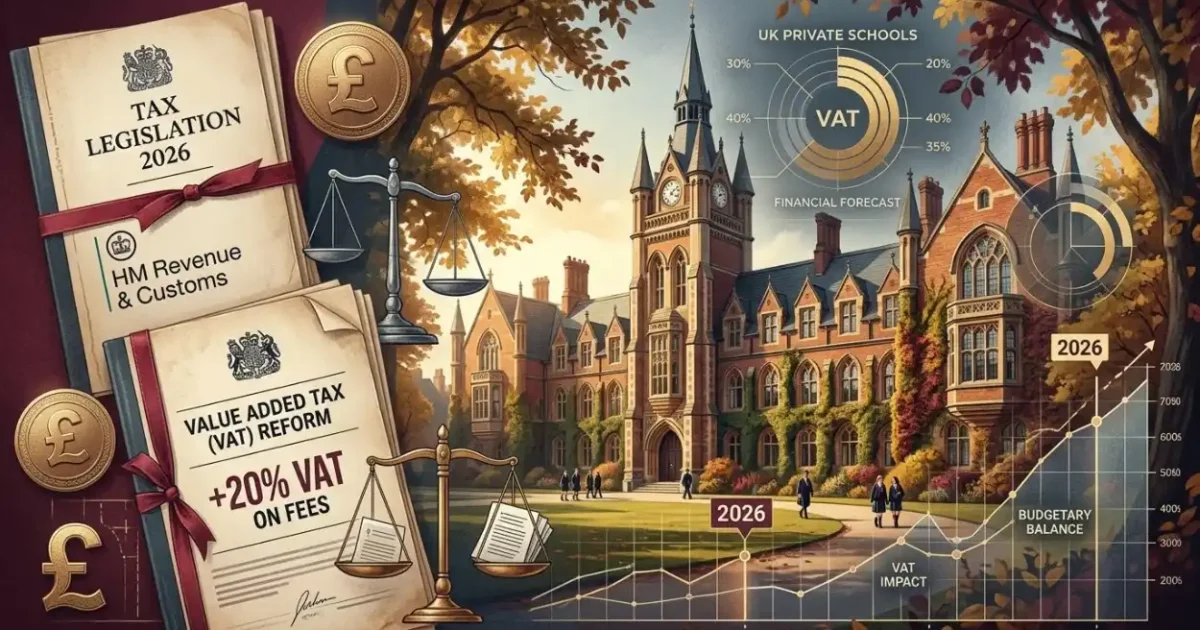
Tax changes affecting UK private schools in 2026 influence school fees, financial planning, public scrutiny and the information parents use to evaluate educational institutions. Reputation management is the process of understanding and influencing how an organisation is perceived through public information, reviews and search results. Online reputation refers to the collective interpretation of information about an organisation across digital platforms, including news coverage, school websites, parent reviews and search engine results pages (SERPs). For private schools, tax policy becomes a reputation issue when financial changes shape public discussion about affordability, educational access and institutional priorities.
How Do UK Private School Tax Changes Influence Online Reputation?
UK private school tax changes influence online reputation by creating new information about fees, financial pressures and the relationship between independent education and public policy. From 1 January 2025, private school education and boarding services in the UK became subject to 20% VAT, subject to the applicable rules and exemptions. The policy changed the financial context in which parents, school leaders and journalists assess independent education. In 2026, discussions about fee increases, operating costs and access to education continue to form part of the information environment surrounding private schools. Search engines index this material and rank individual pages according to relevance, quality, authority and other signals. Consequently, tax policy affects reputation through the information people encounter and the conclusions they draw from it.
What Is the Relationship Between Tax Policy and School Reputation?
Tax policy is a set of government decisions governing taxation, while school reputation is the collective perception formed from information about an educational institution. Their relationship develops when a policy changes the financial obligations or operating conditions associated with private education. Parents evaluate the implications for fees, affordability and educational provision, while journalists examine the policy’s economic and social effects. These interpretations generate articles, commentary, institutional statements and online discussions that become part of a school’s digital footprint. Search visibility determines which sources users encounter first, but ranking prominence does not establish that a claim is accurate. School reputation therefore reflects both the underlying policy and the credibility, framing and visibility of information about its effects.
Why Does Tax-Related News Affect Parent Perception?
Tax-related news affects parent perception by providing information that influences judgements about affordability, value and institutional stability. News articles often place individual schools within broader discussions about independent education, public finances and educational inequality. The headline, evidence, quoted sources and publication authority influence how readers interpret the policy’s implications. A report focused on fee increases creates a different perception from one examining school cost structures or changes in bursary provision. When these articles appear prominently in branded searches, they can influence the first impression formed before a parent visits the school’s official website. This mechanism demonstrates why content framing and search visibility are important components of institutional reputation.
How Is a Private School’s Digital Footprint Formed?
A private school’s digital footprint is the collection of indexed and publicly accessible information associated with its name, activities and institutional identity. It includes official website pages, inspection reports, news articles, school directories, parent reviews and references published by third parties. Each source contributes information that search engines can discover, process and potentially display for relevant queries. The resulting footprint changes as publishers add content, existing pages are updated and search engines recrawl or reassess documents. Tax-related reporting becomes part of this footprint when it mentions a school’s fees, finances, policies or response to the wider education debate. The digital footprint therefore extends beyond information directly published or controlled by the school.
How Does Content Indexing Influence School Reputation?
Content indexing is the process through which a search engine stores and organises information discovered on accessible webpages. Indexing makes a page eligible to appear in search results, but it does not guarantee visibility or a particular ranking. A tax-related article can enter a school’s digital footprint when the institution is named in the text, title, metadata or other relevant content. Search engines then evaluate the page in relation to the user’s query and competing documents. A highly relevant news report can rank for a school name even when the school’s own website contains more detailed information about its educational provision. This creates a distinction between controlling published information and controlling how information is discovered.
Which Sources Contribute to a School’s Digital Footprint?
A school’s digital footprint develops through sources that differ in ownership, purpose and credibility. Official school pages explain institutional policies, while independent reporting offers external interpretation and parent reviews describe individual experiences. Inspection documents provide a separate form of evidence concerning educational standards and institutional performance. Search engines evaluate each page individually rather than treating every source associated with a school as equally authoritative. The combined results shape entity perception, which refers to the understanding users form about the school from connected pieces of information. A balanced analysis therefore distinguishes source type, factual reliability, publication context and search prominence.
How Do Search Engines Rank Tax-Related Content About Private Schools?

Search engines rank tax-related content by assessing its relevance to a query alongside signals associated with quality, authority, usability and context. A search for changes to private school fees has a different intent from a search for the financial position of a named school. The results reflect these differences by prioritising pages that best match the perceived information need. News coverage can rank prominently when it provides timely reporting and directly addresses the query. Official school content can also appear when it answers questions about fees, bursaries, admissions or institutional policy. Search rankings are dynamic, so a page’s position does not represent a permanent assessment of the school’s overall reputation.
How Do Search Engine Results Pages Shape Entity Perception?
Search engine results pages shape entity perception by presenting a selected set of links, headlines, descriptions and other search features. Users often form an initial understanding from these visible elements before opening a webpage. A result about tax-driven fee increases can frame the school in financial terms, while a result about academic provision foregrounds educational outcomes. The order and wording of results influence which aspects receive attention during the initial evaluation. However, the presence of a result does not independently confirm its accuracy, completeness or importance to the school’s overall performance. SERP evaluation therefore examines the sources visible for a query, the information they communicate and the context in which users encounter them.
Why Do News Articles Sometimes Outrank Official School Pages?
News articles sometimes outrank official school pages because they satisfy a particular query more directly or possess stronger relevance and authority signals for that search. An independent report may contain recent policy analysis, expert commentary and references that connect it to a wider public debate. An official page focused on admissions or curriculum does not necessarily answer a specific question about VAT or fee changes. Search engines rank pages in relation to individual queries rather than assigning one universal ranking to every document associated with an organisation. This means a school can maintain a strong website while independent tax coverage ranks more prominently for policy-related searches. The result reflects query relevance and competition, not a definitive verdict on institutional credibility.
How Do Reviews and Sentiment Affect Private School Reputation?
Reviews and sentiment affect private school reputation by providing user-generated accounts that influence how prospective parents interpret institutional performance. Review content can address communication, pastoral care, teaching, administration, facilities and perceived value for money. Tax changes can also influence the context in which parents discuss fees and the relationship between cost and educational experience. Sentiment analysis refers to the classification of language as positive, negative or neutral, although automated interpretation does not always capture context, irony or factual accuracy. Search engines and review platforms use their own systems to organise and display content, so sentiment does not translate directly into a guaranteed ranking outcome. Reviews function as one category of reputation signal within a wider information ecosystem.
How Can Tax Changes Influence Review Sentiment?
Tax changes can influence review sentiment when parents connect fee changes with their expectations of service quality, affordability or educational value. A review may focus on the amount charged, the clarity of school communications or the perceived relationship between cost and provision. These topics create a record of individual perceptions, but they do not establish the complete financial circumstances of the school. Review interpretation requires attention to the review’s wording, timing, relevance and evidential basis. A change in sentiment can indicate a shift in public discussion without proving that the school’s educational performance has changed. Analysing review themes alongside other sources provides a more reliable picture than treating ratings as a standalone measure of institutional quality.
Do Negative Reviews Automatically Reduce Search Rankings?
Negative reviews do not automatically cause a private school to lose search rankings. Search visibility depends on multiple factors, and the treatment of reviews varies across search engines, directories and review platforms. Ratings and review information can contribute to local prominence in applicable search contexts, but they operate alongside relevance, distance, content quality and other signals. A negative review can still influence user perception when it appears prominently for a branded search, even if the school’s ranking remains unchanged. Its reputational significance depends on its content, visibility, credibility and relationship to the information users seek. Separating ranking effects from perception effects helps prevent inaccurate conclusions about the role of reviews.
Dive Deeper With Our Expert Guides:
Do Private Schools Pay Tax? Charitable Status Explained
Northamptonshire School Term Dates 2026/27: Full Calendar
Which Authority and Trust Signals Influence Private School Credibility?
Authority and trust signals are indicators that help users and search systems assess the reliability, expertise and identity of an information source. For private schools, these signals include official institutional information, inspection reports, transparent fee policies, credible news coverage and consistent details across recognised directories. Their importance depends on the context: an inspection report is relevant to educational standards, while an official fee page is more directly relevant to tuition costs. Search engines use automated systems to assess content and relationships between documents, but they do not publish a single universal score representing a school’s reputation. Users also apply their own judgements when comparing information from different sources. Credibility therefore develops through the combined interpretation of evidence, source quality and consistency.
How Does Accurate School Information Support Online Credibility?
Accurate school information supports online credibility by reducing discrepancies between what an institution publishes and what users find elsewhere. Consistent names, addresses, contact details, admissions information and fee explanations help users identify the correct organisation and understand its policies. When financial information changes, outdated pages can create confusion if they remain accessible alongside newer statements. Clear dates, explicit explanations and well-maintained official pages help readers distinguish current policy from historical information. These practices also improve the usefulness of the school’s digital footprint without guaranteeing a specific ranking position. Accuracy is therefore a foundational trust signal, particularly when public policy changes create heightened demand for reliable information.
What Role Does Independent Reporting Play in Institutional Trust?
Independent reporting contributes to institutional trust by providing external scrutiny, context and evidence beyond an organisation’s own statements. Journalists can explain the scope of a tax change, examine its implications and compare claims against official documents or expert analysis. The value of a report depends on its methodology, sourcing, factual accuracy and distinction between evidence and opinion. A critical article is not automatically unreliable, just as an official statement is not automatically complete or impartial. Readers benefit from comparing independent reporting with primary sources, including government guidance and the school’s published policies. This comparison supports a more evidence-based assessment of the institution and the wider policy debate.
How Does Tax Policy Press Coverage Shape Private School Reputation?
Tax policy press coverage shapes private school reputation by influencing which aspects of the policy become visible, how they are framed and which sources readers consider credible. The process involves publication, content indexing, ranking, user exposure and interpretation. A report about fees can attract searches from parents comparing schools, while a broader policy analysis can attract readers researching the future of independent education. These distinct queries expose users to different parts of the same debate. Understanding how tax policy press coverage shapes private school reputation requires examining the interaction between news framing, search intent, source authority and the visibility of competing information. The resulting reputation reflects an evolving information environment rather than a single article or rating.
How Does News Framing Influence Search Perception?
News framing influences search perception by determining which facts, comparisons and consequences receive emphasis in a report. A headline centred on rising fees directs attention towards affordability, while a headline about school finances foregrounds operating costs and financial sustainability. Search snippets can reinforce this framing by extracting or displaying language that closely matches the user’s query. When multiple articles repeat similar themes, those themes become more visible within the search environment, although repetition alone does not establish factual validity. Readers can counter incomplete impressions by checking publication dates, consulting primary sources and comparing coverage from independent outlets. This process separates the visibility of a narrative from the strength of the evidence supporting it.
Why Does Search Intent Matter When Interpreting Tax Coverage?
Search intent matters because the reason behind a query determines which information is most relevant to the user. A parent searching for a school’s 2026 fees seeks current cost information, while a journalist researching the VAT policy seeks legal and economic detail. A person searching for a named school alongside terms such as “tax changes” or “fee increase” is more likely to encounter policy-related reporting. Search engines attempt to match results to these distinct needs, which means the same school can appear differently across different queries. Reputation analysis therefore evaluates query groups rather than treating branded search as one uniform experience. This distinction explains why visibility and perception vary according to the questions users ask.
How Can Digital Reputation Be Evaluated Objectively?
Digital reputation can be evaluated objectively by comparing the available evidence, source credibility, search visibility and patterns of public feedback. An assessment begins by identifying the queries associated with the institution and recording the sources visible for each query. It then examines whether the results contain accurate information, credible evidence, outdated material or claims presented without adequate context. Review patterns and sentiment provide additional information, but they need to be interpreted alongside other evidence. Repeated measurement helps distinguish a persistent pattern from a temporary change in coverage or ranking. The objective is to understand how the institution is represented online, not to assume that every negative result is inaccurate or every positive result is authoritative.
Which Indicators Help Explain a School’s Online Reputation?
A useful evaluation framework combines indicators that describe different aspects of the digital information environment.
- Audit branded search results by recording the headlines, source types and ranking positions visible for relevant school-name queries.
- Verify factual claims by comparing published statements with official documents, current fee information and credible independent reporting.
- Analyse review sentiment by grouping recurring topics, such as affordability, communication and educational provision, without treating sentiment as proof.
- Compare source authority by examining publication standards, evidence quality, expertise and the distinction between fact and opinion.
- Monitor content changes by noting publication dates, updated pages and shifts in search visibility over a consistent observation period.
These indicators help explain how information contributes to institutional perception without reducing reputation to one numerical score. Each measure answers a different question, and none independently establishes the overall quality of a school. Combining them creates a more complete account of the institution’s digital footprint and the information users encounter.
What Do the 2026 Tax Changes Mean for the Future of Private School Reputation?
The 2026 tax environment makes financial transparency and accurate public information important components of private school reputation. The 20% VAT policy introduced for private school education and boarding services from January 2025 remains a central part of the policy context in 2026, subject to applicable rules and exemptions. Its reputational effects arise through public discussion of fees, affordability, institutional finances and educational access. Understanding how tax policy press coverage shapes private school reputation requires examining how search engines rank individual pages against particular queries and how users interpret the resulting information through their own priorities and expectations. Reviews, independent reporting and official documents contribute different forms of evidence and must be assessed according to their purpose and reliability. These mechanisms explain how tax policy becomes part of a school’s online reputation without assuming that visibility alone proves credibility.
What tax changes affect UK private schools in 2026?
UK private school education and boarding services became subject to 20% VAT from 1 January 2025, subject to applicable rules and exemptions. In 2026, the policy continues to influence discussions about school fees, affordability, financial planning and private school reputation.
How do VAT changes affect private school reputation?
VAT changes can influence private school reputation by increasing public discussion about fees, educational affordability and the value of independent education. News coverage, parent reviews and search visibility shape how families interpret these changes and assess individual schools.
How does tax-related news affect a private school’s online reputation?
Tax-related news influences online reputation through headlines, reporting, search rankings and public discussion about school finances. Prominent coverage of fee increases or affordability can shape first impressions, making source credibility and factual context important when evaluating a school’s digital footprint.
How can parents check whether information about private school tax changes is accurate?
Parents can verify tax-related information through official UK government guidance, published school fee schedules and credible independent reporting. Comparing publication dates, checking applicable exemptions and distinguishing confirmed facts from commentary helps prevent misunderstandings about school costs.
What is reputation management for private schools, and why is it important in 2026?
Reputation management for private schools involves understanding and monitoring how news coverage, reviews, official information and search results influence public perception. In 2026, accurate financial communication and consistent online information help schools address questions about VAT, fees and affordability while supporting informed decisions by parents.