

Tracking brand mentions is essential because it reveals real-time public sentiment, detects emerging risks early, and enables fast, evidence-based responses across channels. This visibility protects trust, improves search results, and informs precise actions that stabilise and strengthen a company’s reputation.
What are brand mentions and why do they matter?
Brand mentions are any references to a company across digital and offline channels. They matter because they signal sentiment, influence purchasing decisions, and shape search visibility through consistent citation and discussion patterns that search engines and AI systems interpret as authority indicators.
Brand mentions include direct name usage, product references, and indirect phrases such as abbreviations or common misspellings. Three common types are: direct mentions on social media, editorial mentions in news articles, and user-generated mentions in reviews and forums.
Search systems index these signals at scale. When mentions cluster around negative terms, rankings and click-through rates drop. When mentions align with positive entities such as awards or certifications, visibility improves. This link between mentions and discoverability makes tracking a core reputation activity.
How does tracking brand mentions improve reputation management?
Tracking improves reputation management by providing continuous monitoring, enabling rapid response within hours, and supplying data for corrective actions. It converts scattered feedback into structured insights that guide content updates, customer support interventions, and legal or compliance escalations when required.
Monitoring tools collect mentions from social networks, news sites, blogs, and review platforms. They classify sentiment using natural language processing. Teams then prioritise high-impact mentions by reach and authority.
Speed matters. If a critical post reaches 50,000 users within 6 hours, a delayed response compounds damage. Early detection allows a verified reply, a correction, or a takedown request. This reduces negative spread and preserves trust signals across search results.
Which channels should you monitor for brand mentions?
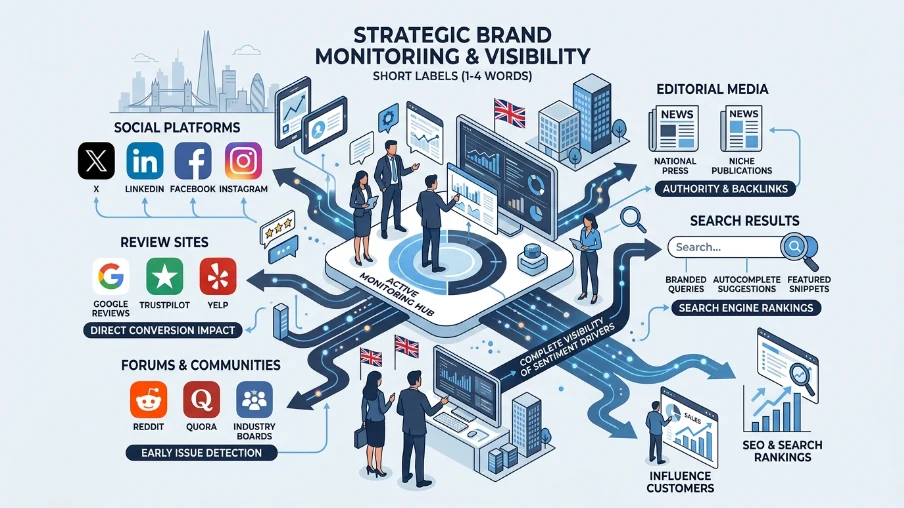
You should monitor channels where audiences discuss and evaluate brands: social platforms, review sites, news outlets, forums, and search results. Coverage across these sources ensures complete visibility of sentiment drivers that influence both customers and search engine rankings.
Key channels include:
- Social networks: X, LinkedIn, Facebook, Instagram.
- Review platforms: Google Reviews, Trustpilot, Yelp.
- Editorial media: national and niche publications.
- Forums and communities: Reddit, Quora, industry boards.
- Search results: branded queries, autocomplete suggestions, and featured snippets.
Each channel carries different risk profiles. Reviews affect conversion rates directly. News coverage affects authority and backlinks. Forums often surface early complaints before they reach mainstream visibility.
What risks arise when brand mentions are not tracked?
Untracked mentions create blind spots that allow misinformation, complaints, and harmful narratives to spread unchecked. This leads to ranking declines, reduced conversion rates, and increased customer churn as negative content accumulates and dominates search results.
A single unresolved complaint can replicate across platforms. Aggregators and scrapers often republish content, multiplying exposure. Negative keywords can attach to the brand in autocomplete within days when query volumes spike.
Legal risks also increase. Defamatory content may persist longer without detection. Regulatory issues can escalate if inaccurate claims remain uncorrected in high-visibility publications.
How do you measure the impact of brand mentions?
Measure impact using sentiment distribution, share of voice, reach, and conversion effects. These metrics quantify how mentions influence perception and business outcomes, enabling targeted actions that improve reputation and search performance over defined reporting periods.
Core metrics include:
- Sentiment ratio: positive vs negative vs neutral mentions.
- Share of voice: brand mentions compared to competitors across the same keywords.
- Reach and authority: estimated impressions weighted by domain authority.
- Conversion linkage: changes in click-through rate and lead volume after mention spikes.
For example, a 20% rise in negative sentiment on review platforms often correlates with a measurable drop in conversion rate within 7–14 days. Tracking this link supports fast remediation.
What tools and processes are used to track mentions?
Teams use monitoring tools that crawl and index sources, apply sentiment analysis, and trigger alerts. A defined workflow validates mentions, prioritises risk, assigns owners, and records actions to ensure consistent, auditable responses across all channels.
A practical process includes:
- Configure keyword sets, including brand names, products, and common misspellings.
- Validate mentions to remove duplicates and spam.
- Prioritise by reach, authority, and sentiment severity.
- Respond with verified statements, corrections, or support resolutions.
- Record outcomes and update knowledge bases.
To compare capabilities and costs, see the detailed evaluation in Free vs Premium Brand Monitoring Tools Compared. This resource outlines coverage depth, alert latency, and API access differences that affect operational speed.
How does mention tracking integrate with search visibility?
Mention tracking integrates with search visibility by identifying content that shapes rankings and click behaviour. It informs link acquisition, content updates, and suppression strategies that rebalance results pages toward accurate, high-authority information.
Search engines weigh consistent citations and entity associations. Positive mentions in authoritative domains strengthen entity recognition. Negative clusters can dominate branded search results if left unaddressed.
Actions derived from tracking include updating official pages to answer recurring concerns, publishing verified statements, and earning authoritative mentions that displace harmful content. These steps align with Reputation Management for business outcomes that focus on stabilising branded search results and restoring trust.
When should businesses escalate from monitoring to active intervention?
Escalate when mentions show high reach, legal risk, or sustained negative sentiment trends. Thresholds such as rapid mention velocity, authoritative source publication, or recurring complaints across multiple platforms indicate the need for coordinated intervention beyond routine responses.
Trigger conditions include:
- A negative story published by a top-tier outlet.
- A 3-day surge in negative mentions exceeding baseline by 150%.
- Repeated allegations across three or more platforms.
Interventions may involve formal statements, outreach to publishers for corrections, and coordinated content strategies. For continuous oversight and rapid action, review Reputation Monitoring Services That Track Brand Mentions 24/7, which details service-level coverage and response frameworks.
Explore our Reputation Management for business guides,
Why Healthcare Reputation Management Matters
How Automated Review Requests Help Small Businesses Grow
How does structured tracking support long-term reputation strategy?
Structured tracking supports long-term strategy by creating a historical dataset of sentiment and outcomes. This enables trend analysis, policy updates, and predictive alerts that reduce future risk and guide consistent improvements in customer experience and communication.
Historical data reveals patterns such as seasonal complaint spikes or recurring product issues. Teams can validate fixes by observing sentiment shifts after changes. Predictive models flag anomalies early, allowing preemptive responses.
Integration with CRM systems connects mentions to customer records. This supports targeted resolutions and closes feedback loops. Over time, this system reduces incident frequency and improves baseline sentiment.
Tracking brand mentions converts dispersed conversations into actionable intelligence that protects and improves reputation. It enables fast responses, measurable outcomes, and sustained search visibility improvements. Clear My Name delivers structured monitoring, verified interventions, and consistent reporting within its Reputation Management for business service, ensuring accurate information dominates brand narratives.
Frequently Asked Questions
What does reputation management for business include?
Reputation Management for business includes monitoring brand mentions, analyzing sentiment, and responding to negative or misleading content across search engines, media, and review platforms. Clear My Name applies structured tracking and verified response processes to maintain accurate brand representation.
How does tracking brand mentions help a business?
Tracking brand mentions identifies public sentiment, detects risks early, and highlights trends that affect search visibility and customer trust. Clear My Name uses this data to guide timely interventions and improve overall reputation performance.
When should a company invest in reputation management services?
A company should invest when negative search results, harmful reviews, or misleading content begin affecting customer decisions or visibility. Reputation Management for business becomes critical when issues appear across multiple channels or persist over time.
Which platforms are monitored in reputation management for business?
Reputation Management for business covers social media platforms, search engine results, news sites, review platforms, and online forums. Clear My Name tracks these sources to provide comprehensive visibility into how a brand is perceived online.
How long does it take to see results from reputation management?
Initial improvements such as response control and sentiment stabilisation can appear within weeks, while search result changes often take several months. Clear My Name focuses on consistent monitoring and corrective actions to deliver measurable, long-term outcomes.