

Video testimonials often provide stronger credibility signals than written reviews because they combine client language with visible human communication, creating richer evidence of experience and authenticity. Reputation management is the structured process of monitoring, analysing and influencing information that shapes how an individual or organisation is perceived across digital environments.
Online reputation refers to the collection of indexed information, reviews, commentary, profiles and other digital signals that influence entity perception within search ecosystems. For law firms, this reputation extends beyond star ratings because search engines evaluate content, authority, relevance, sentiment and consistency across multiple sources. Video testimonials introduce additional information through speech, facial expression, context and identifiable client experiences. Written reviews remain important, but their format provides a narrower set of reputation signals. Understanding this difference explains why video-based evidence can have a stronger effect on perceived credibility.
Why are video testimonials more persuasive than written reviews?
Video testimonials are more persuasive because they communicate both the substance of a review and observable characteristics of the person delivering it. A written review primarily provides textual information, allowing readers and search systems to analyse words, sentiment and topical relevance. A video adds vocal delivery, facial expression, conversational structure and contextual information to that textual layer. These additional elements create a richer representation of the testimonial as a piece of digital content. Within reputation systems, richer content provides more signals through which credibility and authenticity are interpreted.
A written review can state that a solicitor communicated clearly, handled a case efficiently or provided useful guidance. A video testimonial can communicate the same claim while showing how the client expresses that assessment. The distinction relates to information density rather than simply visual appeal. Video contains speech that can be transcribed, visual information that can be interpreted and metadata that can describe the content. Consequently, the testimonial operates across multiple information layers rather than relying exclusively on written sentiment.
How do video testimonials influence trust and credibility?
Video testimonials influence trust by providing observable evidence that supports the claims contained within the testimonial. Trust is a reputation signal formed through the relationship between claims, sources, consistency and supporting evidence. A written review establishes a textual claim, while a video can establish the same claim alongside identifiable communication characteristics. This distinction affects human perception because viewers assess both what is communicated and how it is communicated. Search ecosystems also benefit from the additional contextual information surrounding properly published video content.
Credibility does not originate from video format alone. A video with vague statements, unclear authorship or weak contextual information provides limited reputation value despite being visually engaging. Strong testimonial content establishes a clear relationship between the speaker, the law firm, the service experience and the factual subject of the review. This creates stronger semantic connections between the entity being discussed and the experience being described. The resulting content therefore has greater informational usefulness for users evaluating the firm’s digital presence.
How do search engines interpret video testimonials?
Search engines interpret video testimonials through the surrounding content, structured information, transcripts, metadata and the context of the page where the video appears. Search algorithms do not treat a video as an isolated reputation score. Instead, the video becomes part of a wider content ecosystem containing textual, visual and contextual signals. Transcribed speech can provide searchable language, while titles and descriptions establish topical relevance. Page-level authority and the relationship between the video and the associated law firm also contribute to how the content is understood.
Content indexing is central to this process. A video that exists without meaningful contextual information provides fewer accessible textual signals than a video supported by a descriptive page, relevant heading and accurate transcript. Search engines can connect indexed language with queries relating to legal services, client experience and the named entity. This creates a clearer semantic relationship between the testimonial and the firm’s digital identity. Video therefore becomes more useful within search ecosystems when its information is properly represented in indexable formats.
Why does visual evidence affect law firm reputation?
Visual evidence affects law firm reputation because it provides information that written text alone cannot fully represent. A viewer can observe whether the testimonial is presented as a direct client statement, a scripted promotional message or an interview-style account. The visual format also establishes contextual cues surrounding the speaker and the production of the content. These cues contribute to human assessment of authenticity and credibility. Reputation perception therefore becomes influenced by both semantic content and presentation characteristics.
For legal entities, this distinction has particular relevance because professional credibility depends heavily on expertise, reliability and communication. A testimonial that demonstrates clear communication creates an additional perception signal alongside the written substance of the review. This does not establish legal expertise independently, but it contributes to the broader entity perception surrounding client experience. The testimonial therefore functions as evidence about the relationship between the firm and its clients rather than simply another piece of promotional copy.
How do written reviews and video testimonials create different reputation signals?
Written reviews create primarily textual reputation signals, whereas video testimonials combine textual, auditory and visual information. A written review can be evaluated through terminology, sentiment, subject matter and review context. A video adds speech patterns, visual presentation, transcript content and media-level metadata. These formats therefore provide different evidence rather than simply competing versions of the same content. Analysing them separately creates a clearer understanding of how reputation information enters a search ecosystem.
Written reviews also have an important structural advantage because they are immediately readable and generally easy for search systems to process as text. Video content requires supporting information for its meaning to become more accessible through search. Transcripts, descriptive titles and relevant surrounding copy address this difference by converting spoken information into indexable textual signals. The strongest reputation ecosystem therefore treats written and video content as complementary information formats. The distinction is not that video replaces written reviews, but that it expands the range of available reputation evidence.
How does sentiment in video testimonials affect entity perception?

Sentiment in video testimonials affects entity perception by connecting expressed opinions with the specific entity, service and experience discussed in the content. Sentiment analysis evaluates language to identify positive, negative or neutral attitudes within a piece of content. In video, the spoken language forms a primary sentiment signal, while tone and presentation influence human interpretation. Search engines primarily process machine-readable information, making transcripts and associated text important components of video discoverability. The reputation effect therefore emerges from the interaction between sentiment, context and entity association.
A positive testimonial has greater contextual relevance when it explains what produced that assessment. Statements relating to communication, responsiveness, legal guidance or case management establish specific semantic associations with the firm. These associations are more informative than unsupported praise because they connect sentiment with identifiable attributes. Search perception consequently develops through the relationship between the entity and the topics repeatedly associated with it across indexed content.
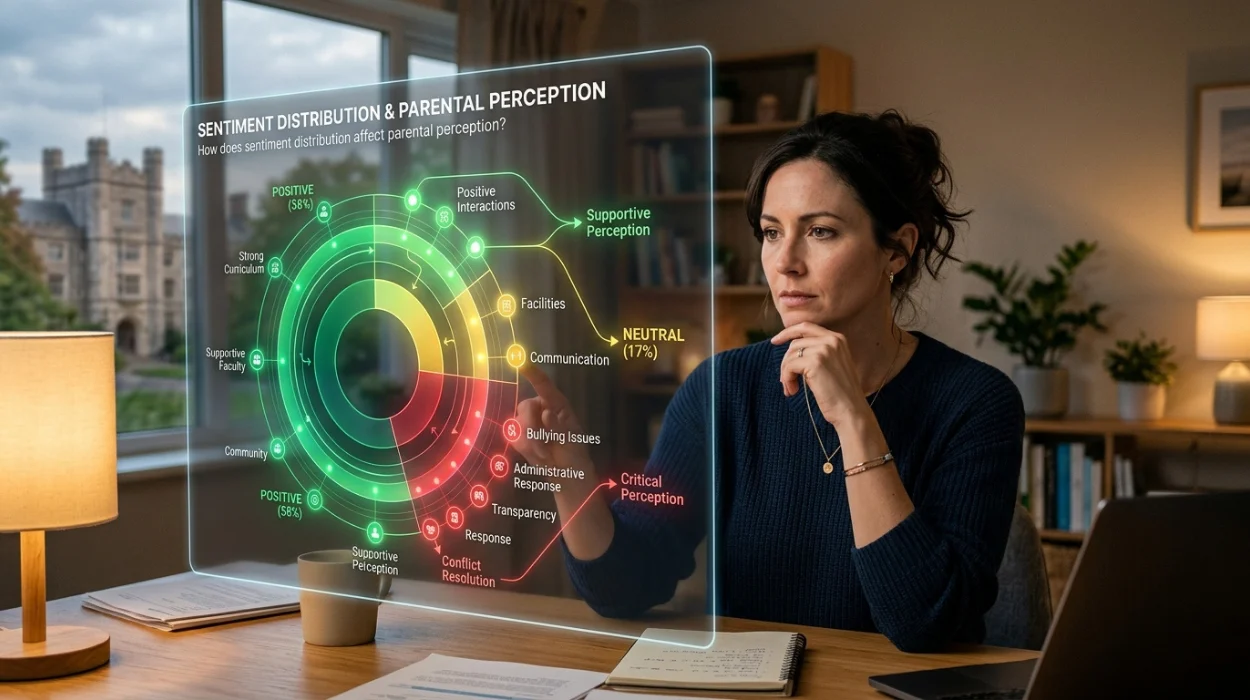
Why does authenticity matter in law firm video testimonials?
Authenticity matters because reputation signals are evaluated in relation to their source, context and consistency. A testimonial that appears disconnected from an identifiable client experience provides weaker evidence than content with clear attribution and substantive detail. Authenticity also affects how users interpret the credibility of the information before making a judgement about the firm. The perceived reliability of the source therefore influences the informational value assigned to the testimonial.
Authenticity is not equivalent to informal production quality. A professionally recorded video can remain credible when its content accurately represents a genuine client experience. Conversely, technically sophisticated production does not compensate for vague or unsupported statements. Reputation analysis therefore focuses on evidence quality rather than visual polish alone. This distinction prevents video testimonials from being treated as automatically authoritative simply because they use a richer media format.
How do video testimonials contribute to search visibility?
Video testimonials can contribute to search visibility by creating additional content that reinforces an entity’s relevance across indexed pages and media platforms. Search visibility refers to the extent to which an entity and its associated information appear for relevant queries within search engine results pages. A testimonial creates another opportunity to associate the law firm with specific topics, services and client experiences. When supported by indexable text, the content can strengthen the semantic relationship between those topics and the entity. Its effect therefore depends on content relevance and ecosystem integration rather than the presence of video alone.
Search visibility also depends on competition between documents and entities. A testimonial page competes with legal directories, professional profiles, review platforms, news articles and other pages that contain information about the same firm. Additional relevant content expands the firm’s digital footprint and gives search systems another authoritative document to evaluate. This does not guarantee a particular ranking position. Instead, it increases the quantity and diversity of evidence available for SERP evaluation.
What makes a video testimonial useful as a reputation signal?
A useful video testimonial contains specific, attributable and contextually relevant information about the client’s experience. Specificity gives the content semantic depth because it connects the testimonial with identifiable aspects of the firm’s work. Attribution establishes who is communicating the information and reduces ambiguity around the source. Context explains why the client is discussing the firm and which aspects of the experience form the basis of the assessment. Together, these characteristics create a more informative reputation signal than generic praise.
The surrounding publication context also determines how effectively the testimonial contributes to the digital footprint. A relevant page title, descriptive copy, transcript and accurate metadata help search systems understand what the video represents. Consistency between the video, the written page and other authoritative references reinforces entity identification. This consistency is important because reputation systems operate across interconnected sources rather than evaluating individual pieces of content in complete isolation.
Dive Deeper With Our Expert Guides:
How Court Docket Websites Expose Attorney Case Outcomes
Why Law School Alumni Networks Influence a Firm’s Online Standing
How should law firms understand the role of video testimonials in online reputation?
Law firms can understand video testimonials as one component of a broader reputation information system rather than as standalone ranking assets. Online credibility develops through repeated associations between an entity and trustworthy, relevant and consistent information. Reviews, professional profiles, editorial references, legal directories, website content and testimonials all contribute different forms of evidence. Video introduces additional information layers that written reviews do not contain. Its value therefore comes from complementing the wider digital footprint.
The strategic distinction is between content creation and reputation interpretation. Creating a testimonial produces information, while search engines and users determine how that information contributes to entity perception. Effective reputation analysis therefore considers source quality, topical relevance, indexing, sentiment, authority and consistency together. Video testimonials can strengthen the evidence available around a law firm’s reputation when these components align. Their contribution is best understood as part of the wider process through which digital information shapes search perception.
What is the relationship between video testimonials and written reviews?
Video testimonials and written reviews perform related but distinct functions within a law firm’s reputation ecosystem. Written reviews provide accessible textual evidence that is easy to scan, compare and analyse for sentiment and subject relevance. Video testimonials add observable communication and richer media context to the same general category of client feedback. Combining both formats creates a broader set of reputation signals than relying exclusively on either format. The resulting digital footprint contains different forms of evidence that reinforce the entity’s relationship with client experience.
This relationship also explains why video testimonials do not make written reviews obsolete. Text remains essential for content indexing, search interpretation and rapid information retrieval. Video adds depth by introducing additional contextual and experiential signals. A balanced reputation ecosystem therefore uses format diversity to represent an entity from multiple informational perspectives. The central principle is not volume but the relevance, reliability and semantic consistency of the information being published.
What can be concluded about video testimonials and law firm reputation?
Video testimonials can outperform written reviews in perceived credibility because they combine testimonial language with visual and auditory evidence. Their reputation value derives from richer information density, clearer contextual signals and the ability to demonstrate aspects of communication that text alone cannot represent. Search engines still depend heavily on indexable language, meaning transcripts, metadata and surrounding content remain important to search visibility. Capture and Deploy Video Testimonials for Your Law Firm provides a relevant framework for understanding how this type of content can be developed and integrated into a firm’s broader digital reputation ecosystem. Video therefore creates the strongest reputation value when its information is clearly connected to the relevant entity and topic.
The broader principle is that online reputation is formed through interconnected information rather than a single review format. Search visibility, sentiment, authority, content indexing and entity perception interact across the digital footprint. Written reviews provide direct textual reputation signals, while video testimonials expand those signals through additional media context. Understanding these mechanisms explains why video can provide stronger evidence of credibility without treating the format itself as an automatic ranking advantage.
Why are video testimonials effective for law firm reputation?
Video testimonials provide spoken, visual and contextual reputation signals that written reviews do not contain. They can strengthen perceived credibility by showing how a client communicates their experience while also creating additional content for a law firm’s digital footprint.
Do video testimonials help improve a law firm’s online reputation?
Video testimonials can contribute to online reputation by associating a law firm with specific client experiences, positive sentiment and relevant expertise. Their value increases when the video is supported by accurate transcripts, descriptive content and consistent entity information.
Are video testimonials better than written reviews for law firms?
Video testimonials can provide richer credibility signals because they combine written or spoken claims with visual and auditory context. Written reviews remain valuable for content indexing and rapid information scanning, so both formats can support a balanced reputation profile.
How do video testimonials affect law firm search visibility?
Video testimonials can support search visibility by creating additional relevant content connected to the law firm’s name, services and client experiences. Transcripts, titles, descriptions and surrounding page content help search engines interpret and index the information.
Can Clear My Name use video testimonials for reputation management for lawyers?
Clear My Name provides reputation management for lawyers, where video testimonials can form part of a broader digital reputation strategy. These testimonials contribute client-experience signals alongside reviews, professional profiles and other indexed reputation content.