
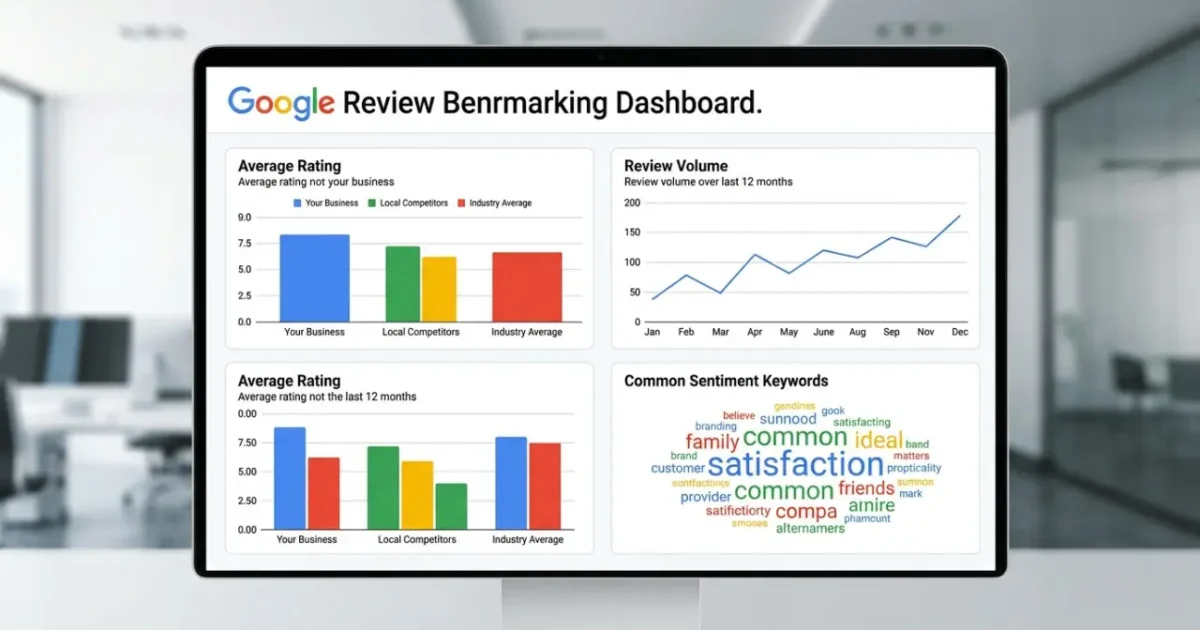
Google Review benchmarking evaluates how businesses build, maintain, and distribute reputation signals across local search ecosystems. Top-rated businesses compare through review velocity, response governance, sentiment distribution, and entity credibility consistency rather than star ratings alone.
Reputation management strategies differ based on operational structure, review acquisition methods, and search visibility objectives. Online reputation control methods are evaluated through trust signal stability, SERP composition influence, behavioural engagement metrics, and long-term reputation sustainability.
How do top-rated businesses compare review acquisition strategies?
Top-rated businesses compare review acquisition strategies through consistency, timing structure, and customer interaction sequencing. Benchmarking analysis identifies differences in review frequency, review recency, and semantic diversity rather than simple review quantity.
Organic review acquisition is customer-led feedback generation based on genuine transactional experiences. Reactive review acquisition operates after visibility decline, sentiment imbalance, or reputation disruption. Organic approaches create balanced sentiment distribution and stable engagement patterns across local search systems. Reactive approaches increase review volume quickly but frequently generate inconsistent behavioural signals. Search engines evaluate abrupt review spikes against historical interaction patterns to determine authenticity and credibility alignment.
Review timing also influences reputation signal strength. Businesses with strong benchmarking performance distribute review requests across operational touchpoints instead of isolated campaigns. Continuous engagement creates predictable behavioural patterns that strengthen entity credibility. Profiles with irregular acquisition cycles often experience unstable ranking signals because review momentum lacks temporal consistency. Search ecosystems interpret sustained engagement as evidence of operational legitimacy and active customer interaction.
Semantic diversity within reviews further separates top-performing profiles from average competitors. Diverse review language expands contextual associations within Google’s entity understanding systems. Repetitive phrasing weakens authenticity perception and reduces semantic breadth. Businesses with wider linguistic variation across reviews generally maintain stronger local ranking relevance because search engines connect review terminology with broader transactional queries.
Which Google Review response methods create stronger reputation signals?
Structured response governance creates stronger reputation signals because response consistency influences trust interpretation, accountability perception, and engagement visibility. Benchmarking comparisons show that response quality affects local reputation performance alongside aggregate ratings.
How does proactive response management compare with reactive response handling?
Proactive response management operates through systematic engagement across positive, neutral, and negative reviews. Reactive response handling focuses primarily on responding after reputational risk appears. Proactive frameworks strengthen entity credibility because engagement appears operationally embedded rather than defensive. Reactive frameworks create inconsistent interaction patterns that weaken behavioural trust interpretation.
Search engines analyse review responses as engagement indicators within local search ecosystems. Consistent response cadence demonstrates active profile governance and operational oversight. Businesses responding only to negative reviews create uneven sentiment interaction patterns that reduce trust continuity. Balanced engagement across all sentiment categories creates stronger behavioural consistency signals.
Proactive systems also improve semantic relevance. Responses containing service-specific terminology, operational references, and contextual details strengthen topical associations. Generic replies reduce informational value and limit semantic differentiation. Top-performing review profiles frequently integrate contextual specificity into responses without repetitive templating structures.
How do templated responses compare with contextual responses?
Templated responses prioritise scalability, compliance consistency, and operational efficiency. Contextual responses prioritise semantic specificity and interaction authenticity. Benchmarking analysis shows that contextual responses generate stronger trust signals because users interpret them as evidence of operational attention and customer engagement quality.
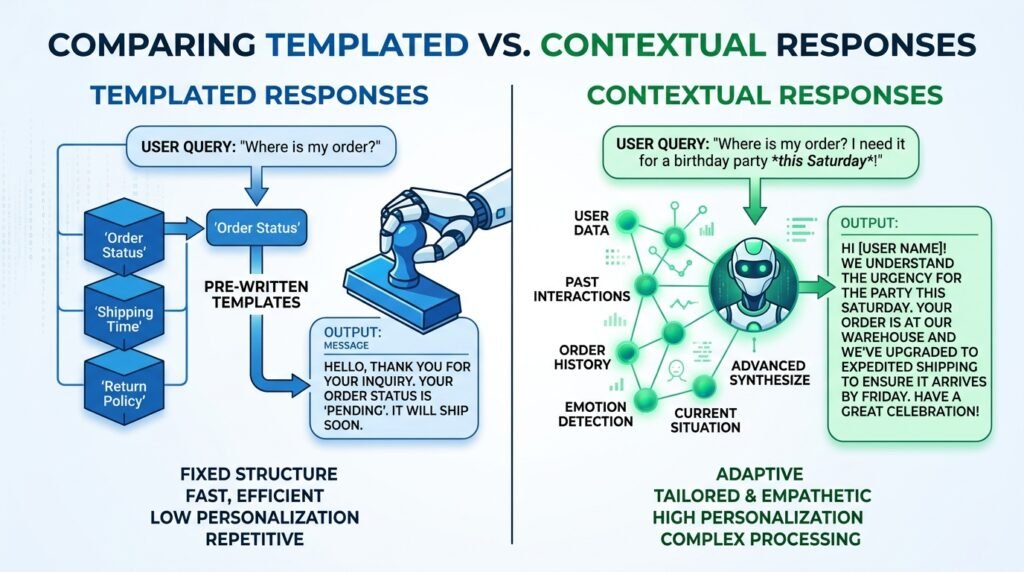
Templated systems operate through predefined response structures that standardise language and governance rules. These systems reduce operational risk across high-volume review environments. However, repetitive language patterns reduce authenticity interpretation and weaken semantic uniqueness. Search ecosystems evaluate repetitive content as low-information interaction when linguistic variation remains limited.
Read More:
Google Review Sentiment Analysis: What Customer Feedback Reveals
Creating a Data-Driven Google Review Growth Strategy for 2026
Contextual responses operate by referencing transaction details, customer concerns, or service-specific outcomes. This mechanism strengthens semantic depth and expands contextual search relevance. Businesses using contextual engagement frameworks frequently achieve stronger visibility for local intent searches because review interactions align naturally with transactional query language.
Contextual response strategies also improve perception stability. Users evaluate responsiveness alongside sentiment distribution and review quality. Profiles with detailed engagement structures appear operationally transparent and actively managed. Benchmarking comparisons consistently identify contextual engagement as a differentiating factor among high-performing local profiles.
How do review quality metrics compare with review quantity metrics?
Review quality metrics create stronger long-term reputation influence because search systems evaluate sentiment depth, contextual relevance, and behavioural trust alongside numerical volume. Quantity metrics remain important for competitive visibility but lose effectiveness when credibility indicators weaken.
High review volume increases local prominence and strengthens comparative visibility within map-based search environments. Larger datasets create broader engagement signals because user interaction appears more frequent. However, volume alone does not sustain trust stability. Search ecosystems compare review recency, linguistic diversity, response interaction, and sentiment distribution simultaneously.
Quality metrics operate through detailed customer feedback, operational references, and semantic richness. Reviews containing contextual explanations generate stronger relevance signals than short-form ratings without supporting detail. Search engines interpret review specificity as evidence of authentic user experience documentation. Profiles with high-quality review content generally maintain broader visibility across transactional and informational search queries.
Benchmarking analysis also identifies diminishing returns in quantity-focused strategies. Extremely high review counts combined with weak semantic variation create credibility imbalance. Users evaluate authenticity through rating distribution patterns, review detail, and engagement consistency rather than aggregate scores alone. Profiles containing moderate sentiment variation often appear more trustworthy than profiles displaying exclusively positive sentiment without nuance.
Negative reviews also contribute to entity credibility when managed through structured response governance. Balanced sentiment distribution reflects realistic customer interaction patterns. Search ecosystems interpret authentic reputation environments more favourably than artificially uniform sentiment structures. Effective benchmarking therefore measures sentiment balance and contextual quality together rather than evaluating numerical ratings independently.
Which reputation management strategies influence SERP composition most effectively?
SERP composition influence depends on content distribution, entity association consistency, and reputation signal reinforcement across indexed digital assets. Google Reviews influence local visibility directly, but broader reputation systems determine long-term search perception stability.

How does content suppression compare with content enhancement?
Content suppression focuses on reducing visibility of negative or conflicting search results. Content enhancement focuses on increasing visibility of authoritative and reputation-supportive assets. Benchmarking comparisons show that enhancement strategies create more sustainable search visibility because they align with relevance expansion mechanisms within search ecosystems.
Suppression operates through de-indexation requests, legal removals, or competing content publication. This approach addresses immediate perception risks when negative search results dominate branded queries. However, suppression effectiveness depends heavily on platform governance rules and indexing behaviour. Search engines frequently preserve authoritative negative content when relevance remains strong.
Enhancement operates by strengthening positive entity associations through structured content ecosystems, authoritative indexing, and semantic reinforcement. This strategy improves favourable SERP composition without direct dependency on content removal. Enhanced reputation ecosystems create stronger entity credibility because search engines identify consistent relevance signals across multiple indexed sources.
Content enhancement also scales more effectively within long-term reputation management frameworks. Suppression strategies require continuous intervention because removed or displaced content may return through indexing updates or secondary publication channels. Enhancement strategies build cumulative authority signals that stabilise perception over time.
How do branded search optimisation strategies compare with review-centric strategies?
Branded search optimisation operates across websites, structured data, profiles, and indexed media assets. Review-centric strategies operate primarily within trust-based platform ecosystems. Benchmarking analysis demonstrates that integrated frameworks generate broader SERP stability than isolated review management approaches.
Review-centric systems influence local pack visibility, map rankings, and transactional trust interpretation. These systems generate direct behavioural trust signals because users evaluate peer-generated sentiment during decision-making processes. However, review ecosystems remain vulnerable to sentiment volatility and platform dependency.
Branded optimisation strategies influence wider search perception through authoritative indexing, semantic relevance expansion, and entity association consistency. These frameworks reduce overreliance on single-platform reputation signals. Businesses with diversified search visibility maintain stronger resilience during review fluctuations because trust perception extends across broader digital ecosystems.
Integrated reputation frameworks combine review governance with authoritative content distribution. Search engines interpret cross-platform consistency as evidence of legitimacy and operational reliability. Benchmarking analysis consistently identifies diversified reputation ecosystems among businesses maintaining long-term visibility stability.
How do short-term reputation repair methods compare with long-term reputation development?
Short-term reputation repair prioritises immediate perception correction following negative sentiment exposure or visibility decline. Long-term reputation development focuses on cumulative trust construction through operational consistency and sustained engagement governance.
Short-term repair operates through accelerated review acquisition, rapid response escalation, and negative content mitigation. These methods influence visible sentiment distribution quickly and improve short-term perception metrics. Benchmarking comparisons identify temporary rating recovery within concentrated remediation frameworks. However, accelerated interventions frequently create inconsistent behavioural signals that weaken authenticity interpretation.
Long-term development operates by embedding review governance into operational systems. Businesses maintain continuous engagement patterns, stable review cadence, and consistent sentiment monitoring over extended periods. This structure strengthens entity credibility because search ecosystems identify stable behavioural trust signals across time. Frameworks associated with Professional Google Review Strategy and Management generally prioritise sustained review authenticity, sentiment consistency, and long-term search ranking influence instead of temporary rating inflation.
Search ranking influence differs substantially between these approaches. Short-term repair frameworks improve immediate visibility metrics but frequently lack semantic continuity. Long-term development strengthens sustainable local visibility because review engagement aligns with broader operational history and diversified reputation signals.
Risk exposure also varies significantly. Aggressive review solicitation, incentivised engagement, or artificial sentiment inflation increase policy enforcement risk and reduce credibility stability. Long-term governance frameworks reduce platform compliance risks because reputation growth aligns with natural customer interaction patterns. Sustainable reputation management therefore depends on operational integration rather than isolated recovery campaigns.
Which benchmarking indicators define high-performing Google Review profiles?
High-performing Google Review profiles are defined through sentiment stability, engagement consistency, semantic richness, and behavioural trust alignment. Benchmarking evaluates interconnected reputation signals rather than isolated ratings or review counts.
Key benchmarking indicators include:
- Measure review velocity against industry transaction frequency to evaluate acquisition consistency.
- Analyse sentiment distribution patterns to assess authenticity and trust stability.
- Compare response cadence with competitor averages to evaluate engagement governance maturity.
- Evaluate linguistic diversity within reviews to identify semantic relevance breadth.
- Monitor review recency to assess profile activity continuity.
- Assess rating consistency across time periods to identify operational stability.
- Compare local ranking visibility against review interaction metrics to measure search ranking influence.
Entity credibility increases when these indicators align coherently across search ecosystems. Profiles with high ratings but inconsistent engagement structures frequently underperform against profiles maintaining stable interaction patterns and balanced sentiment distribution. Search systems evaluate cumulative behavioural evidence rather than isolated numerical benchmarks.
Benchmarking interpretation also changes according to industry structure. High-frequency consumer sectors require faster review acquisition and response cadence than low-frequency professional service sectors. Comparative evaluation therefore depends on operational equivalence rather than broad cross-industry averages.
Geographic competition density further influences benchmarking standards. Urban search ecosystems generate higher expectations for engagement frequency because user interaction levels increase substantially. Lower-density markets rely more heavily on sentiment quality and contextual specificity than raw review quantity. Effective benchmarking frameworks therefore compare operationally similar entities within equivalent search environments.
Google Review benchmarking evaluates how businesses structure review acquisition, response governance, sentiment distribution, and search visibility reinforcement. High-performing profiles differ through engagement consistency, semantic diversity, and operational integration rather than numerical ratings alone.
Organic acquisition systems generate stronger long-term trust signals than reactive review campaigns. Contextual response governance creates greater semantic relevance than templated engagement structures. Content enhancement frameworks provide more sustainable SERP influence than suppression-focused methods. Long-term reputation development also reduces risk exposure compared with accelerated repair strategies.
Search ecosystems interpret reviews as interconnected reputation signals linked to behavioural trust, entity credibility, and engagement consistency. Effective benchmarking therefore measures sentiment quality, review cadence, semantic richness, and search visibility alignment together rather than evaluating isolated metrics independently.
What is Google review benchmarking for businesses?
Google review benchmarking is the process of comparing a business’s review count, star rating, response rate, and customer sentiment against competitors in the same industry or location. Businesses use review benchmarking to identify reputation gaps and improve local SEO performance on Google Search and Google Maps.
Why are Google reviews important for local SEO rankings?
Google reviews help search engines evaluate trust, relevance, and customer satisfaction signals for local businesses. A strong review profile with consistent ratings and recent feedback can improve visibility in local search results and increase click-through rates.
How many Google reviews do top-rated businesses usually have?
The number of Google reviews varies by industry and market competition, but top-ranked local businesses often maintain a steady flow of recent reviews rather than relying only on high totals. Review quality, review frequency, and customer engagement also influence rankings and customer trust.
How can businesses compare their Google reviews with competitors?
Businesses can compare Google reviews by analyzing competitor star ratings, review volume, review keywords, response times, and customer sentiment trends. Tools and reputation management platforms help track these metrics and identify areas where improvements are needed.
Can negative Google reviews affect business performance?
Negative Google reviews can impact customer trust, local search visibility, and conversion rates if they remain unresolved. Addressing critical feedback professionally and improving customer experience can help businesses maintain a balanced online reputation.