

Local SEO increases local discoverability while reputation management maintains and improves the reviews and brand signals that convert local searchers into customers, and both are required together for sustained local visibility and revenue growth.
What role does local SEO play in driving local customers?
Local SEO improves a business’s visibility in local search results and map packs within specific geographic areas.
Local SEO focuses on on-page local signals, Google Business Profile optimisation, local citations, and location-targeted content. It increases impressions and clicks for queries with local intent. For example, optimising title tags, adding structured NAP (name, address, phone) markup, and building 25–50 high-quality local citations can raise visibility in the Google Local Pack. Local SEO generates qualified leads by matching service keywords with proximity signals and user intent.
How does reputation management affect local search performance?
Reputation management secures, improves, and amplifies customer reviews and sentiment that search engines and consumers use to judge credibility.
Review volume, recency, and average rating are ranking factors for local search. Google and other platforms weigh recent reviews more heavily; businesses with a 4.0+ average and at least 50 recent reviews show stronger click-through rates. Reputation management workflows include collecting verified reviews, responding within 48 hours, and flagging fake feedback. These practices increase conversion from local search results and reduce churn from negative impressions.
Read our articles, How Local SEO and Reputation Management Work Together and Local SEO & Reputation Management Services for Better Local Visibility.
How do Local SEO and reputation management interact to improve conversions?
Local SEO attracts searchers; reputation management converts those searchers into customers by improving social proof and trust signals.
Search engines present local businesses with rating stars and review snippets in SERPs and map results. High visibility without positive reviews reduces click-through and booking rates. Combining a Google Business Profile optimised for local keywords with a steady stream of positive reviews increases both organic clicks and phone calls. For example, a location-optimised landing page, combined with a 30% quarterly increase in positive reviews, typically increases local conversions by measurable percentages.
What measurable metrics show combined impact on local visibility?
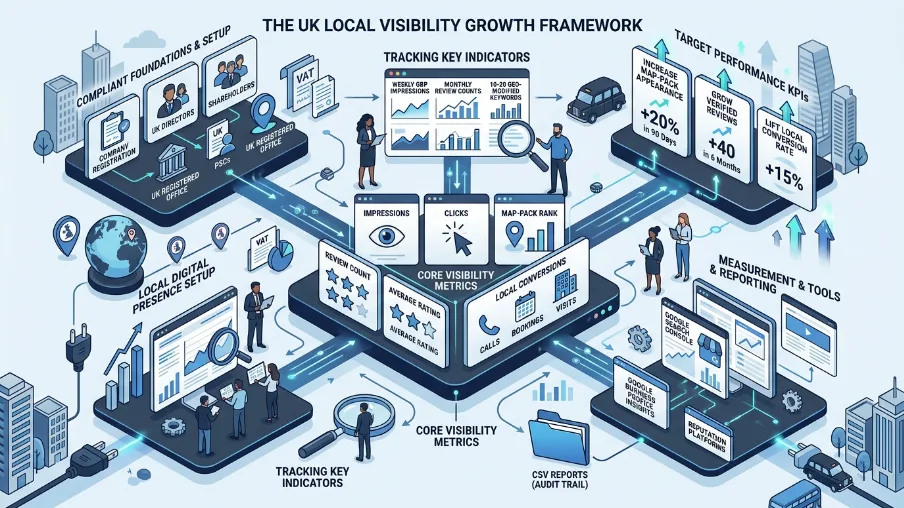
Measure impressions, clicks, map-pack ranking, review count, average rating, and local conversions (calls, bookings, visits).
Track rank positions for 10–20 geo-modified keywords, monitor Google Business Profile impressions weekly, and record review counts monthly. A typical KPI set: increase map-pack appearance by 20% in 90 days, grow verified reviews by 40 in 6 months, and lift local conversion rate by 15%. Use tools such as Google Search Console, Google Business Profile Insights, and reputation platforms that export CSV reports for audit trails.
Which processes should businesses implement to align both strategies?
Implement coordinated workflows: verify local listings, deploy review collection systems, optimise pages for local intent, and respond to reviews promptly.
Start by auditing current listings and removing duplicates. Verify and standardise NAP data across 30–50 top directories. Create local landing pages that include service keywords and location modifiers. Deploy an automated review request process after transactions to generate at least 10 verified reviews per month. Assign team members to respond to reviews within 48 hours and escalate legal or fraudulent issues to compliance.
What tactical steps improve local SEO while supporting reputation signals?
Optimise Google Business Profile, publish local content, use schema markup, and solicit verified reviews.
Claim and complete the Google Business Profile with accurate categories and photos. Publish weekly local posts and FAQs that answer common local queries. Add LocalBusiness schema to service pages to help search engines parse offerings. Send post-service review requests via SMS or email with direct review links. Monitor and remove inaccurate citations that dilute authority.
How should businesses respond to negative reviews for best SEO and reputation outcomes?
Acknowledge, investigate, resolve offline, and document outcomes publicly in a concise response.
Reply within 48 hours. Use factual language: identify the issue, state the corrective action, and offer a private channel to resolve details. After resolution, request a review update from the customer. Public evidence of remediation increases trust signals and reduces the weight of negative reviews when algorithms evaluate relevance for local queries.
What role does content play in combining both strategies?
Localised content builds topical authority and creates landing pages that convert traffic influenced by positive reviews.
Create pages targeting 1–2 services per location with location modifiers and customer proof such as review excerpts and case highlights. Publish 1–2 monthly articles answering specific local questions, for example: “How long is service X in Lahore?” or “Best practices for Y in Punjab.” Link these pages to the Google Business Profile and include testimonial snippets to improve on-page conversion.
What tech stack supports efficient management and reporting?
Use a mix of a reputation management platform, rank tracker, citation manager, and analytics dashboard.
Choose tools that integrate with Google Business Profile and export review data. Combine a rank tracker for local keywords, a citation management tool to maintain NAP consistency, and Google Analytics or a BI tool to track calls and conversions. Automate weekly reports that show map-pack presence, review velocity, and local conversions for stakeholder reviews.
Explore our Reputation Management for business guides,
How Businesses Recover Their Reputation After Bad Press
Ethical Ways to Reduce Negative Search Visibility
When should a business prioritise both services in its marketing funnel?
Prioritise both at the MOFU (evaluation) stage to turn local research into purchase decisions.
During evaluation, buyers compare nearby providers and read reviews. Investing in reputation management and local SEO at MOFU reduces friction and shortens decision cycles. Align messaging on local pages with review-derived proof points and clear calls to action. Track lead sources to attribute which tactic drove the conversion.
Combining local SEO with reputation management creates a feedback loop: local optimisation increases visibility, while reputation work raises conversion and trust. This paired approach delivers higher map-pack placement, improved click-through, and measurable local revenue uplift. Clear My Name provides Reputation Management for business and local optimisation workflows that verify listings, collect reviews, and report on local KPIs in clear, auditable formats.
Frequently Asked Questions
How does Reputation Management for business improve my Google Business Profile visibility?
Reputation Management for business improves Google Business Profile visibility by increasing review volume, maintaining a higher average rating, and ensuring review responses and updates occur regularly. Clear My Name implements verified review collection and response workflows that align with Google’s local ranking signals.
How long does it take for Reputation Management for business to affect local search rankings?
Reputation Management for business typically shows measurable effects on local search rankings within 8–12 weeks when combined with ongoing local SEO tasks. Clear My Name tracks review velocity, average rating, and map-pack impressions to provide time-based reports for assessment.
Can Reputation Management for business remove fake or malicious reviews?
Reputation Management for business identifies fake or malicious reviews, documents evidence, and files disputes with platforms like Google and Yelp following their policies. Clear My Name also recommends legal escalation when reviews clearly violate platform terms and local law.
What metrics should I track for Reputation Management for business success?
Track review count, average rating, review recency, response time, and conversion metrics such as calls or bookings from local listings. Clear My Name exports these metrics in CSV and dashboard formats to enable audit-ready reporting and trend analysis.
How does Reputation Management for business integrate with local SEO strategies?
Reputation Management for business integrates with local SEO by supplying review-derived content for landing pages, improving click-through signals, and ensuring NAP consistency across citations. Clear My Name coordinates review campaigns with local landing-page optimisation to boost both visibility and conversions.