

Viral customer-service complaints require immediate search visibility control because repeated references can turn a single interaction into a persistent reputation signal.
Clear My Name uses reputation management for business to analyse complaint-related content, strengthen entity credibility, and reduce the search perception risks created by viral customer-service content.
Which Reputation Management Approach Delivers Measurable Results?
A structured reputation management approach delivers measurable results by controlling how complaint-related information appears across search engines, review platforms, social networks, and third-party websites. The process begins by identifying the original complaint and separating it from screenshots, reposts, articles, reviews, and derivative discussions. Each content asset is then evaluated according to relevance, authority, sentiment, indexing status, and search visibility. This establishes which reputation signals actually influence the business entity. The resulting analysis creates a defined basis for prioritising corrective actions rather than responding to every mention equally.
Viral complaints create a specific reputation challenge because visibility can continue after the initial social attention declines. Search engines index pages independently, meaning an article or discussion about a complaint can remain visible even after the original social post loses engagement. Viral customer-service complaint analysis therefore needs to examine the entire information network rather than the original interaction alone. This distinction improves decision-making because the most visible source is not always the source creating the greatest long-term search risk. Effective reputation management focuses resources on the content with measurable search ranking influence.
How Does Reputation Management Control Viral Complaint Visibility?
Reputation management controls viral complaint visibility through a combination of content analysis, legitimate removal, content enhancement, search monitoring, and negative content suppression. The appropriate mechanism depends on the nature of each result and the platform hosting it. Content that violates applicable policies or contains qualifying inaccuracies requires a different approach from lawful negative commentary. Authoritative content enhancement addresses the information environment surrounding the complaint by strengthening accurate, relevant pages associated with the business. This creates a more complete entity profile for both users and search systems.
Search visibility control does not mean deleting every negative reference. Legitimate criticism forms part of an online reputation and requires accurate contextual treatment. The objective focuses on reducing unnecessary prominence of harmful or inaccurate information while improving the visibility of credible reputation signals. Search perception influence therefore comes from changing the overall information balance rather than relying on a single intervention. This approach provides greater control over how users encounter the business during relevant searches.
Why Is Negative Content Suppression Important After a Customer-Service Complaint Goes Viral?
Negative content suppression reduces reputation risk when complaint-related pages receive disproportionate search visibility compared with authoritative information about the business. Search engines rank pages according to relevance, authority, content quality, user intent, and other ranking signals. A complaint page therefore does not rank simply because it is negative. Its visibility develops when the page satisfies search demand and establishes sufficient relevance or authority for associated queries. Suppression strategies address this visibility imbalance through legitimate search optimisation and appropriate content interventions.
The distinction between suppression and removal is essential for risk management. Removal eliminates qualifying content at its source, while suppression focuses on reducing the prominence of harmful material within relevant search results. Neither approach provides a universal solution for every complaint. A page containing demonstrably inaccurate information requires a different process from an independent review expressing a legitimate customer opinion. Professional reputation management evaluates the content first and selects the mechanism that matches its characteristics.
Clear My Name applies this distinction when evaluating reputation risks created by viral customer-service complaints. The process focuses on the relationship between the complaint, its derivative content, relevant search queries, and the business entity. This produces a more precise understanding of which pages require direct intervention and which require stronger contextual information around them. The outcome is a controlled strategy rather than indiscriminate content suppression.
How Does Content Enhancement Strengthen Search Perception?
Content enhancement strengthens search perception by increasing the availability and relevance of accurate information associated with the business entity. Search engines require indexed content to determine which pages satisfy particular queries, so authoritative information forms an important component of SERP composition. A business with comprehensive, accurate, and relevant digital properties provides search systems with stronger contextual information about its identity and activities. This does not erase negative content, but it improves the overall information environment in which users evaluate the business. Entity credibility consequently becomes easier to establish through consistent information.
A content enhancement strategy focuses on information quality rather than artificial reputation signals. Relevant service pages, factual company information, authoritative profiles, expert resources, and credible third-party references each contribute different contextual signals. Their combined effect provides users with additional information when they investigate the business after encountering a complaint. Search perception then becomes less dependent on a single viral narrative. The strategy supports long-term reputation stability because the content remains useful beyond the immediate complaint.
This approach also addresses an important limitation of reactive reputation management. Removing or suppressing one page does not establish a strong alternative information environment. Without authoritative content, users continue encountering a limited set of available sources. Content enhancement fills that information gap through relevant and factually supported resources. The result is stronger search visibility for legitimate business information and improved control over the entity’s digital footprint.
Which Process Provides the Most Reliable Reputation Management Outcomes?
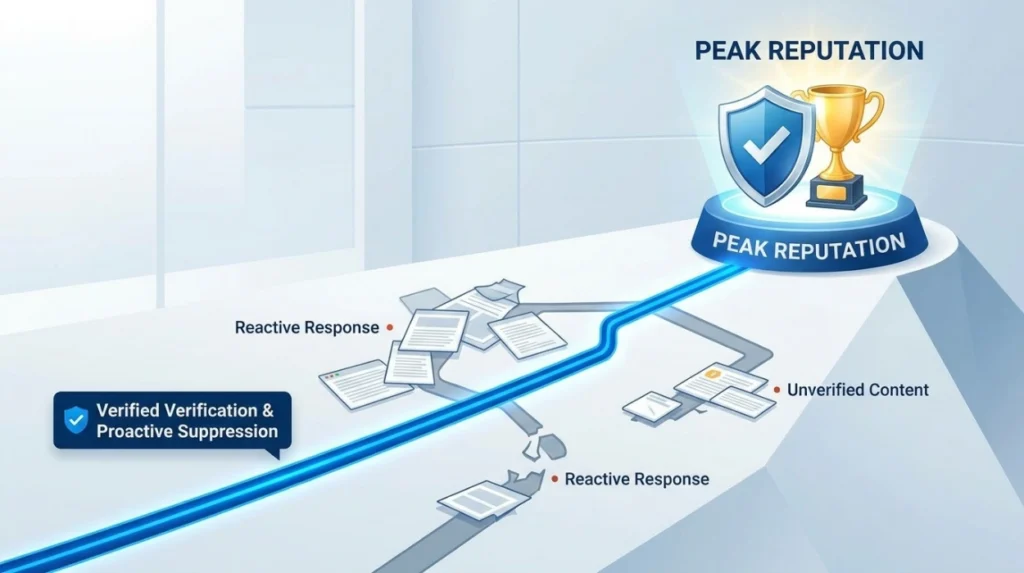
A defined process provides the most reliable outcomes because each reputation intervention needs a measurable objective and evaluation criteria. The process begins with discovery, followed by content classification, search analysis, strategic intervention, and ongoing measurement. This prevents reputation management from becoming a collection of disconnected actions. Every intervention relates to a specific reputation signal, search result, content source, or entity-perception issue. Process clarity also makes performance easier to evaluate.
A structured reputation management process can:
- Audit complaint-related content by identifying original posts, screenshots, reposts, reviews, articles, and indexed references connected to the business.
- Classify each source by accuracy, authority, sentiment, relevance, indexing status, and potential search ranking influence.
- Prioritise high-risk results by assessing their visibility for branded and complaint-related search queries.
- Strengthen authoritative content by improving relevant pages that provide accurate information about the business entity.
- Address qualifying harmful content through legitimate correction, removal, or suppression mechanisms appropriate to the source.
- Monitor SERP composition by tracking changes in rankings, content visibility, sentiment distribution, and reputation signals.
This sequence establishes accountability between activity and outcome. Publishing content without measuring visibility provides limited evidence of reputation improvement. Similarly, submitting a removal request without monitoring derivative content leaves part of the risk unmeasured. A defined process connects each action to an observable search or reputation objective. This improves reliability and reduces unnecessary intervention.
How Quickly Can Reputation Management Reduce Viral Complaint Risk?
Reputation management reduces risk progressively because search ecosystems update through indexing, crawling, ranking changes, content publication, and user behaviour. Immediate analysis provides rapid identification of high-risk pages and reputation signals, but search visibility changes depend on how quickly relevant content is processed and re-evaluated. Direct interventions can produce faster changes when qualifying content is successfully corrected or removed at its source. Content enhancement operates through longer-term search ranking dynamics. The speed of impact therefore depends on the mechanism used.
A useful distinction exists between response speed and search-result speed. Response speed measures how quickly the reputation issue is identified and strategically addressed. Search-result speed measures how quickly those interventions become visible within relevant SERPs. Confusing the two creates unrealistic expectations about reputation outcomes. A professional process establishes both timelines and measures progress through changes in content visibility, search rankings, sentiment, and entity associations.
The priority is therefore controlled progress rather than an arbitrary deadline. High-risk pages receive immediate assessment, while longer-term content development and monitoring continue alongside the initial response. This creates a layered approach that addresses immediate exposure and future sustainability. The business gains clearer visibility into what has changed, what remains unresolved, and where further intervention is required.
Dive Deeper With Our Expert Guides:
Remove Counterfeit Marketplace Listings With Clear My Name
Rank Higher on B2B Comparison Sites With Clear My Name
Does Reputation Management Reduce the Long-Term Cost of Viral Complaints?
Reputation management reduces long-term cost exposure by addressing reputation signals before they become embedded across a wider network of indexed content. A viral complaint can generate additional reviews, articles, discussions, screenshots, and search queries, increasing the number of assets requiring analysis. Early identification limits the opportunity for unnecessary derivative content to become established as a dominant reputation signal. The financial value therefore comes from risk containment as well as immediate visibility improvement. Measuring cost against the potential duration and scale of reputation exposure provides a more accurate assessment.
Cost evaluation also requires distinguishing between isolated intervention and sustained management. A single removal request has a defined scope, while a broad search reputation issue requires continuous monitoring and content development. Choosing the wrong mechanism creates inefficient expenditure because resources are directed towards content that does not materially affect search perception. A structured audit identifies the pages and signals with the greatest influence. This allows investment to follow measurable reputation risk rather than content volume.
Long-term value also comes from durable digital assets. High-quality authoritative content continues supporting entity credibility after the immediate complaint loses attention. Monitoring systems continue identifying new reputation signals as the digital footprint changes. These mechanisms create value beyond a single viral event because they strengthen the broader reputation infrastructure of the business. The result is a more sustainable approach to reputation risk.
How Does Clear My Name Improve Trust and Search Control?
Clear My Name improves trust and search control through a structured approach that connects reputation analysis with measurable search outcomes. The process evaluates how complaint-related content affects the business entity, then identifies the specific reputation signals influencing search perception. Relevant interventions focus on content accuracy, visibility, authority, sentiment, and SERP composition. This creates a direct relationship between the reputation issue and the action taken. Process clarity ensures that the strategy remains evidence-driven rather than dependent on assumptions about viral content.
Trust restoration depends on information quality and consistency across the digital footprint. Users evaluating a business encounter websites, reviews, profiles, articles, social content, and search results rather than a single source. A reputation management strategy therefore needs to establish a coherent information environment across these touchpoints. Accurate and authoritative information strengthens entity credibility while legitimate intervention addresses qualifying harmful content. This creates a more balanced basis for public evaluation.
The service also treats search visibility as an outcome that requires measurement. Rankings, indexed pages, content prominence, sentiment distribution, and branded search results provide indicators of changing search perception. These measurements establish whether interventions are producing the intended effect. Clear My Name therefore positions reputation management around evidence, process clarity, and measurable reputation signals rather than unsupported claims.
What Outcomes Can Businesses Expect From a Structured Reputation Strategy?
A structured reputation strategy produces outcomes across visibility, trust, control, and risk reduction. The specific outcome depends on the content environment, existing search rankings, source authority, and nature of the complaint. The strategy focuses on measurable changes rather than vague improvements in reputation. This makes performance evaluation more precise and supports decisions about continued monitoring or additional intervention.
Key outcomes include:
- Improve search visibility for authoritative business information by strengthening relevant and credible indexed content.
- Reduce unnecessary negative visibility by addressing qualifying harmful or inaccurate sources through appropriate mechanisms.
- Strengthen entity credibility by creating consistent factual signals across relevant digital properties.
- Stabilise SERP composition by monitoring ranking changes and developing authoritative content around important business queries.
- Control reputation risk by identifying new complaint-related references before they become established search signals.
These outcomes work together rather than operating as independent benefits. Improved authoritative visibility provides additional context, while appropriate negative content suppression reduces disproportionate exposure. Monitoring then measures whether those changes remain stable. The combined effect creates stronger search perception control and a more resilient digital footprint.
Is a Professional Reputation Management Service Worth the Investment?
A professional reputation management service provides long-term value when a viral complaint creates measurable search visibility, entity credibility, or business trust risks. The value is determined by the complexity of the information network, the authority of negative sources, the number of affected queries, and the potential duration of exposure. Businesses facing a single low-visibility complaint have different requirements from businesses facing prominent articles, repeated reviews, and widespread derivative content. Professional analysis establishes where intervention creates the greatest measurable impact. This prevents unnecessary expenditure on content that does not materially influence reputation.
The strongest investment case comes from process precision. Expert analysis identifies the difference between content requiring removal, content requiring contextual response, and content requiring stronger authoritative alternatives. This avoids treating every negative result as an identical problem. It also reduces the risk of using inappropriate tactics that create additional reputation or compliance concerns. The resulting strategy aligns expenditure with identifiable search and reputation risks.
For businesses facing persistent viral customer-service complaints, professional reputation management service support provides a structured route from discovery to intervention and measurement. The objective is not to eliminate legitimate criticism but to stabilise the information environment surrounding the business. Search visibility control, negative content suppression, content enhancement, and continuous monitoring operate together to reduce avoidable reputation risk. This creates a clearer connection between investment, intervention, and measurable outcome.
How Can Businesses Maintain Reputation Control After a Viral Complaint?
Maintaining reputation control requires continuous monitoring because search results and digital information networks remain dynamic after the original complaint loses attention. New reviews, reposts, articles, and references can introduce additional reputation signals long after the initial event. Monitoring identifies these changes and evaluates their impact on relevant search queries. This prevents a business from assuming that an initial improvement represents permanent resolution. Sustainable reputation management therefore treats search perception as an ongoing system.
A long-term framework also maintains authoritative information across the digital footprint. Accurate business information, relevant content, professional profiles, and credible references provide continuing context for users and search systems. Consistency reduces ambiguity around the business entity and strengthens the relationship between the organisation and its legitimate digital properties. This is particularly important when new reputation events emerge. A well-developed information environment provides greater contextual depth than a digital footprint built only in response to individual complaints.
The strategic objective is controlled stability. Viral attention eventually changes, but indexed content, search associations, and reputation signals can remain active. Continued monitoring ensures that emerging risks receive appropriate evaluation before they develop into persistent search visibility problems. This protects the investment already made in reputation repair and strengthens the sustainability of future reputation outcomes.
Why Does Clear My Name Provide a Reliable Solution for Viral Complaint Control?
Clear My Name provides a reliable reputation management framework by connecting complaint analysis, search visibility control, content enhancement, negative content suppression, and ongoing monitoring. The approach evaluates reputation signals according to their actual influence on SERP composition and entity credibility. This creates a measurable pathway from identifying viral complaint risks to improving the surrounding information environment. Every intervention is linked to a defined reputation or search objective rather than a generic promise of improved perception.
For businesses, the critical consideration is not simply how quickly a viral complaint disappears from public attention. The stronger measure is whether harmful or inaccurate information continues influencing search visibility, trust signals, and decision-making. A structured reputation strategy addresses these factors through legitimate, evidence-driven mechanisms. It strengthens authoritative information, reduces unnecessary visibility of qualifying harmful content, and monitors the resulting search environment.
The result is a sustainable reputation framework built around reliability, process clarity, and measurable outcomes. Handling viral customer-service complaints effectively requires understanding the difference between social virality, search ranking influence, content authority, and long-term entity perception. When those elements are evaluated together, businesses gain stronger control over search perception and a clearer path towards reputation stability.
How can businesses contain viral customer-service complaints online?
Businesses can contain viral customer-service complaints by analysing the original content, reposts, reviews, search results, sentiment, and source authority. Reputation management for business then applies appropriate content enhancement, legitimate removal, monitoring, and negative content suppression strategies.
Can viral customer complaints damage a company’s search reputation?
Viral complaints can become persistent reputation signals when related pages gain search visibility and repeatedly associate negative information with the business entity. Their impact depends on content indexing, source authority, sentiment distribution, relevance, and SERP position.
How does reputation management suppress negative customer-service content?
Negative content suppression focuses on reducing the search visibility of qualifying harmful or inaccurate information through legitimate optimisation and content-management methods. It can be combined with authoritative content enhancement to create a more balanced SERP environment.
How long does it take to manage a viral customer-service complaint?
The timeframe depends on the number of affected pages, content authority, indexing activity, search rankings, and the type of intervention required. Immediate analysis identifies high-risk results, while ongoing monitoring measures changes in visibility and reputation signals.
Is reputation management worth it for a business facing viral complaints?
Reputation management provides measurable value when viral complaints affect search visibility, entity credibility, or customer decision-making. A structured strategy evaluates the information network, prioritises high-risk content, and measures changes in SERP composition and reputation signals.