
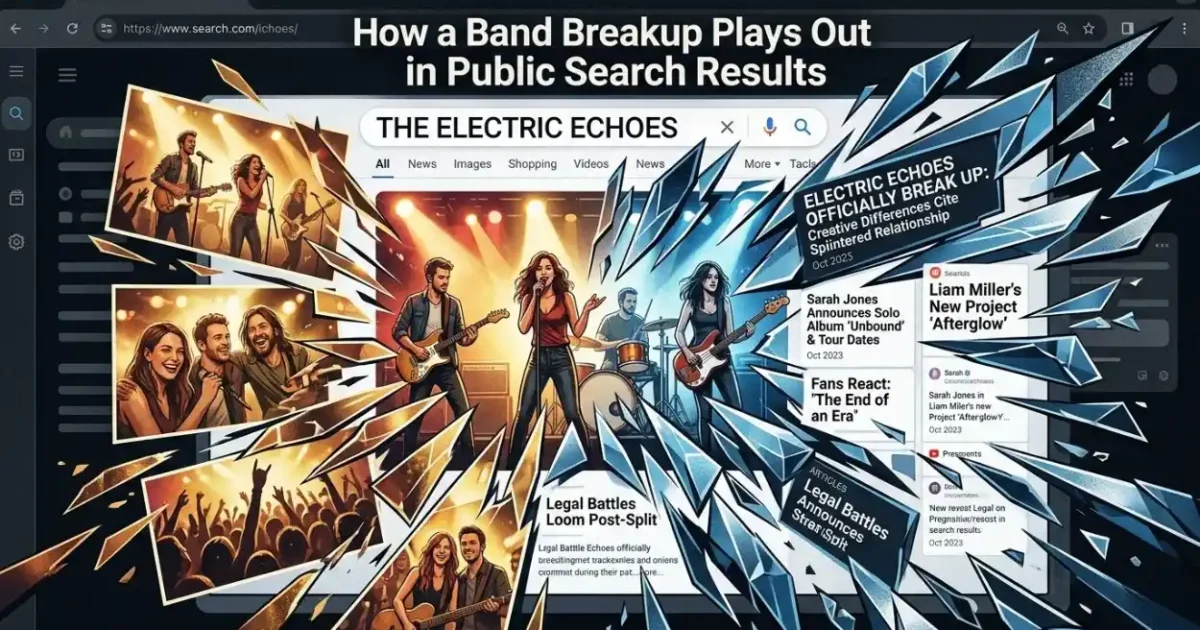
A band breakup can reshape public search results because news coverage, social posts, reviews and historical pages continue influencing how the artists and band entity are represented online. Search engines evaluate this accumulated information through relevance, authority, freshness, content relationships and reputation signals.
Reputation management is the structured understanding and control of information that influences how an individual, organisation or entity is represented online. Online reputation refers to the collection of searchable information, perceptions and signals associated with an entity across search engines, websites, social platforms and other digital sources. When a band separates, the digital footprint surrounding the group and its members changes as new information enters the search ecosystem. Search engines then process those changes through crawling, content indexing and ranking systems. The resulting SERP can therefore reflect both the band’s historical identity and its post-breakup information.
How does a band breakup change its digital footprint?
A band breakup changes the digital footprint by introducing new information that alters the relationship between the band, its members, music and historical content. A digital footprint is the accumulated collection of online information associated with an entity, including official pages, interviews, reviews, biographies, social profiles, music platforms and third-party coverage. Before a breakup, these sources often reinforce a shared entity identity through repeated names, member associations and musical references. After the separation, new pages begin describing individual members, new projects or changes to the band’s status. Search engines process these relationships as additional information rather than replacing the historical record automatically.
The change becomes particularly important when older pages continue to rank for searches involving the band’s name. Historical interviews, festival listings, streaming profiles and music publications can remain indexed after the underlying relationship between members has changed. Content indexing preserves the searchable history unless pages are removed, updated or displaced through subsequent ranking changes. This creates a layered digital footprint containing both historical and current information. The SERP therefore represents the accumulated online record rather than a single current statement.
A breakup also creates new entity relationships between the former band and individual musicians. Search engines use contextual relationships between names, topics, organisations and pages to interpret entities. When a member launches a solo project, new content can establish a separate entity association while older pages continue connecting that musician with the former band. Entity perception consequently develops through both historical and current signals. The search environment becomes an evolving representation of identity rather than a simple record of the latest event.
How do search engines interpret band breakup information?
Search engines interpret breakup information through the relevance and context of indexed content rather than through a single authoritative interpretation of the event. Search systems analyse textual relationships, page relevance, source authority and other signals to determine which content deserves visibility for a query. A report announcing a breakup therefore competes with older biographies, music databases and interviews for positions within the SERP. The ranking process evaluates how closely each page matches the searcher’s intent. This determines which version of the band’s public identity becomes most visible.
Content authority influences how quickly a new breakup announcement gains search visibility. A report published by an established music publication has a different authority profile from an unverified social post. Search engines evaluate the relationship between the source, subject matter and query when determining relevance. This does not mean that one source permanently controls the narrative. New content continues entering the index and can alter the ranking environment over time.
Freshness also becomes relevant when users search for current information about the band. Queries containing terms such as breakup, former members, reunion or new project signal a need for current context. Search engines can therefore prioritise newer content when it provides a stronger match for the query. Older pages remain relevant for historical searches because they provide established context about the band’s previous identity. SERP evaluation consequently produces different results depending on the search intent behind the query.
Why do old band pages continue appearing after a breakup?
Old band pages continue appearing because content indexing preserves previously published information even when circumstances surrounding the entity change. A biography describing the original line-up remains historically relevant after members leave. A concert archive remains useful as a record of past performances. A review written during the band’s active period retains its original context. Search engines do not automatically remove historical pages simply because the band’s status has changed.
Historical content also accumulates authority through links, references and continued user engagement. A long-established publication page can maintain search visibility because it has developed relevance within its topic area. The breakup does not erase those existing reputation signals. Instead, new information enters a search environment containing an established historical record. This explains why searches for a former band can produce a mixture of old and new results.
The persistence of historical information also affects entity perception. Users encountering older pages without current context can interpret the band as active even when the group has separated. Updated pages provide temporal context that helps explain the entity’s current status. Search engines use content relationships and query intent to determine which pages receive visibility, but the underlying historical material remains part of the digital footprint. Understanding this distinction is essential when evaluating search results after a significant identity change.
How does news coverage influence the public search narrative?
News coverage influences the public search narrative by creating authoritative, indexable documents that explain the breakup and establish relationships between the band and its former members. Published reports frequently contain the band name, member names, previous releases and statements about the separation. These elements create strong semantic connections between the entities. Once indexed, the coverage becomes part of the information environment used by search engines to satisfy related queries. The prominence of that coverage depends on relevance, source authority and search intent.
The language used in coverage also contributes to entity perception. A factual report focused on dates, statements and career developments creates a different contextual signal from content built around speculation or unsupported claims. Search engines process the content itself, while users interpret the information according to the context presented. This interaction between content structure and user behaviour contributes to search perception. Accurate, clearly sourced information therefore provides stronger informational context around a significant change.
Coverage can also become a reference point for subsequent articles. New pages frequently link to or discuss earlier reporting, creating relationships between documents within the broader information ecosystem. These connections help establish which sources are discussing the same event and entities. As the information network expands, the breakup becomes associated with a cluster of related content. This cluster can influence which pages appear for searches involving the band and its members.
Dive Deeper With Our Expert Guides:
Why Ticketing and Refund Complaints Hurt an Artist’s Name
How Fake Collaboration Rumours Spread About Musicians
How do reviews and sentiment affect a band’s search reputation?
Reviews and sentiment affect a band’s search reputation by adding evaluative signals to the broader information associated with the entity. Reviews can describe music, performances, member changes or the perceived impact of a breakup. Search engines analyse content for relevance and context, while users interpret positive, negative or neutral language as part of their assessment. Sentiment therefore contributes to the informational environment surrounding a band’s name. It does not operate as a single ranking factor that determines every search result.
Sentiment distribution is more useful as a reputation concept than treating one review as representative of the entire entity. A band’s digital footprint can contain favourable album reviews, critical commentary, neutral news reports and historical discussions simultaneously. These sources create a mixed information environment. Search perception emerges from the overall composition and prominence of those sources rather than from one isolated statement. The visibility of each source depends on ranking dynamics and query relevance.
A breakup can change sentiment distribution because audiences and publications begin evaluating the band’s history, individual careers and future direction. Reviews of previous releases remain part of the band’s historical reputation, while commentary about new projects develops separate signals around individual members. This creates a transition between collective and individual entity identities. Search results therefore contain reputation signals associated with both the former group and its members. The distinction helps explain why post-breakup search results can become more fragmented.
How do authority and trust signals affect breakup-related search results?
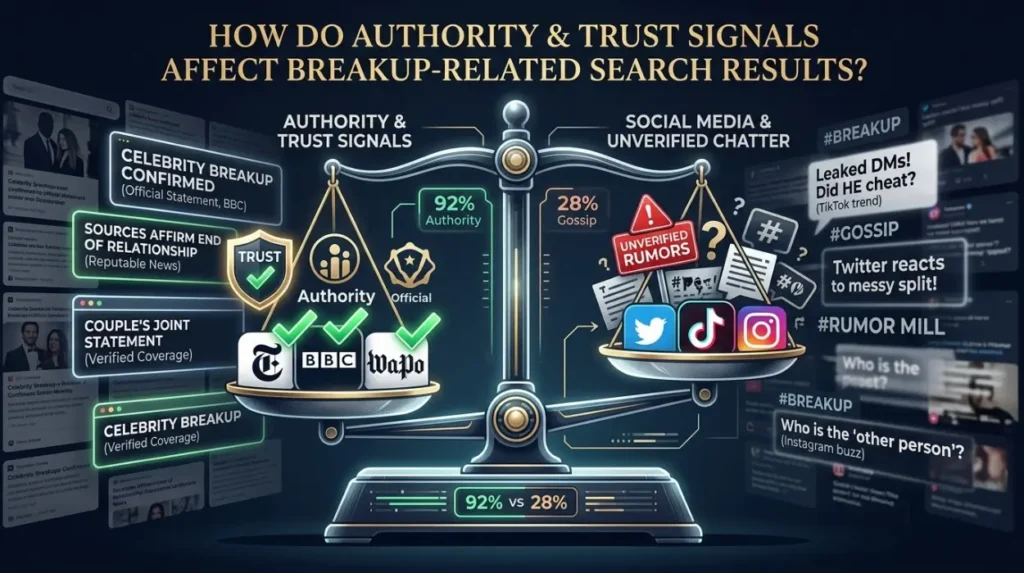
Authority and trust signals influence which sources receive visibility when users search for information about a band’s breakup. Authority refers to the strength and relevance of a source within a particular subject area, while trust relates to the reliability and consistency of information presented by that source. Established music publications, official artist profiles and recognised industry databases often provide stronger contextual signals than anonymous pages. Search engines evaluate these relationships as part of their ranking systems. Users also rely on recognisable sources when assessing whether information is credible.
Consistency strengthens entity understanding because repeated factual relationships across credible sources create a clearer information structure. If multiple authoritative pages identify the same former members, release history and breakup date, the entity relationship becomes easier to interpret. Contradictory information introduces additional complexity into the search environment. Search systems continue evaluating each source independently, so consistency does not guarantee one fixed ranking outcome. It does, however, provide clearer contextual information for both search engines and users.
Trust signals also develop over time through source history and content quality. A newly published page does not automatically replace established sources simply because it contains newer information. Its ability to rank depends on relevance, authority and how effectively it satisfies the search query. This creates a distinction between freshness and credibility. Both factors contribute to SERP evaluation when search engines determine which information deserves visibility.
How does a breakup affect searches for individual band members?
A breakup can shift search visibility from a collective band entity towards individual member entities as new content establishes separate identities. New solo releases, interviews, profiles and project pages create fresh associations between each musician and their independent work. Search engines then process these pages alongside historical references connecting the members to the former group. This creates overlapping entity relationships. A musician can therefore remain strongly associated with the former band while developing a distinct searchable identity.
The strength of this transition depends on the amount and quality of information surrounding the individual member. Official websites, music profiles, interviews and credible publications provide contextual evidence about the musician’s current activities. Older band pages continue supplying historical context. Search results consequently contain both legacy and current signals. Over time, the relative prominence of these signals can change as new content becomes indexed and user search behaviour develops.
The transition also affects branded and personal search queries. A search for the former band’s name primarily activates collective entity signals, while a member’s name activates both individual and historical band associations. Query wording determines which part of the digital footprint becomes most relevant. Search engines therefore evaluate the relationship between the query and available content rather than applying one permanent identity structure. This makes entity separation a gradual search process rather than an instantaneous change.
What role does content indexing play after a band breakup?
Content indexing determines which breakup-related pages become available for search evaluation and therefore influences the information that can enter the SERP. When a search engine crawls a page and adds it to its index, the page becomes part of the searchable information environment. A new interview, announcement or member profile can therefore introduce additional context around the band’s changing identity. Existing indexed pages remain available unless their indexing status or ranking position changes. The result is an evolving collection of historical and current information.
Indexing also explains why publishing an update does not instantly transform every search result. Search engines process pages independently and then evaluate their relevance against specific queries. An updated band biography can provide stronger current context while older articles continue ranking for historical searches. The search ecosystem therefore changes progressively as content is crawled, processed and ranked. This mechanism separates content publication from search visibility.
The distinction is important for understanding search perception after a breakup. A new page can exist online without becoming prominent in search results. Conversely, an older page can retain visibility because it remains highly relevant to a historical query. Content indexing creates availability, while ranking determines prominence. Both processes contribute to how a band’s public identity appears within search results.
How can reputation perception change over time after a band breakup?
Reputation perception changes as new information modifies the balance between historical, current and evaluative content associated with the band and its members. Search results are not static records because new pages enter the index, existing pages receive updates and ranking positions change according to search evaluation. A breakup therefore creates a transition period in which collective and individual identities coexist. Over time, newer information can become more prominent for current-intent searches. Historical content continues contributing context for searches focused on the band’s previous work.
This process demonstrates why online credibility is cumulative. Online credibility refers to the perceived reliability and authority of an entity based on the quality, consistency and context of information available about it. A band’s credibility is represented through music coverage, reviews, official information, interviews and other sources rather than through one isolated page. After a breakup, the same historical signals remain while new evidence develops around individual careers. Search perception therefore evolves through accumulated information.
For musicians navigating this transition, understanding Managing Your Reputation Through a Band Breakup provides a framework for examining how collective identity, individual identity and search visibility interact. The concept focuses on the information system rather than treating reputation as a single page or statement. It also demonstrates why historical content, current reporting and new entity relationships need to be considered together. Search perception is shaped by the total information environment available to users. Analysing that environment provides a clearer understanding of how a breakup becomes represented online.
What does a band’s search reputation reveal after a breakup?
A band’s search reputation reveals the combined effect of historical content, current reporting, entity relationships, reviews, sentiment and authority signals within the search ecosystem. The first page of results often contains a mixture of official information, journalism, music databases, reviews and historical material. Each source contributes a different type of information to the entity’s searchable identity. The resulting SERP therefore represents an information structure rather than a single narrative. Its composition changes as content is published, indexed and evaluated.
The most important distinction is between historical reputation and current search perception. Historical pages explain what the band was, while current sources explain its present status and the activities of former members. Search engines evaluate both according to query relevance. Users then form perceptions from the information that receives prominent visibility. Understanding this interaction explains why a breakup can have a continuing digital effect long after the original announcement.
A band breakup therefore does not erase an established online identity; it reorganises the information associated with that identity. Search visibility evolves through content indexing, ranking dynamics, reputation signals and changing entity relationships. Reviews contribute sentiment, authoritative sources contribute credibility, and new content provides current context. Together, these mechanisms determine how the former band and its members are represented in public search results. Understanding these systems provides the foundation for analysing digital reputation without reducing it to a single page, event or ranking position.
How does a band breakup affect Google search results?
A band breakup introduces new news articles, interviews, social content and artist profiles that can change the information appearing in search results. Search engines evaluate this content alongside existing historical pages when determining relevance and ranking.
Why do old band articles still appear after a breakup?
Old articles remain indexed because they provide historical information about the band’s music, members and previous activities. A breakup does not automatically remove or de-index previously published content from search engines.
Does a band breakup affect the online reputation of its members?
A breakup can change the reputation signals associated with individual members by creating new connections between their names, solo projects and the former band. Search results then combine historical band references with current information about each musician.
How do reviews affect a band’s reputation after a breakup?
Reviews contribute sentiment and reputation signals that remain part of the band’s digital footprint after separation. Positive, negative and neutral reviews can continue influencing how users interpret the band’s historical identity and musical reputation.
Can musicians control how a band breakup appears in search results?
Musicians can influence search perception by maintaining accurate current information, strengthening authoritative profiles and monitoring indexed content. These actions help provide clearer context around the separation while supporting a consistent individual digital identity.