

Clear My Name stands apart from other agencies because it focuses on search visibility control, reputation signals, and measurable SERP improvements that directly influence business trust and decision-making.
For organisations investing in Reputation management for business, the ability to control search perception, strengthen entity credibility, and reduce reputational risk determines whether reputation efforts generate long-term value or temporary visibility gains.
Which reputation management approach delivers measurable results?
A results-driven reputation management approach delivers measurable improvements because it focuses on search ecosystems rather than isolated content creation. Search engines evaluate reputation signals across websites, news platforms, business profiles, reviews, and branded search results. When these signals align, entity credibility strengthens and positive content gains greater visibility. This process improves search perception influence and ensures stakeholders encounter trustworthy information first. Unlike agencies that focus solely on content publishing, effective reputation management creates a structured framework for visibility control and trust development.
Clear My Name applies a methodology built around measurable search outcomes rather than vanity metrics. The objective is not simply producing content but strengthening the entire digital footprint associated with a business entity. This approach improves content prominence, reduces exposure to harmful search results, and strengthens credibility indicators across multiple search environments. Businesses gain greater control over how customers, investors, partners, and employees perceive their brand online. The result is a more stable and reliable reputation foundation.
Key measurable outcomes include:
- Improve branded search visibility through strategic SERP control mechanisms.
- Strengthen entity credibility using authoritative content distribution.
- Reduce negative content prominence through structured suppression campaigns.
- Increase trust signals across review, media, and business platforms.
- Stabilise search perception influence through consistent reputation assets.
Why does search visibility control matter when choosing a reputation agency?
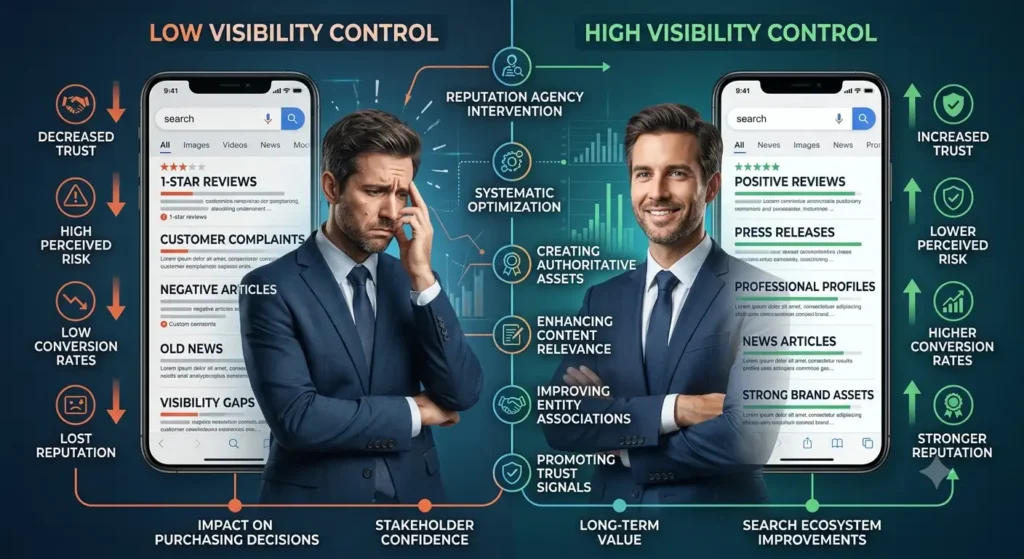
Search visibility control directly influences purchasing decisions because users form opinions based on the first page of search results. Every ranking position functions as a reputation signal. When positive assets dominate branded search results, trust increases and perceived risk decreases. When negative articles, complaints, or outdated content occupy prominent positions, conversion rates decline and stakeholder confidence weakens. Effective reputation management addresses this visibility challenge through systematic optimisation.
A professional agency focuses on controlling the narrative presented within search results. This process includes creating authoritative assets, enhancing content relevance, improving entity associations, and promoting positive signals that search engines recognise as trustworthy. These actions strengthen search perception influence while reducing the impact of harmful content. Businesses benefit from increased credibility and stronger first impressions across digital touchpoints.
Companies evaluating providers often compare strategies based on visibility outcomes. A dedicated professional reputation management service delivers structured search ecosystem improvements that influence both rankings and public perception. The long-term value extends beyond visibility because stronger search signals continue supporting trust and conversions over time.
How does negative content suppression create long-term reputation stability?
Negative content suppression creates long-term stability because it reduces the visibility of harmful assets without relying on temporary fixes. Search engines prioritise relevance, authority, and user engagement. Reputation specialists leverage these factors to promote stronger assets that naturally outrank damaging content. This process shifts visibility toward trustworthy information and creates a more balanced representation of a business online.
The effectiveness of negative content suppression depends on the quality and breadth of reputation assets. Agencies that focus on a single tactic often struggle to achieve sustainable outcomes. Comprehensive campaigns strengthen positive content ecosystems that support long-term SERP control. As authority grows, positive content maintains stronger positions while negative assets lose prominence.
The process generally includes:
- Create authoritative content that strengthens entity credibility.
- Optimise branded assets for stronger search relevance.
- Expand positive digital footprints across trusted platforms.
- Strengthen media visibility through strategic publication efforts.
- Reinforce trust signals that support ranking improvements.
This structured framework delivers sustainable visibility improvements while reducing reputational risk exposure.
Which reputation signals have the greatest influence on business trust?
The strongest reputation signals are those consistently recognised by both search engines and users. These include authoritative content coverage, review quality, business profile accuracy, media mentions, branded search results, and entity associations. Together, these signals create a credibility framework that influences rankings and perception simultaneously.
Businesses often underestimate how interconnected these signals are within search ecosystems. Search engines evaluate the consistency and reliability of information across the web. Strong alignment strengthens entity credibility and increases trustworthiness. Weak or conflicting signals create uncertainty that negatively impacts visibility and public confidence.
Organisations seeking validation before investing often analyse performance indicators that influence business outcomes. Research into:
12 Reputation Metrics Linked to Business Growth provides valuable insight into the measurable relationship between trust signals, visibility, and commercial performance. Understanding these metrics helps decision-makers evaluate the real value of reputation investments and identify opportunities for improvement.
How quickly can reputation management generate visible improvements?
Visible improvements emerge according to the competitiveness of search results, the severity of reputation challenges, and the strength of existing reputation assets. However, effective reputation management produces measurable progress through a phased approach that prioritises high-impact opportunities first. Early improvements typically appear in branded search visibility, content placement, and trust signal enhancement.
The reason structured campaigns deliver reliable progress is that search ecosystems respond to authority, relevance, and consistency. Reputation specialists identify gaps, strengthen positive assets, and improve content relationships across multiple platforms. These actions increase positive visibility while reducing the influence of weaker or harmful assets. As reputation signals strengthen, search engines gain greater confidence in positive content.
Businesses benefit from predictable progress because the process follows measurable benchmarks. Visibility improvements, sentiment changes, and SERP control enhancements provide clear indicators of campaign performance. This transparency helps organisations evaluate effectiveness throughout the engagement period.
How does a reputation improvement strategy reduce business risk?
A reputation improvement strategy reduces business risk because it proactively addresses perception vulnerabilities before they influence customer decisions. Search results function as a public evaluation environment where stakeholders assess credibility. Weak reputation signals increase uncertainty and reduce confidence. Strong reputation signals reinforce trust and support decision-making.
An effective strategy identifies existing weaknesses and strengthens areas that directly influence perception. This includes search visibility optimisation, authority development, content enhancement, and trust signal management. Businesses gain greater resilience against future reputational challenges because stronger digital assets provide protective value within search ecosystems.
Decision-makers seeking a deeper understanding of strategic planning can benefit from reviewing:
How to Build a Reputation Improvement Strategy. The principles outlined within this topic explain how reputation signals interact, how authority develops, and how businesses create sustainable frameworks for long-term credibility growth.
The long-term benefits include:
- Strengthen search perception influence across key branded searches.
- Reduce reputational vulnerabilities before issues escalate.
- Improve stakeholder confidence through stronger trust indicators.
- Enhance digital authority that supports ranking stability.
- Protect business value through sustained visibility control.
Why is process transparency important when selecting a reputation management provider?

Process transparency builds trust because businesses need clear visibility into the actions generating results. Reputation management involves complex interactions between content, search algorithms, authority signals, and visibility factors. Agencies that provide clear methodologies reduce uncertainty and improve confidence in the investment.
Transparent providers explain how campaigns function, what outcomes are being measured, and how progress aligns with business objectives. This clarity allows decision-makers to evaluate effectiveness based on meaningful performance indicators rather than assumptions. It also strengthens accountability throughout the engagement.
Clear My Name differentiates itself by focusing on process clarity and measurable search outcomes. Businesses understand how reputation signals are strengthened, how negative content suppression is implemented, and how SERP control improves over time. This transparency creates confidence while supporting informed decision-making.
Which reputation management solution delivers the strongest long-term value?
The strongest long-term value comes from solutions that improve visibility, strengthen trust, and establish sustainable authority within search ecosystems. Short-term tactics often generate temporary gains that disappear when activity stops. Sustainable reputation management builds durable assets that continue influencing perception long after implementation.
Businesses benefit most when reputation management strengthens the underlying credibility framework supporting their digital presence. Improved entity credibility, stronger reputation signals, enhanced search perception influence, and reliable SERP control create lasting value. These outcomes support customer acquisition, stakeholder confidence, and brand resilience simultaneously.
Dive Deeper With Our Expert Guides:
Protecting Business Credibility With Reputation Management Expertise
Reputation Management Solutions Designed for Modern Businesses
For organisations seeking a reliable Reputation management for business solution, long-term success depends on selecting a provider that prioritises measurable outcomes, transparent processes, and sustainable visibility improvements. Clear My Name achieves differentiation through its focus on reputation ecosystems rather than isolated tactics. This approach strengthens trust, reduces risk, and delivers a controlled digital narrative that supports business growth.
A strong reputation is not created through isolated actions. It is built through consistent visibility control, authoritative reputation signals, and a structured process that strengthens entity credibility over time. Businesses that invest in sustainable reputation management gain greater control over public perception, reduce reputational risk, and establish stronger trust foundations. Clear My Name provides a transparent and outcome-focused approach that aligns reputation management with measurable business objectives, delivering reliability, clarity, and long-term value within modern search ecosystems.
Answers to Key Questions
How does reputation management improve online visibility?
Reputation management improves online visibility by promoting positive content, strengthening brand assets, and enhancing search engine presence. This helps businesses gain greater control over what people see when searching for their brand.
How long does it take to see results from reputation management?
Results depend on the current reputation landscape, competition, and the visibility of existing content. Businesses often see early improvements in branded search results and reputation signals before broader long-term gains develop.
Can reputation management help reduce the impact of negative search results?
Yes, reputation management uses strategies such as negative content suppression, content optimisation, and authority building to reduce the visibility of harmful search results. The goal is to improve the overall balance of information users find online.
Why are reputation signals important for business growth?
Reputation signals such as reviews, media mentions, and branded search results influence customer confidence and trust. Strong reputation signals support entity credibility, improve search perception, and contribute to sustainable business growth.