
Acquisition rumours can alter a company’s market perception by changing how investors, customers, employees and search engines interpret its identity, credibility and future direction. Reputation management is the structured analysis of information and signals that shape an organisation’s perceived credibility across digital and search ecosystems.
Online reputation refers to the collective perception created by indexed content, media coverage, reviews, corporate information, professional profiles and third-party references. Acquisition speculation introduces new information into this environment before a transaction is confirmed, creating a distinction between verified corporate facts and unverified claims. Search engines process both types of information according to relevance, authority, context and other ranking signals. This means acquisition rumours can influence not only public discussion but also the information environment surrounding a company’s entity.
Why do acquisition rumours affect a company’s online reputation?
Acquisition rumours affect online reputation because repeated references to a potential transaction introduce new associations around the company’s identity. A company’s reputation is not formed by one webpage or one statement; it develops through the cumulative interpretation of information across multiple sources. Search engines evaluate these sources when constructing SERPs for branded and informational queries. Rumours therefore become part of the searchable digital footprint when credible or highly visible sources publish or discuss them. Their influence depends on the authority, relevance and context of the information.
An acquisition rumour also changes the topics associated with the company. Searches that previously focused on products, services or corporate performance can become connected with ownership, restructuring, valuation or strategic direction. This creates a broader entity context around the organisation. Search engines use contextual relationships between entities, topics and content when determining relevance. The company’s search representation therefore begins reflecting the acquisition narrative alongside its established identity.
The distinction between fact and speculation remains important within this process. Verified corporate announcements represent factual information, while unconfirmed reporting represents an interpretive or speculative signal. Search systems do not automatically assign identical meaning to every source mentioning an organisation. They evaluate factors such as source authority, relevance, content context and corroborating information. Consequently, the prominence of an acquisition rumour depends partly on how strongly the surrounding information supports its credibility.
How do search engines interpret acquisition rumours?
Search engines interpret acquisition rumours through the relationships between entities, content, sources and search queries. Entity perception refers to how a search ecosystem understands a real-world organisation based on available information. When an acquisition rumour repeatedly connects two corporate entities, that relationship becomes part of the broader indexed information environment. Search engines analyse these references when determining which content is relevant to searches involving the companies. The resulting SERP evaluation reflects the available evidence rather than a single definitive reputation score.
Content indexing provides the foundation for this process. A rumour published on an indexed news website becomes retrievable for queries associated with the company and acquisition topic. Additional coverage creates further indexed references to the same relationship. Search engines then evaluate these pages according to relevance and other ranking signals. Increased coverage can therefore increase the visibility of the acquisition narrative without establishing that the underlying transaction is confirmed.
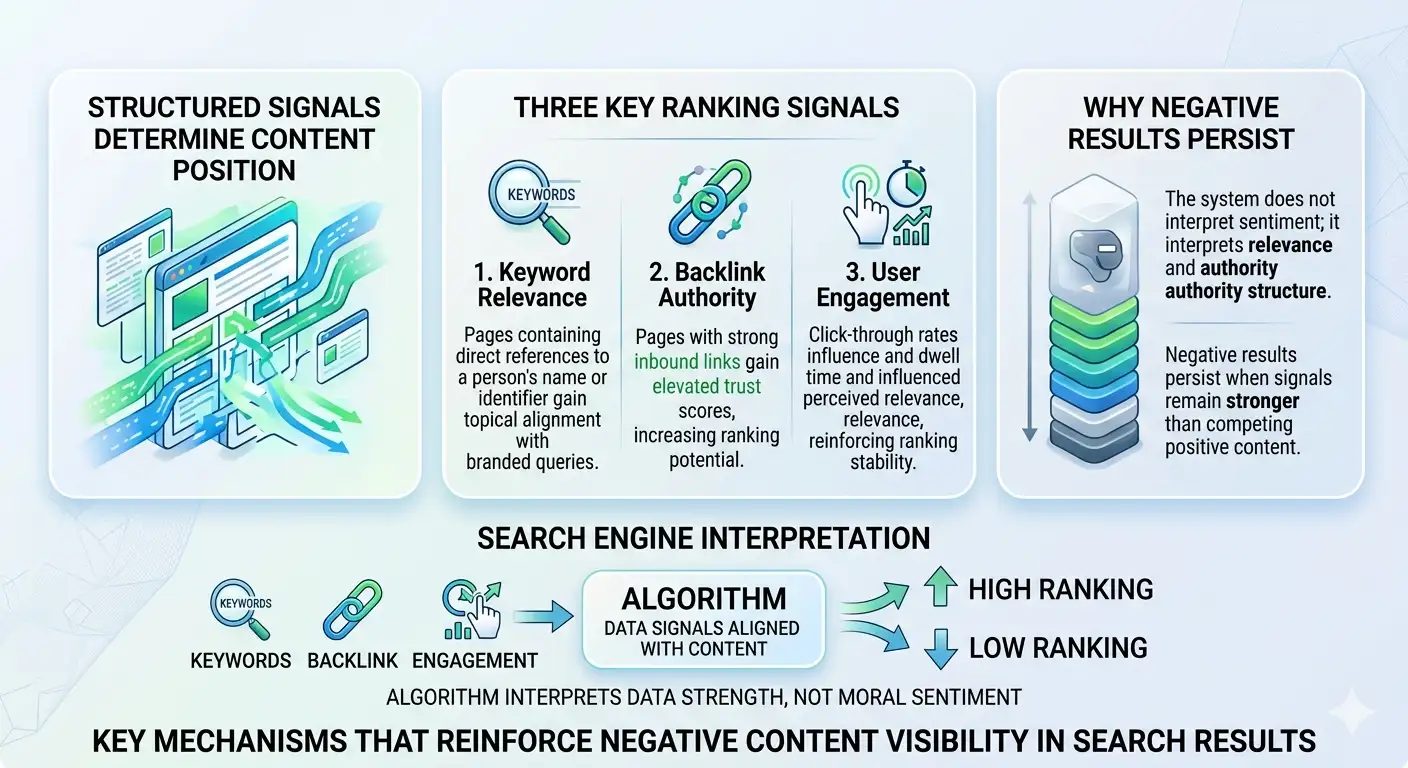
Source authority also influences interpretation. A statement from an authoritative corporate source carries a different contextual signal from an anonymous online comment. Professional publications, established news organisations and official company communications provide different levels of source credibility. Search engines analyse these contextual relationships when evaluating content. Users also apply similar credibility assessments when interpreting acquisition-related information in search results.
How does acquisition speculation change SERP composition?
Acquisition speculation changes SERP composition by introducing new pages, topics and entity relationships into search results. SERP composition refers to the types of information displayed for a particular query, including corporate pages, news articles, financial commentary, professional profiles and other indexed sources. When acquisition-related content gains relevance, it can occupy prominent positions for searches involving the company. This changes the information users encounter when researching the organisation.
Branded searches provide a direct example of this mechanism. A query containing the company’s name can return corporate information alongside acquisition-related reporting. The presence of transaction-focused results changes the informational context surrounding the brand. Users then evaluate the company through a broader set of reputation signals. Search visibility therefore influences perception by determining which information receives attention during the research process.
Content ranking dynamics determine which acquisition-related pages receive prominent placement. Relevance connects the content to the query, while authority and other quality signals influence competitive positioning. Recent reporting can gain visibility when it directly addresses a developing topic. Historical corporate content remains relevant for queries focused on established information about the organisation. The resulting SERP contains multiple information layers representing different aspects of the company’s identity.
How do acquisition rumours influence trust and credibility signals?

Acquisition rumours influence trust and credibility signals by changing the information users encounter when evaluating a company’s stability and corporate identity. Trust signals refer to indicators that support the perceived reliability of information or an entity. These signals include authoritative sources, consistent corporate information, transparent statements and corroborated reporting. Rumours introduce uncertainty into this information environment because their factual status differs from confirmed corporate information.
Consistency remains a central credibility factor. If corporate information consistently identifies the company’s ownership, leadership and structure, a sudden increase in speculative acquisition content creates a contrasting information layer. Search users then encounter both established corporate information and emerging speculation. Search engines process these sources according to their relevance and authority rather than treating them as equivalent facts. The distinction affects how entity credibility is interpreted across different searches.
Corroboration also influences perception. Multiple independent sources discussing the same acquisition claim create a stronger information relationship than an isolated reference. However, repeated coverage does not automatically establish factual confirmation. Search systems evaluate source relationships and content quality when determining relevance and ranking. Effective analysis therefore separates information volume from information reliability.
What role does news coverage play in acquisition-related reputation?
News coverage plays a significant role because news content can rapidly introduce acquisition-related information into search ecosystems. News articles often receive visibility for current corporate queries because their subject matter directly matches developing events. Once indexed, these articles contribute to the company’s searchable digital footprint. Their headlines, descriptions and references influence the topics associated with the entity. This creates a direct connection between media visibility and online reputation.
The authority of the publishing source affects the strength of the reputation signal. Established publications provide identifiable editorial context, while low-authority sources provide weaker evidence about the underlying claim. Search engines evaluate these differences through ranking systems that assess relevance and quality. Users also distinguish between established reporting, commentary and unverified discussion. Consequently, acquisition-related reputation cannot be assessed solely by counting the number of published articles.
News freshness also affects search visibility. Developing acquisition stories generate new content that directly addresses current search intent. Older corporate pages remain indexed but can receive less visibility for queries focused on the developing event. This produces a temporal shift in SERP composition. The company’s digital reputation therefore reflects both historical authority and current information demand.
How do reviews affect perception during acquisition speculation?
Reviews influence perception during acquisition speculation by providing an independent source of reputation signals about customer and stakeholder experiences. Review content contains ratings, written feedback, dates and references to products or services. Search engines can index this material and associate it with the relevant business entity. When acquisition rumours appear alongside reviews, users encounter both operational reputation and corporate speculation. These signals address different dimensions of perception.
Sentiment interpretation is particularly relevant when search results contain contrasting information. Reviews provide sentiment signals through positive, neutral or negative language. Acquisition coverage provides corporate and strategic signals rather than direct customer-experience evidence. Search users interpret both categories while evaluating the organisation. Separating sentiment from corporate speculation prevents the two information types from being treated as identical reputation indicators.
Review recency also creates an important distinction. Recent reviews provide information about current customer experiences, while older reviews reflect historical interactions. Acquisition speculation often concerns future ownership or organisational direction rather than existing service quality. Search systems therefore process these information categories within different contextual relationships. The combined SERP can contain both operational and corporate reputation signals.
Dive Deeper With Our Expert Guides:
Why Customer Service Screenshots Go Viral and Define Brands
How Counterfeit Listings Harm a Brand’s Marketplace Reputation
How does an acquisition rumour affect a company’s digital footprint?
An acquisition rumour expands a company’s digital footprint by creating additional indexed references connecting the organisation with acquisition-related entities and topics. A digital footprint is the collection of online information associated with an organisation across first-party and third-party sources. It includes websites, publications, reviews, professional profiles, directories and corporate records. Acquisition reporting adds new content to this network. Each new reference creates another searchable representation of the company.
The footprint becomes more complex when multiple entities are involved. Search engines need to distinguish between the acquiring organisation, the target organisation and other companies mentioned in the reporting. Entity relationships provide contextual information that helps establish these distinctions. Accurate corporate references therefore become important for maintaining clear entity perception. Incorrect associations can introduce additional ambiguity into the search environment.
Historical content also remains part of the footprint. Existing pages describing the company’s products, leadership and history continue to provide established information. New acquisition coverage introduces a separate layer focused on ownership or strategic change. Search users encounter these layers depending on their query. Online reputation therefore develops through the interaction between historical content and current information.
Why does content authority matter when acquisition rumours spread?
Content authority matters because search engines need to evaluate which sources provide the most relevant and reliable information for a query. Authority refers to the strength and credibility associated with a source within a particular information context. A highly authoritative source discussing an acquisition receives different ranking consideration from an unsupported reference on an unknown website. This distinction affects which version of the acquisition narrative becomes visible. Search visibility therefore influences which information users treat as significant.
Authoritative corporate content provides another important signal. Official announcements, corporate statements and verified organisational information establish direct evidence about the company’s position. These sources create first-party information that search engines can associate directly with the entity. Third-party reporting then provides external context around that information. Together, these sources form a broader information environment for SERP evaluation.
The relationship between authority and relevance also matters. An authoritative page that does not address the acquisition directly provides limited relevance for acquisition-specific searches. Conversely, a highly relevant article from a weaker source has different credibility characteristics. Search ranking systems evaluate these dimensions together. Analysing acquisition-related reputation therefore requires consideration of both source authority and topical relevance.
How can companies manage perception during acquisition speculation?
Companies can manage perception during acquisition speculation by maintaining accurate information, distinguishing confirmed facts from unverified claims and monitoring changes in search visibility. Managing Perception During Acquisition or Merger Speculation involves analysing how corporate information, third-party reporting and entity relationships interact across search ecosystems. The objective is to understand which reputation signals users encounter and how those signals influence entity perception. This requires continuous analysis rather than reliance on a single corporate statement. Search visibility provides an observable indicator of how the information environment is changing.
Information consistency forms the foundation of this approach. Corporate names, leadership information, organisational descriptions and other core entity attributes need to remain factually aligned across relevant sources. Consistent information provides stronger contextual evidence for search engines and users. Contradictory information creates additional interpretation requirements. Entity consistency therefore supports clearer online credibility during periods of corporate uncertainty.
Monitoring also provides an analytical view of changing SERP composition. Tracking branded searches reveals whether acquisition-related pages are entering prominent positions. Reviewing the sources behind those results identifies differences in authority, sentiment and factual status. This process separates changes in search visibility from changes in underlying corporate reputation. It also demonstrates how search perception develops as new information enters the index.
What is the long-term reputation impact of acquisition rumours?
The long-term reputation impact of acquisition rumours depends on how the information becomes integrated into the company’s digital footprint. A rumour that receives limited visibility can remain a temporary information signal within the broader search ecosystem. Sustained publication, authoritative reporting and continued search demand can establish acquisition-related content as a persistent topic. Search engines continue evaluating this content while it remains indexed and relevant. The resulting reputation signal therefore develops over time.
Persistent acquisition narratives can also change the semantic associations surrounding an entity. Searches for the company can become connected with ownership, strategic direction, corporate restructuring or market positioning. These associations influence how users understand the organisation before interacting with its official information. Search engines reflect this semantic environment through content ranking and entity relationships. The company’s online reputation therefore evolves alongside its information ecosystem.
Long-term perception also depends on subsequent information. Confirmed transactions, abandoned negotiations, corporate statements and later developments create additional content. Each development changes the factual context surrounding earlier reporting. Search engines then evaluate the newer information alongside historical pages. Reputation analysis therefore requires a chronological understanding of how information enters, persists and changes within search ecosystems.
How do acquisition rumours shape market perception?
Acquisition rumours shape market perception by introducing new information, entity relationships and reputation signals into the digital environment surrounding a company. Search engines process these signals through content indexing, relevance, authority and SERP evaluation. News coverage, reviews, corporate information and third-party references each contribute different forms of evidence. The resulting search environment influences how users understand the company’s identity, credibility and strategic position.
The central distinction is between information visibility and information certainty. A rumour can become highly visible without becoming a confirmed corporate fact. Search ranking dynamics determine which sources users encounter, while authority and corroboration influence how those sources are interpreted. Understanding these mechanisms provides a clearer basis for analysing changes in online reputation during acquisition speculation.
Ultimately, acquisition-related reputation is formed through the interaction of corporate information, third-party content, search visibility and entity perception. Monitoring these signals reveals how speculation becomes part of a company’s digital footprint and how subsequent information changes its meaning. A structured understanding of these systems provides the foundation for evaluating Managing Perception During Acquisition or Merger Speculation without confusing search visibility with factual confirmation.
How do acquisition rumours affect a company’s online reputation?
Acquisition rumours can change online reputation by introducing new information about ownership, strategy and corporate direction into search results. These reputation signals influence entity perception, search visibility and how users evaluate the company’s credibility.
Do acquisition rumours affect Google search results?
Yes, acquisition rumours can influence SERP composition when news articles, corporate commentary and third-party references become indexed. Search engines evaluate their relevance, authority and context when ranking acquisition-related content.
How do acquisition rumours affect brand perception?
Acquisition rumours can change brand perception by associating a company with new entities, ownership discussions and strategic developments. The impact depends on the visibility, authority and credibility of the information appearing in search results.
Can negative acquisition news damage a company’s reputation?
Negative acquisition-related content can affect reputation when it receives prominent search visibility and influences how users interpret the company’s credibility. Reputation management for business focuses on analysing these reputation signals and the broader digital footprint.
How can a company manage its reputation during acquisition speculation?
A company can manage its reputation by monitoring SERPs, maintaining accurate corporate information and analysing the authority and sentiment of acquisition-related content. This helps distinguish verified information from speculation while supporting consistent entity perception.